Many custom options


And formats



Tian in Chinese / Japanese
Buy a Tian calligraphy wall scroll here!
Personalize your custom “Tian” project by clicking the button next to your favorite “Tian” title below.
1. Tian
2. Celestial Dragon / Tian Long
3. Heaven
4. Arita
5. Gay Pride
7. Daodejing / Tao Te Ching - Chapter 81
8. Tien
9. Angel / Messenger of Heaven
10. Clear Blue Sky
11. Divine Grace
12. Emperor of Japan
13. Etienne
14. Destiny Determined by Heaven
15. Ganesh
16. Heaven and Earth
17. Grace from Heaven / Grace from God
18. Heaven Sent
20. Swan
21. Honda
23. Lotte
24. Shibata / Shida
26. Takeda
27. Tengu
28. Tenra
29. Toyota
30. Yotsuda / Shida
32. Benzaiten
33. Cookie Monster
34. Dark Angel
36. Tennessee
37. Uranus
38. Libra
39. Scorpio
40. Chun Ku Do
41. Optimism / Happy With Your Fate
42. Born To Be Wild
43. Catholic
45. Dark Angel
46. Family Love / Domestic Bliss
47. Fallen Angel
48. Guardian Angel
49. Heaven Blesses the Diligent
50. Live For The Day
52. Oneness of Heaven and Humanity
54. Soul Mates
55. Tenshin Dojo
56. Valentino
57. Voice of Heaven / Voices from Heaven
58. Warrior of the Heavenly Realm
60. Art of War: 5 Points of Analysis
61. Sun Goddess
62. God in the Glorious Center of Heaven
64. I am the Master of My Destiny
67. Good Good Study, Day Day Up
68. I love you to the moon and back
69. Fix the roof before the rain; Dig the well before you are thirsty
70. One frost doesn't make winter
71. Daodejing / Tao Te Ching - Excerpt
72. One Who Does Not Do Bad Things, Worries Not of Knocks at His Door
73. Daodejing / Tao Te Ching - Chapter 9
74. Daodejing / Tao Te Ching - Chapter 1
75. Daodejing / Tao Te Ching - Chapter 54
76. The Lord's Prayer / Mathew 6:9-13
Tian
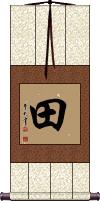
This Chinese, Korean, and Japanese character means field or farm.
Most of the time, this refers to a rice field.
However, this is very commonly used as a surname that romanizes from Mandarin as Tian, and from Cantonese and Taiwanese, it's romanized as Tien.
In Vietnamese, it's the surname Tiên.
In Japanese, it can be the surname Yanakida, Tatsuru, or Tazaki. There are other romanizations used for Japanese surnames for this character. When just a field, it is pronounced “den” in Japanese.
Celestial Dragon / Tian Long
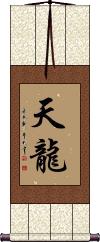
天龍 can mean Heavenly Dragon (Dragon of Heaven), Sky Dragon, Holy Dragon, Celestial Dragon, or Divine Dragon.
This can be a given name in both China and Japan (天龍 is pronounced Tenryū and sometimes written 天竜 in Japanese).
In an older Buddhist context, this can refer to Brahma, Indra, and the devas, together with the nāgas. It can also refer to celestials and snake spirits.
Heaven
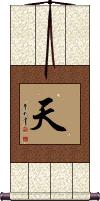
天 means “heaven” or “sky” in Chinese, Japanese Kanji, and old Korean Hanja.
The context determines if you are talking about heaven or the sky above (often they are the same concept).
When combined with other characters, words like “today” and “tomorrow” are created. While sometimes the character for “sun” is used to mean “day,” often “sky” represents “day” in Asian languages.
Example: 今天 (this sky) = “today,” 明天 (next sky) = “tomorrow” in modern Chinese and Japanese.
In Chinese culture, regardless of which religion, it's almost always assumed that God (and any other deities) live up above the sky. The concept of God living in the sky is likely the reason heaven is associated with this character.
The equation goes something like this: God's domain is the sky, thus, the sky is heaven.
Note: As a single character, this is a little ambiguous, so you might want to choose our Kingdom of Heaven selection instead.
See Also: Heaven | Xuan Wu / Genbu / Black Tortoise God | Never Put Off Until Tomorrow What You Can Do Today | Sun
Arita
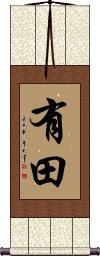
有田 is a version of the Japanese name Arita.
This can also be Uda or Arida.
This would be read as “You Tian” in Mandarin but it would be understood to be a Japanese name.
Gay Pride
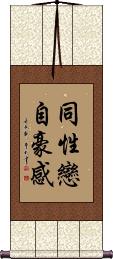
同性戀自豪感 or “Gay Pride” is a new idea in China. It's so new, that we may have just started the movement by translating this phrase.
If they ever do start having gay pride parades in China, my best guess is that these 6 characters will constitute the term they use to title the parade/movement.
Who knows, maybe in 10 years they will have a pride parade march straight past Tian'anmen Square on Chang An Street (the main drag in Beijing).
Master / Skilled Worker
Secondary version of Sifu
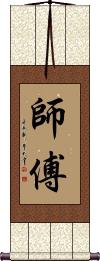
師傅 is “sifu” as in the “master” in the context of martial arts.
But two sifu titles are floating around. This one can simply mean “skilled worker.”
Historically, this term has been used for many things, such as “The tutor of a king or emperor.” But now it's more commonly used to mean master worker or qualified worker.
Currently, within the field of skilled labor, a master (Shifu) is higher than a journeyman and is considered to be one worthy of teaching others.
Note: In the 1970s and 1980s, this term was used as a common form of polite address between people. You might say, “master, do you know where Tian'anmen Square is?” to a person on the street at that time. This usage has almost passed; however, for some reason, people still often refer to taxi cab drivers as “master” in China (though I think/hope this is fading).
In Mandarin Chinese, this is pronounced like “Sure Foo,” and in Cantonese, like “See Foo.”
The second character is the difference between this sifu and the other. In this case, the second character by itself means tutor, instructor, or teacher.
Daodejing / Tao Te Ching - Chapter 81
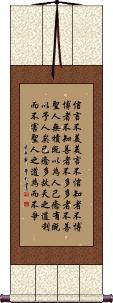
信言不美美言不信知者不博博者不知善者不多多者不善聖人無積既以為人己癒有既以予人矣已癒多故天之道利而不害聖人之道為而不爭 is the Mawangdui version of Daodejing chapter 81.
Credible words are not eloquent;
Eloquent words are not credible.
The wise are not erudite;
The erudite are not wise.
The adept are not all-around;
The all-around are not adept.
The sages do not accumulate things.
Yet the more they have done for others,
The more they have gained themselves;
The more they have given to others,
The more they have gotten themselves.
Thus, the way of tian (heaven) is to benefit without harming;
The way of sages is to do without contending.
Sincere words are not showy;
showy words are not sincere.
Those who know are not “widely learned”;
those “widely learned” do not know.
The good do not have a lot;
Those with a lot are not good.
The Sage accumulates nothing.
Having used what he had for others,
he has even more.
Having given what he had to others,
what he has is even greater.
Therefore, the Way of Heaven is to benefit and not cause any harm,
The Way of Man is to act on behalf of others and not to compete with them.
True words aren't charming,
charming words aren't true.
Good people aren't contentious,
contentious people aren't good.
People who know aren't learned,
learned people don't know.
Wise souls don't hoard;
the more they do for others the more they have,
the more they give the richer they are.
The Way of heaven provides without destroying.
Doing without outdoing
is the Way of the wise.
Tien
This is the original Chinese character for the Vietnamese name Tien or Tiên.
田 means field or farm. Most of the time, this refers to a rice field.
It happens to sometimes romanize as Tien from Cantonese and Taiwanese.
In Japanese, it can be the surname Yanakida, Tatsuru, or Tazaki. There are other romanizations used for Japanese surnames for this character. When just a field, it is pronounced “den” in Japanese.
Angel / Messenger of Heaven
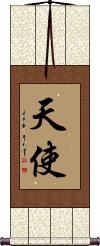
天使 is the meaning of Angel in Chinese, Japanese Kanji, and old Korean Hanja.
The first character means heaven. The second means messenger. Together it makes sense that we are talking about angels as Heaven's Messengers.
If you are an “Angel Junkie,” this may be the wall scroll for you.
I also think it's a great choice if your name happens to be Angel.
See Also: Guardian Angel
Clear Blue Sky
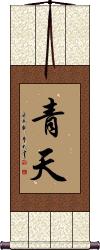
青天 means clear sky and/or blue sky in Chinese and Japanese Kanji.
Sometimes this term is used in Chinese to refer to an upright and honorable official or politician (a very rare thing).
In Japanese, this can also be the name Harutaka.
Divine Grace
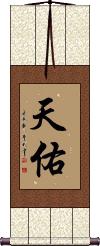
天佑 is a Chinese and Japanese word that means divine aid, divine grace, Heaven blessed, or providential help.
Some Chinese people will use this to infer that this means a home or family blessed by heaven or God. 天佑 is the shortest way to express that idea anyway.
Emperor of Japan
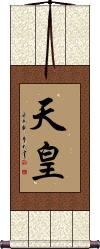
天皇 is the title of the Emperor of Japan.
This title is used in China, Korea, and Japan to refer specifically to the Emperor of Japan.
Etienne
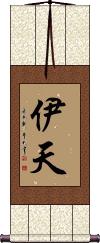
This is a common Mandarin Chinese transliteration for the male French name Etienne.
Destiny Determined by Heaven
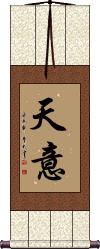
天意 is a way to express destiny in a slightly religious way.
天意 means “Heaven's Wish” or “Heaven's Desire,” with the idea of fate and destiny being derived as well. It suggests that your destiny comes from God / Heaven and that your path has already been chosen by a higher power.
My Japanese dictionary defines this word as “divine will” or “providence,” but it also holds the meaning of “the will of the emperor.” Therefore, I don't suggest this phrase if your audience is Japanese - it feels strange in Japanese anyway.
Ganesh
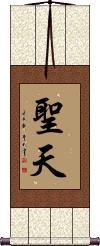
聖天 is the Chinese and Japanese title for Ganesh, Nandikesvara, or Āryadeva (A deity in the Buddhist pantheon).
Can also be a female Japanese given name Seiten.
Heaven and Earth
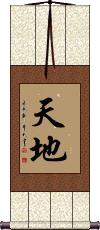
天地 is “Heaven and Earth” in Chinese, Japanese Kanji, and old Korean Hanja.
This title is used in many different contexts. It can be a general term but is also used by Buddhists and in other religions.
This can also be used to refer to all of nature, the universe, the top and bottom, the realm of life, or the sphere of existence.
Grace from Heaven / Grace from God
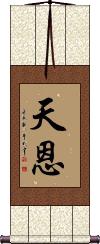
天恩 is the deepest way to say “Heaven's Grace” or “God's Grace” in Chinese.
The first character means Heaven or sky (referring, in this case, to the domain of God).
The second character means grace, blessings, benevolence, favor/favour, acts of kindness, merits, or beneficial influence.
This title can also be defined as:
Blessings of Heaven, Favor of the Emperor, Divination's luckiest day, or blessings of nature. Note: When you see “Emperor” above, remember that the Emperor, like the Pope, is theoretically chosen by God or seen as an emissary or conduit of God in ancient Asian culture. It would only be read that way in a certain context, such as “The Emperor, in his mercy, bestowed upon him Heaven's Grace, and the prisoner was set free.”
Note: Technically, this is a Japanese word too (pronounced “ten-on”) but it’s rarely used in Japan anymore. Therefore, this title is best if your audience is Chinese.
Heaven Sent
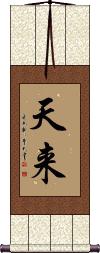
天来 is a Chinese and Japanese title that means: heavenly; divine; inspired; heaven sent.
This can also be the Japanese surname Tenrai or Japanese female given names Takara or Sora.
Heavenly / Celestial
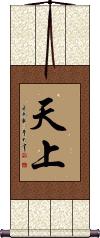
天上 is a Chinese, Japanese, and Korean word that means celestial or heavenly.
You can directly translate this as “heavens above,” or “sky above.”
Swan
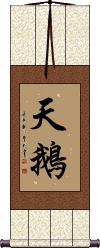
天鵝 is one of a few titles that can mean “swan” in Chinese.
This one can be literally translated as “heavenly goose.”
Honda
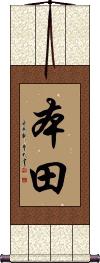
本田 is the Japanese name, Honda, which is both a surname and the car company.
However, the full name of the Honda Motor Corporation is 本田技研工業株式会社. The short version is 本田技研工業. The two Kanji, 本田, would be the shortest way to write Honda, but it can be confused with other Honda names (surnames and given names).
本田 also be pronounced Motoda, Honden, or Honta (various surnames in Japan written the same way, but pronounced differently).
Technically, the word honda means rice paddy.
Kingdom of Heaven
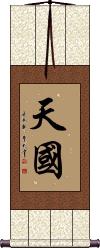
天國 is the very Christian way to refer to the “Kingdom of Heaven” in Chinese, old Korean, and Japanese. 天國 is also the translation for “paradise.”
The first character means “Heaven.” The second character means “kingdom” but, in modern times, has been extended to mean “country” (but no one will translate this particular character combination as “Heaven Country”). 天國 is the ancient version of this word, as in modern times (after WWII), the second character was simplified in mainland China and Japan.
Kingdom of Heaven
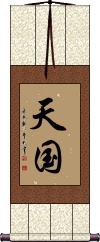
天国 is the same meaning and pronunciation as our other entry for “Kingdom of Heaven,” but the second character was simplified in Japan and mainland China to this version.
Choose the appearance that you like best (they will be somewhat universally understood - as most people are aware of this simplification in places where they still use all traditional characters - such as Taiwan and Hong Kong). You can consider the other version to be the “ancient version.”
Lotte
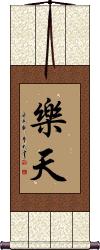
樂天 is the name Lotte in Chinese (Mandarin).
Shibata / Shida
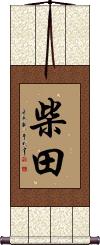
This is a Japanese surname and place-name that can be romanized as Shibata or Shida.
Other variations of romanization include: Tsubata; Shibada; Shihada; Shinoda.
This is understood to be a Japanese place-name/surname in Chinese.
Sky / Air / Ether / Space
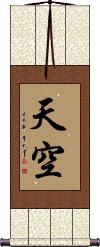
天空 means sky in most contexts but it can also refer to air, space, the heavens, or ether.
Takeda
Surname
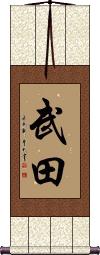
This is a Japanese surname that romanizes as Takeda.
This can also be the Japanese surnames Muta, Tageta, Takedo, or Taketa.
Takeda
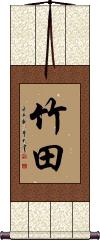
This is a Japanese surname that romanizes as Takeda.
In Chinese, this can refer to Chutien township in Pingtung County, Taiwan.
Other Japanese romanizations for this name include Chikuden, Chikuda, Taketa, or Okamura.
Tengu
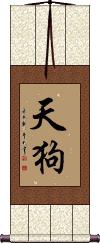
天狗 is the Japanese title for Tengu, which roughly translates as “heavenly dog.”
Tengu is a type of legendary creature found in Japanese folk religion and is also considered a type of Shinto god (kami) or yōkai (supernatural being).
The origin is Chinese, though this term is seldom used in Chinese anymore. It was a dog-like Chinese demon (Tiangou)
Although the title contains the word “dog,” the tengu are often depicted with human and bird-like characteristics. Sometimes they have large noses or beaks like birds.
Tenra
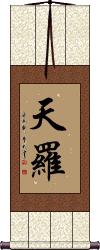
天羅 is the title Tenra, as in Tenra War, the Japanese role-playing game.
This title can be confused in China with 天羅國, the ancient Kingdom of Devala.
Toyota
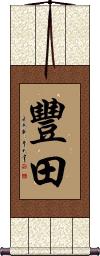
豐田 is the name of Toyota (or Toyoda) the Japanese carmaker.
Yotsuda / Shida
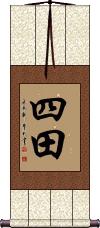
This is a Japanese surname that can be romanized as Yotsuda or Shida
In Buddhist context, this can refer to the four fields for cultivating happiness.
Archangel / Arch Angel
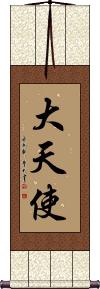
大天使 is the title Archangel in Chinese characters, Japanese Kanji, and old Korean Hanja.
The first character means big or great (in this case, it means “arch”).
The second means heaven (or sky).
The last means messenger.
The second and third characters together make the title for angel, which is literally “Heaven's Messenger.”
This title would be understood as “The Chief of all Angels,” or “The Great Angel.” Some might even say it's the boss of Angels.
See Also: Guardian Angel
Benzaiten
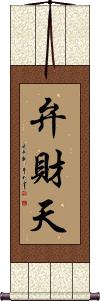
弁財天 is a Buddhist term that can be translated or transliterated as Benzaiten or Saraswati.
弁財天 is the Buddhist goddess of music, eloquence, wealth, and water.
This goddess of eloquence came into Buddhism from the Hindu goddess Saraswati. Benzaiten and Saraswati are considered by most to be one and the same. However, in Japanese culture, Benzaiten has been conflated with several other deities.
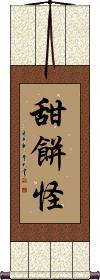
甜餅怪 is Cookie Monster in Chinese.
Dark Angel
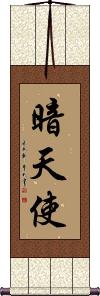
暗天使 is the shortest way to write, “Dark Angel,” in Chinese.
This literally reads, “dark heaven's messenger.”
天使 means “heaven's messenger” but is always understood as “angel.”
This would be pronounced “kura tenshi” in Japanese. This has the same meaning in Japanese, but not a common title. If you manage to find dark angel written in Japan, it would probably be ダーク エンジェル (Dāku Enjeru), which is a transliteration of the English title into Japanese, or 暗い天使 (kurai tenshi) which is a specifically Japanese title.
Warrior of Heaven
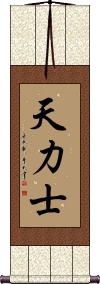
天力士 means “Heavenly Warrior,” or “Hero of Heaven,” in Chinese, old Korean, and Japanese.
Often used in a Buddhist context.
Tennessee
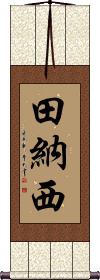
田納西 is the name Tennessee in Chinese (Mandarin).
Uranus
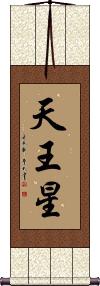
天王星 is the Chinese, Japanese Kanji, and old Korean Hanja for the planet Uranus.
Libra Zodiac Symbol / Sign
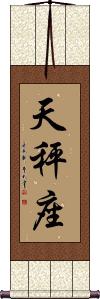
天秤座 is the Chinese and Japanese way to write Libra (scales) of western astrology.
See Also: Chinese Traditional Medicine
Scorpio Zodiac Symbol / Sign
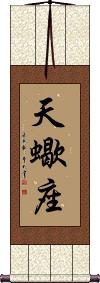
天蠍座 is the Chinese way to write Scorpio (scorpion) from western astrology.
Please note this version is only used in Chinese (see the other version if Japanese is your audience).
See Also: Chinese Traditional Medicine
Chun Ku Do

天國道 (or 천국도) is Chun Kuk Do, Korean and American martial arts hybrid system created by Chuck Norris.
Note: Chun Ku Do is now known as the Chuck Norris System.
If you want this in Korean Hangul, please click on the Korean Hangul, please click here instead of the button above: 천국도
Optimism / Happy With Your Fate
樂天 is about being optimistic and also making the best of whatever life throws at you.
This is hard to define. One dictionary defines this as “acceptance of fate and happy about it.” There is one English word equivalent, which is sanguinity or sanguinary.
You can also say that this means “Be happy with whatever Heaven provides,” or “Find happiness in whatever fate Heaven bestows upon you.” 樂天 suggests being an optimist in life.
Note: This is sometimes a given name in China.
 Please note that Japanese tend to write the first character in a slightly-different form (as seen to the right). Let us know if you have a preference when you place your order.
Born To Be Wild
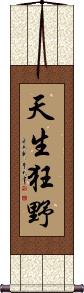
天生狂野 is “Born To Be Wild” (like the Steppenwolf song) in Chinese (Mandarin).
If you get to the deep meaning, the first two characters can mean “born” but refer as much to the nature, disposition, calling, or innate qualities of something or someone.
The last two mean coarse and/or wild.
So it roughly means that it is your nature to be wild.
Catholic
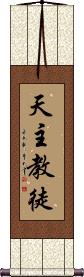
天主教徒 is the Chinese title for Catholic, meaning a follower of Catholicism or member of the Catholic Church.
The Catholic Church
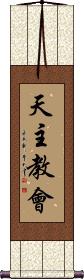
天主教會 is the Chinese title for, The Catholic Church.
Dark Angel
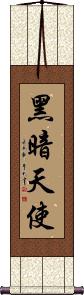
黑暗天使 means “Dark Angel” in Chinese.
The first character means black, but the second means dark by itself, so this can also be written with the first character dropped.
The last two characters mean angel.
Family Love / Domestic Bliss
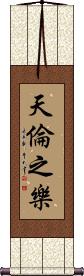
天倫之樂 means family love and joy, or domestic bliss.
The first two characters mean “the bonds of the family.”
The third character connects this to the fourth character which means happiness, joy, and cheerfulness.
Fallen Angel
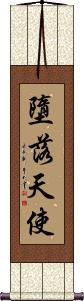
墮落天使 means “fallen angel” in Chinese.
墮落天使 is also the title of a 1995 movie that was popular in Hong Kong.
墮落 means to degrade, degenerate, become depraved, corrupt, fall from grace, or descend.
天使 means angel (more literally “heavenly messenger” or “divine messenger”).
Guardian Angel
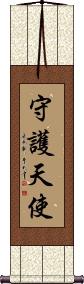
守護天使 is the title used for guardian angel in Chinese and Japanese Kanji.
It's used in the same way we use this title in the west - such as a guardian angel watching out for you and allowing you to survive a disaster or accident.
The first two characters mean to guard and protect. The second two mean “angel” (literally “Heaven's messenger”).
Heaven Blesses the Diligent
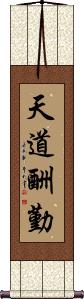
天道酬勤 can be interpreted in a few different ways:
God blesses those who work hard.
It is the way of Heaven to smile on the diligent.
God will reward those that are worthy.
Heaven blesses those who are diligent.
Whichever translation you like, a scroll like this on your wall may serve as a reminder to work hard because your diligence will pay off both in this life and the next.
Note: This can be pronounced in Korean, but it's not a commonly used term.
Live For The Day
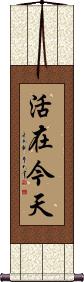
活在今天 is not an eastern concept, so it does not translate into a phrase that seems natural on a wall scroll.
However, if this is your philosophy, the characters shown here do capture your idea of living for today or living in the moment. 活在今天 says “Live in today,” and they are grammatically correct in Chinese.
Note: This kind of makes sense in Korean Hanja but the grammar is Chinese, so it’s not that natural in Korean.
Marici / Marishiten
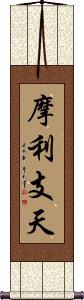
This is the Chinese and Japanese title for Marici, the Buddhist god of war.
Pronounced as Marishiten in Japan or Molizhitian in China.
The original name Mārīcī comes from the Sanskrit मारीची which literally means “Ray of Light.”
Oneness of Heaven and Humanity
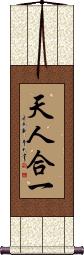
天人合一 is a title that represents the oneness of heaven and humanity. It conveys the idea that man is an integral part of nature.
You can also read this as “heaven and man in unity,” or “nature and man in unity.” The “man” is really “people” or “humans” and is not gender-specific in Chinese.
One Family Under Heaven
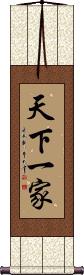
天下一家 is a proverb that can also be translated as “The whole world is one family.”
It is used to mean that all humans are related by decree of Heaven.
The first two characters can mean “the world,” “the whole country,” “descended from heaven,” “earth under heaven,” “the public,” or “the ruling power.”
The second two characters can mean “one family,” “a household,” “one's folks,” “a house” or “a home.” Usually, this is read as “a family.”
Note: This proverb can be understood in Japanese, though not commonly used.
Soul Mates
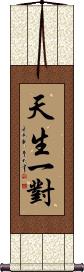
It was tough to find the best way to say “soul mates” in Chinese. We settled on 天生一對 as an old way to say, “A couple selected by heaven.”
The first two characters together mean “natural” or “innate.” Separated, they mean “heaven” and “born.” The last two characters mean “couple.” So this can mean “A couple that is together by nature,” or “A couple brought together by heaven's decree.” With a slight stretch, you could say, “A couple born together from heaven.”
It's a struggle to find the best way to describe this idea in English but trust me, it is pretty cool, and it is a great way to say “soulmates.”
If you're in a happy relationship or marriage and think you have found your soul mate, this would be a wonderful wall scroll to hang in your home.
Tenshin Dojo

天心道場 is the title Tenshin Dojo in Japanese Kanji.
The meaning of 天心 is the center of the sky, will of heaven, will of the Gods, the monarch's will, zenith, divine will, or providence.
Valentino
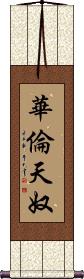
華倫天奴 is the name Valentino in Chinese (Mandarin).
Voice of Heaven / Voices from Heaven
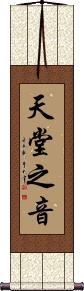
天堂之音 is a title that can mean either “voice of heaven” or “voices from heaven.”
The first two characters mean heaven.
The third character is a possessive article (similar to making heaven into heaven's).
The last character means voice but can also mean sound.
Note: This can be pronounced in Korean, but it's not a commonly used term.
Warrior of the Heavenly Realm
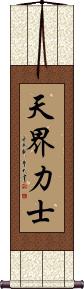
天界力士 means “warrior of the heavenly realm” in Chinese, old Korean Hanja, and Japanese Kanji.
This is also known as Narayana in Buddhism.
The Whole World at Peace
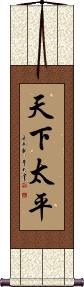
This proverb can mean the whole world at peace, peace and prosperity, peaceful and tranquil, peace reigns over the land, times of peace, peace and tranquillity, peaceful world, or from the Greek, times of halcyon.
Sometimes (rarely) written as 天下泰平 (variant 3rd character).
Art of War: 5 Points of Analysis
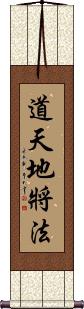
道天地將法 is a list of five key points to analyzing your situation from the first chapter of Sun Tzu's Art of War.
This reads like a 5-part military proverb. Sun Tzu says that to sharpen your skills, you must plan. To plan well, you must know your situation. Therefore, you must consider and discuss the following:
1. Philosophy and Politics: Make sure your way or your policy is agreeable among all of your troops (and the citizens of your kingdom as well). For when your soldiers believe in you and your way, they will follow you to their deaths without hesitation and will not question your orders.
2. Heaven/Sky: Consider climate / weather. This can also mean considering whether God is smiling upon you. In the modern military, this could be waiting for clear skies so that you can have air support for an amphibious landing.
3. Ground/Earth: Consider the terrain in which the battle will take place. This includes analyzing defensible positions, and exit routes, while using varying elevations to your advantage. When you plan an ambush, you must know your terrain and the best location from which to stage that ambush. This knowledge will also help you avoid being ambushed, as you will know where the likely places in which to expect an ambush from your enemy.
4. Leadership: This applies to you as the general and your lieutenants. A leader should be smart and be able to develop good strategies. Leaders should keep their word, and if they break a promise, they should punish themselves as harshly as they would punish subordinates. Leaders should be benevolent to their troops, with almost a fatherly love for them. Leaders must have the ability to make brave and fast decisions. Leaders must have steadfast principles.
5. [Military] Methods: This can also mean laws, rules, principles, models, or systems. You must have an efficient organization in place to manage both your troops and supplies. In the modern military, this would be a combination of how your unit is organized and your SOP (Standard Operating Procedure).
Notes: This is a simplistic translation and explanation. Much more is suggested in the actual text of the Art of War (Bing Fa). It would take many study to master all of these aspects. In fact, these five characters can be compared to the modern military acronyms such as BAMCIS or SMEAC.
CJK notes: I have included the Japanese and Korean pronunciations but in Chinese, Korean and Japanese, this does not make a typical phrase (with subject, verb, and object) it is a list that only someone familiar with Sun Tzu’s writings would understand.
Sun Goddess
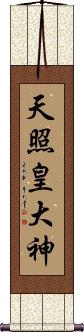
天照皇大神 is the title for Sun Goddess or Amaterasu Oomikami in Japanese.
Rare Chinese Buddhists/Shitoists may be familiar with this (so I have included the Chinese pronunciation above) however, this should generally be considered a specifically-Japanese title.
Besides Amaterasuoomikami, this can also be pronounced/romanized as Tenshoukoudaijin. There are several similar ways to write Sun Goddess in Japanese, so don't be surprised if you see different forms on the web, etc.
God in the Glorious Center of Heaven
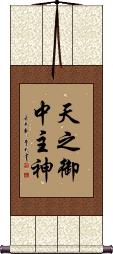
天之御中主神 is a phrase submitted by a customer.
I do not have information on the origin of this phrase.
There is always a way out
Never say die
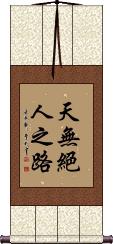
天無絕人之路 is a proverb that means “Heaven never bars one's way,” “Don't despair and you will find a way through,” and “Never give up hope,” and is the Chinese way to say “Never say die.”
I am the Master of My Destiny
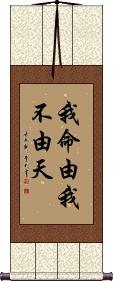
我命由我不由天 is often translated as “The one that shapes my destiny will always be myself rather than the God” or “Rather than Heaven, I am the master of my fate.”
Breaking down the words directly:
我命 = My fate/destiny
由我 = depends (on) me
不 = not
由天 dependant (on) Heaven.
See Also: Choose Your Own Destiny
Heaven Rewards Hard Work
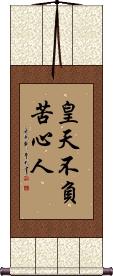
皇天不负苦心人 is an inspirational Chinese proverb that can be translated in a few ways:
Heaven will not disappoint the person who tries.
If you try hard, you're bound to succeed eventually.
Heaven rewards diligent work.
Sincere/heartful effort reaps the grace of Heaven.
Tenshin Buko-Ryu Heiho

天真武甲流兵法 is the Kanji title that romanizes as Tenshin Bukō-Ryū Heihō or Tenshin Buko-Ryu Heiho.
天真武甲流兵法 is a Japanese koryū martial art that has its roots in the Toda-ryū, founded in the late Muromachi period around the year 1560 by Toda Seigen.
This title can be pronounced in Chinese with a similar meaning, however, it should be considered a Japanese title.
Good Good Study, Day Day Up
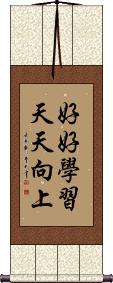
好好學習天天向上 is a famous proverb by Chairman Mao Zedong that sounds really strange when directly translated into English.
I include it in our database of phrases to illustrate how different the construction and grammar can be between Chinese and English. The direct translation is “Good Good Study, Day Day Up.” In Chinese, a repeated character/word can often serve to reinforce the idea (like saying “very” or suggesting “many”). So “good good” really means “many good.” While “day day” can be better translated as “day in day out.” The idea of “up” has a meaning in China of “rising above” or “improving.”
After understanding all of this, we come up with a slightly better translation of “With many good study, day in and day out, we raise above.”
The more natural translation of this proverb would be something like, “study hard, and keep improving.”
I love you to the moon and back

我愛你到地老天荒 is a Chinese version of “I love you to the moon and back.”
The literal meaning of this phrase is, “I love you from the end of the Earth to the reaches of Heaven” or more simply translated as, “I love you until the end of time.”
Fix the roof before the rain; Dig the well before you are thirsty
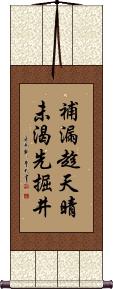
补漏趁天晴未渴先掘井 is a Chinese proverb that literally translates as: Mend the roof while the weather is fine, [and when you are] not yet thirsty, dig the well beforehand.
In simple terms, this means: Always being prepared in advance.
See Also: Have a Walking Stick at the Ready Before You Stumble
One frost doesn't make winter

一次霜凍不代表整個冬天 is a proverb that means “One frost doesn't make winter.”
The deeper meaning is that a single early sign of cold weather doesn't signify the full onset or severity of winter; it's about the gradual transition of seasons, patience, and not jumping to conclusions.
It's a reminder to stay resilient, wait for the real season to arrive, and not let one small event define the whole experience, similar to how one kind word can warm you for months.
While the origin of this proverb is murky (not originally Chinese, likely a modern adaptation of “One swallow does not a summer make”), this idea aligns with the Chinese solar terms (二十四節氣), which mark subtle shifts, like the transition from “cold dew” (寒露) to “frost falls” (霜降).
Daodejing / Tao Te Ching - Excerpt
Excerpt from Chapter 67
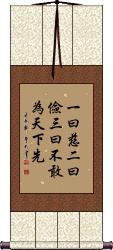
一曰慈二曰儉三曰不敢為天下先 is an excerpt from the 67th Chapter of Lao Tzu's (Lao Zi's) Te-Tao Ching (Dao De Jing).
This is the part where the three treasures are discussed. In English, we'd say these three treasures are compassion, frugality, and humility. Some may translate these as love, moderation, and lack of arrogance. I have also seen them translated as benevolence, modesty, and “Not presuming to be at the forefront in the world.” You can mix them up the way you want, as translation is not really a science but rather an art.
I should also explain that the first two treasures are single-character ideas, yet the third treasure was written out in six characters (there are also some auxiliary characters to number the treasures).
If Lao Tzu's words are important to you, then a wall scroll with this passage might make a great addition to your home.
One Who Does Not Do Bad Things, Worries Not of Knocks at His Door
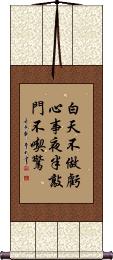
白天不做亏心事夜半敲门不吃惊 literally translates as: [If one does] not do bad things in the daytime, one need not be alarmed at knocks on the door in the middle of the night.
The meaning is something like, “A quiet conscience sleeps in thunder.” the message is, “don't commit crimes and you won't be jumpy every time the doorbell rings (so don't do anything wrong and your life will have fewer worries and you can sleep at night).”
Daodejing / Tao Te Ching - Chapter 9
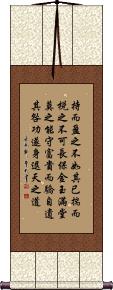
This text is the ninth chapter of the Daodejing / Tao Te Ching.
To hold until full is not as good as stopping.
An oversharpened sword cannot last long.
A room filled with gold and jewels cannot be protected.
Boasting of wealth and virtue brings your demise.
After finishing the work, withdraw.
持而盈之不如其已揣而梲之不可長保金玉滿堂莫之能守富貴而驕自遺其咎功遂身退天之道 is the Way of Heaven.
Dr. Muller's translation of all 81 Daodejing chapters
The text reads:
持而盈之、不如其已。揣而梲之、不可長保。 金玉滿堂、莫之能守。 富貴而驕、自遺其咎。 功遂身退、天之道。
This classical Chinese passage comes from the Mawangdui (馬王堆帛書) text.
Daodejing / Tao Te Ching - Chapter 1
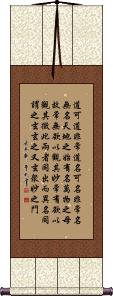
This text is the first chapter of the Daodejing / Tao Te Ching.
The Way that can be followed is not the eternal Way.
The name that can be named is not the eternal name.
The nameless is the origin of heaven and earth
While naming is the origin of a myriad of things.
Therefore, always desireless, you see the mystery
Ever desiring, you see the manifestations.
These two are the same—
When they appear, they are given different names.
This sameness is the mystery,
Mystery within mystery;
The door to all marvels.
Dr. Muller's translation of all 81 Daodejing chapters
The text reads:
道可道、非常道。名可名、非常名。 無名天地之始 有名萬物之母。故常無欲以觀其妙、常有欲以觀其徼。此兩者同出而異名。同謂之玄。玄之又玄、衆妙之門。
This classical Chinese passage comes from the Mawangdui (馬王堆帛書) text.
Daodejing / Tao Te Ching - Chapter 54
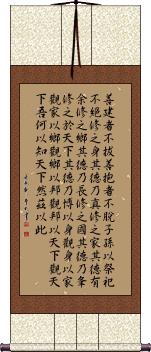
This is the Mawangdui version of Daodejing chapter 54.
By its virtue alone can one generation after another carry on the ancestral sacrifice.
Apply it to yourself, and by its power, you will be freed from dross.
Apply it to your household, and your household shall thereby have abundance.
Apply it to the village, and the village will be made secure.
Apply it to the kingdom, and the kingdom shall thereby be made to flourish.
Apply it to an empire, and the empire shall thereby be extended.
Therefore just as through oneself, one may contemplate Oneself;
So through the household one may contemplate the Household;
And through the village, one may contemplate the Village;
And through the kingdom, one may contemplate the Kingdom;
And through the empire, one may contemplate the Empire.
How do I know that the empire is so? By this.
What is firmly rooted cannot be pulled out;
What is tightly held in the arms will not slip loose;
Through this, the offering of sacrifice by descendants will never come to an end.
Cultivate it in your person, and its virtue will be genuine;
Cultivate it in the family, and its virtue will be more than sufficient;
Cultivate it in the hamlet, and its virtue will endure;
Cultivate it in the state, and its virtue will abound;
Cultivate it in the empire, and its virtue will be pervasive.
Hence look at the person through the person;
Look at the family through the family;
Look at the hamlet through the hamlet;
Look at the state through the state;
Look at the empire through the empire.
How do I know that the empire is like that?
By means of this.
The Lord's Prayer / Mathew 6:9-13
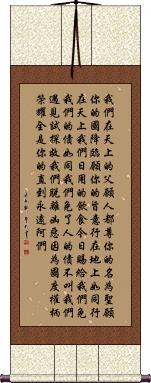
Here is the Lord's Prayer in Chinese from Mathew 6:9-13.
The Chinese text with punctuation is:
Part of 6:9 ...我们在天上的父,愿人都尊你的名为圣。
6:10 愿你的国降临,愿你的旨意行在地上,如同行在天上。
6:11 我们日用的饮食,今日赐给我们。
6:12 免我们的债,如同我们免了人的债。
6:13 不叫我们遇见试探,救我们脱离凶恶,因为国度,权柄,荣耀,全是你的,直到永远,阿们。
Note that punctuation is not included in traditional Chinese calligraphy artwork.
From KJV, this is:
Part of 6:9 ...Our Father which art in heaven, Hallowed be thy name.
6:10 Thy kingdom come. Thy will be done in earth, as it is in heaven.
6:11 Give us this day our daily bread.
6:12 And forgive us our debts, as we forgive our debtors.
6:13 And lead us not into temptation, but deliver us from evil: For thine is the kingdom, and the power, and the glory, forever. Amen.
Return to Dwell in Gardens and Fields Poem

This is Tao Yuanming's poem, “Returning to Dwell in Gardens and Fields.”
少無適俗韻 性本愛丘山。
誤落塵網中 一去三十年。
羈鳥戀舊林 池魚思故淵。
開荒南野際 抱拙歸園田。
方宅十餘畝 草屋八九間。
榆柳蔭後簷 桃李羅堂前。
暖暖遠人村 依依墟裡煙。
狗吠深巷中 雞鳴桑樹顛。
戶庭無塵雜 虛室有餘閒。
久在樊籠裡 復得返自然。
The Lord's Prayer / Luke 11:2-4
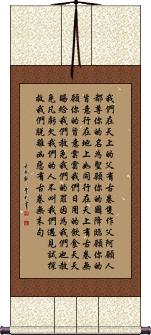
Here is the Lord's Prayer in Chinese from Luke 11:2-4.
The Chinese text with punctuation is:
Part of 11:2 ...我们在天上的父,有古卷只作父阿愿人都尊你的名为圣。愿你的国降临。愿你的旨意行在地上,如同行在天上。有古卷无愿你的旨意云云。
11:3 我们日用的饮食,天天赐给我们。
11:4 赦免我们的罪,因为我们也赦免凡亏欠我们的人。不叫我们遇见试探。救我们脱离凶恶。有古卷无末句。
Note that punctuation is not included in traditional Chinese calligraphy artwork.
From KJV, this is:
Part of 11:2 ...Our Father which art in heaven, Hallowed be thy name. Thy kingdom come. Thy will be done, as in heaven, so in earth.
11:3 Give us day by day our daily bread.
11:4 And forgive us our sins; for we also forgive everyone that is indebted to us. And lead us not into temptation, but deliver us from evil.
This in-stock artwork might be what you are looking for, and ships right away...


Not the results for Tian that you were looking for?
Below are some entries from our dictionary that may match your Tian search:
| Characters If shown, 2nd row is Simp. Chinese |
Pronunciation Romanization |
Simple Dictionary Definition |
天 see styles |
tiān tian1 t`ien tien hiroshi ひろし |
More info & calligraphy: Heaven(1) sky; (2) {Christn} heaven; (3) God; (4) {Buddh} svarga (heaven-like realm visited as a stage of death and rebirth); (5) {Buddh} deva (divine being of Buddhism); (6) top (of a book); (7) sole (of a Japanese sandal); (8) beginning; start; (9) (abbreviation) (See 天ぷら) tempura; (10) (abbreviation) (obsolete) (See 天竺・1) India; (given name) Hiroshi Heaven; the sky; a day; cf. dyo, dyaus also as 提婆 a deva, or divine being, deity; and as 素羅 sura, shining, bright. |
田 see styles |
tián tian2 t`ien tien yanakida やなきだ |
More info & calligraphy: Tianrice field; (surname) Yanakida A field, fields; a place, or state, for the cultivation of meritorious or other deeds; cf. 福田. |
吉田 see styles |
jí tián ji2 tian2 chi t`ien chi tien raide らいで |
More info & calligraphy: Yoshida(surname) Raide |
四田 see styles |
sì tián si4 tian2 ssu t`ien ssu tien yotsuda よつだ |
More info & calligraphy: Yotsuda / ShidaThe four fields for cultivating happiness — animals; the poor; parents, etc.; the religion. |
天上 see styles |
tiān shàng tian1 shang4 t`ien shang tien shang tenjou / tenjo てんじょう |
More info & calligraphy: Heavenly / Celestial(1) the heavens; the skies; (2) {Buddh} (See 天路・あまじ・2) heaven; deva realm; (n,vs,vi) (3) ascending to heaven; death; (given name) Tenjō The heavens above, i. e. the six devalokas 六欲天 of the region of desire and the rupalokas andarupalokas, i. e. 色 and 無色界. |
天使 see styles |
tiān shǐ tian1 shi3 t`ien shih tien shih yukari ゆかり |
More info & calligraphy: Angel / Messenger of Heaven(noun - becomes adjective with の) angel; (female given name) Yukari Divine messengers, especially those of Yama; also his 三天使 three messengers, or lictors— old age, sickness, death; and his 五天使 or 五大使, i. e. the last three together with rebirth and prisons or punishments on earth. |
天國 天国 see styles |
tiān guó tian1 guo2 t`ien kuo tien kuo amakuni あまくに |
More info & calligraphy: Kingdom of Heaven(surname) Amakuni |
天地 see styles |
tiān dì tian1 di4 t`ien ti tien ti amachi あまち |
More info & calligraphy: Heaven and Earth(1) heaven and earth; the universe; the world; nature; (2) (てんち only) land; world; realm; sphere; (3) (てんち only) top and bottom; (4) (あめつち only) gods of heaven and earth; (surname) Amachi heaven and earth |
天意 see styles |
tiān yì tian1 yi4 t`ien i tien i teni てんい |
More info & calligraphy: Destiny Determined by Heavendivine will; providence |
天狗 see styles |
tiān gǒu tian1 gou3 t`ien kou tien kou tengu てんぐ |
More info & calligraphy: Tenguulkā, 憂流迦the 'heavenly dog' i. e. a meteor. Also 'a star in Argo' according to Williams. |
天皇 see styles |
tiān huáng tian1 huang2 t`ien huang tien huang tennou / tenno てんのう |
More info & calligraphy: Emperor of JapanEmperor of Japan; (place-name) Tennou Deva-king; the Tang monk 道悟 Daowu of the 天皇 Tianhuang monastery at 荊州 Jingzhou. |
天空 see styles |
tiān kōng tian1 kong1 t`ien k`ung tien kung hirari ひらり |
More info & calligraphy: Sky / Air / Ether / Spacesky; air; ether; firmament; the heavens; (female given name) Hirari |
天鵝 天鹅 see styles |
tiān é tian1 e2 t`ien o tien o |
More info & calligraphy: Swan |
天龍 天龙 see styles |
tiān lóng tian1 long2 t`ien lung tien lung tenryuu / tenryu てんりゅう |
More info & calligraphy: Celestial Dragon / Tian LongDevas, including Brahma, Indra, and the devas, together with the nāgas. |
山田 see styles |
shān tián shan1 tian2 shan t`ien shan tien yomada よまだ |
More info & calligraphy: Yamada(surname) Yomada |
本田 see styles |
běn tián ben3 tian2 pen t`ien pen tien motoda もとだ |
More info & calligraphy: Hondarice paddy; (surname) Motoda |
柴田 see styles |
chái tián chai2 tian2 ch`ai t`ien chai tien tsubata つばた |
More info & calligraphy: Shibata / Shida(surname) Tsubata |
樂天 乐天 see styles |
lè tiān le4 tian1 le t`ien le tien rakuten |
More info & calligraphy: Lottedeva musicians, see above. |
武田 see styles |
wǔ tián wu3 tian2 wu t`ien wu tien muta むた |
More info & calligraphy: Takeda(surname) Muta |
石田 see styles |
shí tián shi2 tian2 shih t`ien shih tien sekiden せきでん |
More info & calligraphy: Ishida(given name) Sekiden |
竹田 see styles |
zhú tián zhu2 tian2 chu t`ien chu tien chikuden ちくでん |
More info & calligraphy: Takeda(personal name) Chikuden |
聖天 圣天 see styles |
shèng tiān sheng4 tian1 sheng t`ien sheng tien seiten / seten せいてん |
More info & calligraphy: GaneshĀryadeva |
豐田 丰田 see styles |
fēng tián feng1 tian2 feng t`ien feng tien toyoda とよだ |
More info & calligraphy: Toyota(surname) Toyoda |
青天 see styles |
qīng tiān qing1 tian1 ch`ing t`ien ching tien harutaka はるたか |
More info & calligraphy: Clear Blue Skyblue sky; (personal name) Harutaka |
天力士 see styles |
tiān lì shì tian1 li4 shi4 t`ien li shih tien li shih ten rikishi |
More info & calligraphy: Warrior of Heaven |
天王星 see styles |
tiān wáng xīng tian1 wang2 xing1 t`ien wang hsing tien wang hsing tennousei(p); tenousei / tennose(p); tenose てんのうせい(P); てんおうせい |
More info & calligraphy: Uranus{astron} Uranus (planet) |
天秤座 see styles |
tiān chèng zuò tian1 cheng4 zuo4 t`ien ch`eng tso tien cheng tso tenbinza てんびんざ |
More info & calligraphy: Libra Zodiac Symbol / SignLibra (constellation); the Scales |
天蠍座 天蝎座 see styles |
tiān xiē zuò tian1 xie1 zuo4 t`ien hsieh tso tien hsieh tso |
More info & calligraphy: Scorpio Zodiac Symbol / Sign |
田納西 田纳西 see styles |
tián nà xī tian2 na4 xi1 t`ien na hsi tien na hsi |
More info & calligraphy: Tennessee |
佃 see styles |
tián tian2 t`ien tien den でん |
to cultivate; to hunt cultivated rice field; (surname) Den |
Click here for more Tian results from our dictionary
The following table may be helpful for those studying Chinese or Japanese:
| Title | Characters | Romaji (Romanized Japanese) | Various forms of Romanized Chinese | |
| Tian | 田 | den | tián / tian2 / tian | t`ien / tien |
| Celestial Dragon Tian Long | 天龍 天龙 | tenryuu / tenryu | tiān lóng tian1 long2 tian long tianlong | t`ien lung tienlung tien lung |
| Heaven | 天 | ten | tiān / tian1 / tian | t`ien / tien |
| Arita | 有田 | arita / arida / uda | yǒu tián you3 tian2 you tian youtian | yu |
| Gay Pride | 同性戀自豪感 同性恋自豪感 | tóng xìng liàn zì háo gǎn tong2 xing4 lian4 zi4 hao2 gan3 tong xing lian zi hao gan tongxinglianzihaogan | t`ung hsing lien tzu hao kan tunghsinglientzuhaokan tung hsing lien tzu hao kan |
|
| Master Skilled Worker | 師傅 师傅 | shī fu / shi1 fu / shi fu / shifu | shih fu / shihfu | |
| Daodejing Tao Te Ching - Chapter 81 | 信言不美美言不信知者不博博者不知善者不多多者不善聖人無積既以為人己癒有既以予人矣已癒多故天之道利而不害聖人之道為而不爭 信言不美美言不信知者不博博者不知善者不多多者不善圣人无积既以为人己愈有既以予人矣已愈多故天之道利而不害圣人之道为而不争 | |||
| Tien | 田 | den | tián / tian2 / tian | t`ien / tien |
| Angel Messenger of Heaven | 天使 | ten shi / tenshi | tiān shǐ / tian1 shi3 / tian shi / tianshi | t`ien shih / tienshih / tien shih |
| Clear Blue Sky | 青天 | seiten | qīng tiān qing1 tian1 qing tian qingtian | ch`ing t`ien chingtien ching tien |
| Divine Grace | 天佑 | ten yuu / tenyuu / ten yu | tiān yòu / tian1 you4 / tian you / tianyou | t`ien yu / tienyu / tien yu |
| Emperor of Japan | 天皇 | ten nou / tennou / ten no | tiān huáng tian1 huang2 tian huang tianhuang | t`ien huang tienhuang tien huang |
| Etienne | 伊天 | yī tiān / yi1 tian1 / yi tian / yitian | i t`ien / itien / i tien | |
| Destiny Determined by Heaven | 天意 | teni | tiān yì / tian1 yi4 / tian yi / tianyi | t`ien i / tieni / tien i |
| Ganesh | 聖天 圣天 | shouten / shoten | shèng tiān sheng4 tian1 sheng tian shengtian | sheng t`ien shengtien sheng tien |
| Heaven and Earth | 天地 | tenchi | tiān dì / tian1 di4 / tian di / tiandi | t`ien ti / tienti / tien ti |
| Grace from Heaven Grace from God | 天恩 | tiān ēn / tian1 en1 / tian en / tianen | t`ien en / tienen / tien en | |
| Heaven Sent | 天来 | tenrai / takara / sora | tiān lái / tian1 lai2 / tian lai / tianlai | t`ien lai / tienlai / tien lai |
| Heavenly Celestial | 天上 | tenjou / tenjo | tiān shàng tian1 shang4 tian shang tianshang | t`ien shang tienshang tien shang |
| Swan | 天鵝 天鹅 | tiān é / tian1 e2 / tian e / tiane | t`ien o / tieno / tien o | |
| Honda | 本田 | honden | běn tián / ben3 tian2 / ben tian / bentian | pen t`ien / pentien / pen tien |
| Kingdom of Heaven | 天國 天国 | tengoku | tiān guó / tian1 guo2 / tian guo / tianguo | t`ien kuo / tienkuo / tien kuo |
| Kingdom of Heaven | 天國 天国 | tengoku | tiān guó / tian1 guo2 / tian guo / tianguo | t`ien kuo / tienkuo / tien kuo |
| Lotte | 樂天 乐天 | lè tiān / le4 tian1 / le tian / letian | le t`ien / letien / le tien | |
| Shibata Shida | 柴田 | shibata / shida | chái tián chai2 tian2 chai tian chaitian | ch`ai t`ien chaitien chai tien |
| Sky Air Ether Space | 天空 | ten kuu / tenkuu / ten ku | tiān kōng tian1 kong1 tian kong tiankong | t`ien k`ung tienkung tien kung |
| Takeda | 武田 | takeda | wǔ tián / wu3 tian2 / wu tian / wutian | wu t`ien / wutien / wu tien |
| Takeda | 竹田 | takeda | zhú tián / zhu2 tian2 / zhu tian / zhutian | chu t`ien / chutien / chu tien |
| Tengu | 天狗 | ten gu / tengu | tiān gǒu / tian1 gou3 / tian gou / tiangou | t`ien kou / tienkou / tien kou |
| Tenra | 天羅 天罗 | tenra | tiān luō / tian1 luo1 / tian luo / tianluo | t`ien lo / tienlo / tien lo |
| Toyota | 豐田 丰田 | toyoda | fēng tián feng1 tian2 feng tian fengtian | feng t`ien fengtien feng tien |
| Yotsuda Shida | 四田 | yotsuda / shida | sì tián / si4 tian2 / si tian / sitian | ssu t`ien / ssutien / ssu tien |
| Archangel Arch Angel | 大天使 | dai ten shi daitenshi | dà tiān shǐ da4 tian1 shi3 da tian shi datianshi | ta t`ien shih tatienshih ta tien shih |
| Benzaiten | 弁財天 弁财天 | ben zai ten benzaiten | biàn cái tiān bian4 cai2 tian1 bian cai tian biancaitian | pien ts`ai t`ien pientsaitien pien tsai tien |
| Cookie Monster | 甜餅怪 甜饼怪 | tián bǐng guài tian2 bing3 guai4 tian bing guai tianbingguai | t`ien ping kuai tienpingkuai tien ping kuai |
|
| Dark Angel | 暗天使 | àn tiān shǐ an4 tian1 shi3 an tian shi antianshi | an t`ien shih antienshih an tien shih |
|
| Warrior of Heaven | 天力士 | ten riki shi tenrikishi | tiān lì shì tian1 li4 shi4 tian li shi tianlishi | t`ien li shih tienlishih tien li shih |
| Tennessee | 田納西 田纳西 | tián nà xī tian2 na4 xi1 tian na xi tiannaxi | t`ien na hsi tiennahsi tien na hsi |
|
| Uranus | 天王星 | tennousei / tennosei | tiān wáng xīng tian1 wang2 xing1 tian wang xing tianwangxing | t`ien wang hsing tienwanghsing tien wang hsing |
| Libra Zodiac Symbol Sign | 天秤座 | tenbin-za | tiān chèng zuò tian1 cheng4 zuo4 tian cheng zuo tianchengzuo | t`ien ch`eng tso tienchengtso tien cheng tso |
| Scorpio Zodiac Symbol Sign | 天蠍座 天蝎座 | tiān xiē zuò tian1 xie1 zuo4 tian xie zuo tianxiezuo | t`ien hsieh tso tienhsiehtso tien hsieh tso |
|
| Chun Ku Do | 天國道 天国道 | ten goku dou tengokudou ten goku do | tiān guó dào tian1 guo2 dao4 tian guo dao tianguodao | t`ien kuo tao tienkuotao tien kuo tao |
| Optimism Happy With Your Fate | 樂天 / 楽天 乐天 | raku ten / rakuten | lè tiān / le4 tian1 / le tian / letian | le t`ien / letien / le tien |
| Born To Be Wild | 天生狂野 | tiān shēng kuáng yě tian1 sheng1 kuang2 ye3 tian sheng kuang ye tianshengkuangye | t`ien sheng k`uang yeh tienshengkuangyeh tien sheng kuang yeh |
|
| Catholic | 天主教徒 | tiān zhǔ jiào tú tian1 zhu3 jiao4 tu2 tian zhu jiao tu tianzhujiaotu | t`ien chu chiao t`u tienchuchiaotu tien chu chiao tu |
|
| The Catholic Church | 天主教會 天主教会 | tiān zhǔ jiào huì tian1 zhu3 jiao4 hui4 tian zhu jiao hui tianzhujiaohui | t`ien chu chiao hui tienchuchiaohui tien chu chiao hui |
|
| Dark Angel | 黑暗天使 | hēi àn tiān shǐ hei1 an4 tian1 shi3 hei an tian shi heiantianshi | hei an t`ien shih heiantienshih hei an tien shih |
|
| Family Love Domestic Bliss | 天倫之樂 天伦之乐 | tiān lún zhī lè tian1 lun2 zhi1 le4 tian lun zhi le tianlunzhile | t`ien lun chih le tienlunchihle tien lun chih le |
|
| Fallen Angel | 墮落天使 堕落天使 | duò luò tiān shǐ duo4 luo4 tian1 shi3 duo luo tian shi duoluotianshi | to lo t`ien shih tolotienshih to lo tien shih |
|
| Guardian Angel | 守護天使 守护天使 | shu go ten shi shugotenshi | shǒu hù tiān shǐ shou3 hu4 tian1 shi3 shou hu tian shi shouhutianshi | shou hu t`ien shih shouhutienshih shou hu tien shih |
| Heaven Blesses the Diligent | 天道酬勤 | tiān dào chóu qín tian1 dao4 chou2 qin2 tian dao chou qin tiandaochouqin | t`ien tao ch`ou ch`in tientaochouchin tien tao chou chin |
|
| Live For The Day | 活在今天 | huó zài jīn tiān huo2 zai4 jin1 tian1 huo zai jin tian huozaijintian | huo tsai chin t`ien huotsaichintien huo tsai chin tien |
|
| Marici Marishiten | 摩利支天 | ma ri shi ten marishiten | mó lì zhī tiān mo2 li4 zhi1 tian1 mo li zhi tian molizhitian | mo li chih t`ien molichihtien mo li chih tien |
| Oneness of Heaven and Humanity | 天人合一 | tiān rén hé yī tian1 ren2 he2 yi1 tian ren he yi tianrenheyi | t`ien jen ho i tienjenhoi tien jen ho i |
|
| One Family Under Heaven | 天下一家 | tenka ikka / tenkaikka / tenka ika | tiān xià yī jiā tian1 xia4 yi1 jia1 tian xia yi jia tianxiayijia | t`ien hsia i chia tienhsiaichia tien hsia i chia |
| Soul Mates | 天生一對 天生一对 | tiān shēng yí duì tian1 sheng1 yi2 dui4 tian sheng yi dui tianshengyidui | t`ien sheng i tui tienshengitui tien sheng i tui |
|
| Tenshin Dojo | 天心道場 | ten shin dou jou tenshindoujou ten shin do jo | tiān xīn dào chǎng tian1 xin1 dao4 chang3 tian xin dao chang tianxindaochang | t`ien hsin tao ch`ang tienhsintaochang tien hsin tao chang |
| Valentino | 華倫天奴 华伦天奴 | huá lún tiān nú hua2 lun2 tian1 nu2 hua lun tian nu hualuntiannu | hua lun t`ien nu hualuntiennu hua lun tien nu |
|
| Voice of Heaven Voices from Heaven | 天堂之音 | tiān táng zhī yīn tian1 tang2 zhi1 yin1 tian tang zhi yin tiantangzhiyin | t`ien t`ang chih yin tientangchihyin tien tang chih yin |
|
| Warrior of the Heavenly Realm | 天界力士 | ten kai riki shi tenkairikishi | tiān jiè lì shì tian1 jie4 li4 shi4 tian jie li shi tianjielishi | t`ien chieh li shih tienchiehlishih tien chieh li shih |
| The Whole World at Peace | 天下太平 | tenkataihei | tiān xià tài píng tian1 xia4 tai4 ping2 tian xia tai ping tianxiataiping | t`ien hsia t`ai p`ing tienhsiataiping tien hsia tai ping |
| Art of War: 5 Points of Analysis | 道天地將法 道天地将法 | dou ten chi shou hou doutenchishouhou do ten chi sho ho | dào tiān dì jiàng fǎ dao4 tian1 di4 jiang4 fa3 dao tian di jiang fa daotiandijiangfa | tao t`ien ti chiang fa taotientichiangfa tao tien ti chiang fa |
| Sun Goddess | 天照皇大神 | amaterasuoomikami amaterasuomikami | tiān zhào huáng dà shén tian1 zhao4 huang2 da4 shen2 tian zhao huang da shen tianzhaohuangdashen | t`ien chao huang ta shen tienchaohuangtashen tien chao huang ta shen |
| God in the Glorious Center of Heaven | 天之御中主神 | tiān zhī yù zhōng zhǔ shén tian1 zhi1 yu4 zhong1 zhu3 shen2 tian zhi yu zhong zhu shen tianzhiyuzhongzhushen | t`ien chih yü chung chu shen tienchihyüchungchushen tien chih yü chung chu shen |
|
| There is always a way out | 天無絕人之路 天无绝人之路 | tiān wú jué rén zhī lù tian1 wu2 jue2 ren2 zhi1 lu4 tian wu jue ren zhi lu tianwujuerenzhilu | t`ien wu chüeh jen chih lu tienwuchüehjenchihlu tien wu chüeh jen chih lu |
|
| I am the Master of My Destiny | 我命由我不由天 | wǒ mìng yóu wǒ bù yóu tiān wo3 ming4 you2 wo3 bu4 you2 tian1 wo ming you wo bu you tian womingyouwobuyoutian | wo ming yu wo pu yu t`ien womingyuwopuyutien wo ming yu wo pu yu tien |
|
| Heaven Rewards Hard Work | 皇天不負苦心人 皇天不负苦心人 | huáng tiān bù fù kǔ xīn rén huang2 tian1 bu4 fu4 ku3 xin1 ren2 huang tian bu fu ku xin ren huangtianbufukuxinren | huang t`ien pu fu k`u hsin jen huangtienpufukuhsinjen huang tien pu fu ku hsin jen |
|
| Tenshin Buko-Ryu Heiho | 天真武甲流兵法 | ten shin bu kou ryu hei ho tenshinbukouryuheiho ten shin bu ko ryu hei ho | tiān zhēn wǔ jiǎ liú bīng fǎ tian1 zhen1 wu3 jia3 liu2 bing1 fa3 tian zhen wu jia liu bing fa tianzhenwujialiubingfa | t`ien chen wu chia liu ping fa tienchenwuchialiupingfa tien chen wu chia liu ping fa |
| Good Good Study, Day Day Up | 好好學習天天向上 好好学习天天向上 | hǎo hǎo xué xí tiān tiān xiàng shàng hao3 hao3 xue2 xi2 tian1 tian1 xiang4 shang4 hao hao xue xi tian tian xiang shang | hao hao hsüeh hsi t`ien t`ien hsiang shang hao hao hsüeh hsi tien tien hsiang shang |
|
| I love you to the moon and back | 我愛你到地老天荒 我爱你到地老天荒 | wǒ ài nǐ dào dì lǎo tiān huāng wo3 ai4 ni3 dao4 di4 lao3 tian1 huang1 wo ai ni dao di lao tian huang woainidaodilaotianhuang | wo ai ni tao ti lao t`ien huang woainitaotilaotienhuang wo ai ni tao ti lao tien huang |
|
| Fix the roof before the rain; Dig the well before you are thirsty | 補漏趁天晴未渴先掘井 补漏趁天晴未渴先掘井 | bǔ lòu chèn tiān qíng wèi kě xiān jué jǐng bu3 lou4 chen4 tian1 qing2 wei4 ke3 xian1 jue2 jing3 bu lou chen tian qing wei ke xian jue jing | pu lou ch`en t`ien ch`ing wei k`o hsien chüeh ching pu lou chen tien ching wei ko hsien chüeh ching |
|
| One frost doesn't make winter | 一次霜凍不代表整個冬天 一次霜冻不代表整个冬天 | yī cì shuāng dòng bù dài biǎo zhěng gè dōng tiān yi1 ci4 shuang1 dong4 bu4 dai4 biao3 zheng3 ge4 dong1 tian1 yi ci shuang dong bu dai biao zheng ge dong tian | i tz`u shuang tung pu tai piao cheng ko tung t`ien i tzu shuang tung pu tai piao cheng ko tung tien |
|
| Daodejing Tao Te Ching - Excerpt | 一曰慈二曰儉三曰不敢為天下先 一曰慈二曰俭三曰不敢为天下先 | yī yuē cí èr yuē jiǎn sān yuē bù gǎn wéi tiān xià xiān yi1 yue1 ci2 er4 yue1 jian3 san1 yue1 bu4 gan3 wei2 tian1 xia4 xian1 yi yue ci er yue jian san yue bu gan wei tian xia xian | i yüeh tz`u erh yüeh chien san yüeh pu kan wei t`ien hsia hsien i yüeh tzu erh yüeh chien san yüeh pu kan wei tien hsia hsien |
|
| One Who Does Not Do Bad Things, Worries Not of Knocks at His Door | 白天不做虧心事夜半敲門不吃驚 白天不做亏心事夜半敲门不吃惊 | bái tiān bú zuò kuī xīn shì yè bàn qiāo mén bù chī jīng bai2 tian1 bu2 zuo4 kui1 xin1 shi4 ye4 ban4 qiao1 men2 bu4 chi1 jing1 bai tian bu zuo kui xin shi ye ban qiao men bu chi jing | pai t`ien pu tso k`uei hsin shih yeh pan ch`iao men pu ch`ih ching pai tien pu tso kuei hsin shih yeh pan chiao men pu chih ching |
|
| Daodejing Tao Te Ching - Chapter 9 | 持而盈之不如其已揣而梲之不可長保金玉滿堂莫之能守富貴而驕自遺其咎功遂身退天之道 持而盈之不如其已揣而梲之不可长保金玉满堂莫之能守富贵而骄自遗其咎功遂身退天之道 | chí ér yíng zhī bù rú qí yǐ chuǎi ér zhī bù kě cháng bǎo jīn yù mǎn táng mò zhī néng shǒu fù guì ér jiāo zì yí qí jiù gōng suì shēn tuì tiān zhī dào chi2 er2 ying2 zhi1 bu4 ru2 qi2 yi3 chuai3 er2 棁 zhi1 bu4 ke3 chang2 bao3 jin1 yu4 man3 tang2 mo4 zhi1 neng2 shou3 fu4 gui4 er2 jiao1 zi4 yi2 qi2 jiu4 gong1 sui4 shen1 tui4 tian1 zhi1 dao4 chi er ying zhi bu ru qi yi chuai er 棁 zhi bu ke chang bao jin yu man tang mo zhi neng shou fu gui er jiao zi yi qi jiu gong sui shen tui tian zhi dao | ch`ih erh ying chih pu ju ch`i i ch`uai erh chih pu k`o ch`ang pao chin yü man t`ang mo chih neng shou fu kuei erh chiao tzu i ch`i chiu kung sui shen t`ui t`ien chih tao chih erh ying chih pu ju chi i chuai erh chih pu ko chang pao chin yü man tang mo chih neng shou fu kuei erh chiao tzu i chi chiu kung sui shen tui tien chih tao |
|
| Daodejing Tao Te Ching - Chapter 1 | 道可道非常道名可名非常名無名天地之始有名萬物之母故常無欲以觀其妙常有欲以觀其徼此兩者同出而異名同謂之玄玄之又玄衆妙之門 道可道非常道名可名非常名无名天地之始有名万物之母故常无欲以观其妙常有欲以观其徼此两者同出而异名同谓之玄玄之又玄众妙之门 | dào kě dào fēi cháng dào míng kě míng fēi cháng míng wú míng tiān dì zhī shǐ yǒu míng wàn wù zhī mǔ gù cháng wú yù yǐ guān qí miào cháng yǒu yù yǐ guān qí zhēng cǐ liǎng zhě tóng chū ér yì míng tóng wèi zhī xuán xuán zhī yòu xuán zhòng miào zhī mén dao4 ke3 dao4 fei1 chang2 dao4 ming2 ke3 ming2 fei1 chang2 ming2 wu2 ming2 tian1 di4 zhi1 shi3 you3 ming2 wan4 wu4 zhi1 mu3 gu4 chang2 wu2 yu4 yi3 guan1 qi2 miao4 chang2 you3 yu4 yi3 guan1 qi2 jiao3 ci3 liang3 zhe3 tong2 chu1 er2 yi4 ming2 tong2 wei4 zhi1 xuan2 xuan2 zhi1 you4 xuan2 zhong4 miao4 zhi1 men2 dao ke dao fei chang dao ming ke ming fei chang ming wu ming tian di zhi shi you ming wan wu zhi mu gu chang wu yu yi guan qi miao chang you yu yi guan qi jiao ci liang zhe tong chu er yi ming tong wei zhi xuan xuan zhi you xuan zhong miao zhi men | tao k`o tao fei ch`ang tao ming k`o ming fei ch`ang ming wu ming t`ien ti chih shih yu ming wan wu chih mu ku ch`ang wu yü i kuan ch`i miao ch`ang yu yü i kuan ch`i chiao tz`u liang che t`ung ch`u erh i ming t`ung wei chih hsüan hsüan chih yu hsüan chung miao chih men tao ko tao fei chang tao ming ko ming fei chang ming wu ming tien ti chih shih yu ming wan wu chih mu ku chang wu yü i kuan chi miao chang yu yü i kuan chi chiao tzu liang che tung chu erh i ming tung wei chih hsüan hsüan chih yu hsüan chung miao chih men |
|
| Daodejing Tao Te Ching - Chapter 54 | 善建者不拔善抱者不脫子孫以祭祀不絕修之身其德乃真修之家其德有余修之鄉其德乃長修之國其德乃夆修之於天下其德乃博以身觀身以家觀家以鄉觀鄉以邦觀邦以天下觀天下吾何以知天下然茲以此 善建者不拔善抱者不脱子孙以祭祀不绝修之身其德乃真修之家其德有余修之乡其德乃长修之国其德乃夆修之于天下其德乃博以身观身以家观家以乡观乡以邦观邦以天下观天下吾何以知天下然兹以此 | shàn jiàn zhě bù bá shàn bào zhě bù tuō zǐ sūn yǐ jì sì bù jué xiū zhī shēn qí dé nǎi zhēn xiū zhī jiā qí dé yǒu yú xiū zhī xiāng qí dé nǎi zhǎng xiū zhī guó qí dé nǎi féng xiū zhī yú tiān xià qí dé nǎi bó yǐ shēn guān shēn yǐ jiā guān jiā yǐ xiāng guān xiāng yǐ bāng guān bāng yǐ tiān xià guān tiān xià wú hé yǐ zhī tiān xià rán zī yǐ cǐ shan4 jian4 zhe3 bu4 ba2 shan4 bao4 zhe3 bu4 tuo1 zi3 sun1 yi3 ji4 si4 bu4 jue2 xiu1 zhi1 shen1 qi2 de2 nai3 zhen1 xiu1 zhi1 jia1 qi2 de2 you3 yu2 xiu1 zhi1 xiang1 qi2 de2 nai3 zhang3 xiu1 zhi1 guo2 qi2 de2 nai3 feng2 xiu1 zhi1 yu2 tian1 xia4 qi2 de2 nai3 bo2 yi3 shen1 guan1 shen1 yi3 jia1 guan1 jia1 yi3 xiang1 guan1 xiang1 yi3 bang1 guan1 bang1 yi3 tian1 xia4 guan1 tian1 xia4 wu2 he2 yi3 zhi1 tian1 xia4 ran2 zi1 yi3 ci3 shan jian zhe bu ba shan bao zhe bu tuo zi sun yi ji si bu jue xiu zhi shen qi de nai zhen xiu zhi jia qi de you yu xiu zhi xiang qi de nai zhang xiu zhi guo qi de nai feng xiu zhi yu tian xia qi de nai bo yi shen guan shen yi jia guan jia yi xiang guan xiang yi bang guan bang yi tian xia guan tian xia wu he yi zhi tian xia ran zi yi ci | shan chien che pu pa shan pao che pu t`o tzu sun i chi ssu pu chüeh hsiu chih shen ch`i te nai chen hsiu chih chia ch`i te yu yü hsiu chih hsiang ch`i te nai chang hsiu chih kuo ch`i te nai feng hsiu chih yü t`ien hsia ch`i te nai po i shen kuan shen i chia kuan chia i hsiang kuan hsiang i pang kuan pang i t`ien hsia kuan t`ien hsia wu ho i chih t`ien hsia jan tzu i tz`u shan chien che pu pa shan pao che pu to tzu sun i chi ssu pu chüeh hsiu chih shen chi te nai chen hsiu chih chia chi te yu yü hsiu chih hsiang chi te nai chang hsiu chih kuo chi te nai feng hsiu chih yü tien hsia chi te nai po i shen kuan shen i chia kuan chia i hsiang kuan hsiang i pang kuan pang i tien hsia kuan tien hsia wu ho i chih tien hsia jan tzu i tzu |
|
| The Lord's Prayer Mathew 6:9-13 | 我們在天上的父願人都尊你的名為聖願你的國降臨願你的旨意行在地上如同行在天上我們日用的飲食今日賜給我們免我們的債如同我們免了人的債不叫我們遇見試探救我們脫離凶惡因為國度權柄榮耀全是你的直到永遠阿們 我们在天上的父愿人都尊你的名为圣愿你的国降临愿你的旨意行在地上如同行在天上我们日用的饮食今日赐给我们免我们的债如同我们免了人的债不叫我们遇见试探救我们脱离凶恶因为国度权柄荣耀全是你的直到永远阿们 | wǒ men zài tiān shàng de fù yuàn rén dōu zūn nǐ de míng wèi shèng yuàn nǐ de guó jiàng lín yuàn nǐ de zhǐ yì xíng zài dì shàng rú tóng xíng zài tiān shàng wǒ men rì yòng de yǐn shí jīn rì cì gěi wǒ men miǎn wǒ men de zhài rú tóng wǒ men miǎn le rén de zhài bù jiào wǒ men yù jiàn shì tàn jiù wǒ men tuō lí xiōng è yīn wèi guó dù quán bǐng róng yào quán shì nǐ de zhí dào yǒng yuǎn ā men wo3 men zai4 tian1 shang4 de fu4 yuan4 ren2 dou1 zun1 ni3 de ming2 wei4 sheng4 yuan4 ni3 de guo2 jiang4 lin2 yuan4 ni3 de zhi3 yi4 xing2 zai4 di4 shang4 ru2 tong2 xing2 zai4 tian1 shang4 wo3 men ri4 yong4 de yin3 shi2 jin1 ri4 ci4 gei3 wo3 men mian3 wo3 men de zhai4 ru2 tong2 wo3 men mian3 le ren2 de zhai4 bu4 jiao4 wo3 men yu4 jian4 shi4 tan4 jiu4 wo3 men tuo1 li2 xiong1 e4 yin1 wei4 guo2 du4 quan2 bing3 rong2 yao4 quan2 shi4 ni3 de zhi2 dao4 yong3 yuan3 a1 men wo men zai tian shang de fu yuan ren dou zun ni de ming wei sheng yuan ni de guo jiang lin yuan ni de zhi yi xing zai di shang ru tong xing zai tian shang wo men ri yong de yin shi jin ri ci gei wo men mian wo men de zhai ru tong wo men mian le ren de zhai bu jiao wo men yu jian shi tan jiu wo men tuo li xiong e yin wei guo du quan bing rong yao quan shi ni de zhi dao yong yuan a men | wo men tsai t`ien shang te fu yüan jen tou tsun ni te ming wei sheng yüan ni te kuo chiang lin yüan ni te chih i hsing tsai ti shang ju t`ung hsing tsai t`ien shang wo men jih yung te yin shih chin jih tz`u kei wo men mien wo men te chai ju t`ung wo men mien le jen te chai pu chiao wo men yü chien shih t`an chiu wo men t`o li hsiung o yin wei kuo tu ch`üan ping jung yao ch`üan shih ni te chih tao yung yüan a men wo men tsai tien shang te fu yüan jen tou tsun ni te ming wei sheng yüan ni te kuo chiang lin yüan ni te chih i hsing tsai ti shang ju tung hsing tsai tien shang wo men jih yung te yin shih chin jih tzu kei wo men mien wo men te chai ju tung wo men mien le jen te chai pu chiao wo men yü chien shih tan chiu wo men to li hsiung o yin wei kuo tu chüan ping jung yao chüan shih ni te chih tao yung yüan a men |
|
| Return to Dwell in Gardens and Fields Poem | 少無適俗韻性本愛丘山誤落塵網中一去三十年羈鳥戀舊林池魚思故淵開荒南野際抱拙歸園田方宅十余畝草屋八九間榆柳蔭后檐桃李羅堂前暖暖遠人村依依墟里煙狗吠深巷中雞鳴桑樹顛戶庭無塵雜虛室有余閑久在樊籠里復得返自然 少无适俗韵性本爱丘山误落尘网中一去三十年羁鸟恋旧林池鱼思故渊开荒南野际抱拙归园田方宅十余亩草屋八九间榆柳荫后檐桃李罗堂前暖暖远人村依依墟里烟狗吠深巷中鸡鸣桑树颠户庭无尘杂虚室有余闲久在樊笼里复得返自然 | shào wú shì sú yùn xìng běn ài qiū shān wù luò chén wǎng zhōng yī qù sān shí nián jī niǎo liàn jiù lín chí yú sī gù yuān kāi huāng nán yě jì bào zhuō guī yuán tián fāng zhái shí yú mǔ cǎo wū bā jiǔ jiān yú liǔ yīn hòu yán táo lǐ luó táng qián nuǎn nuǎn yuǎn rén cūn yī yī xū lǐ yān gǒu fèi shēn xiàng zhōng jī míng sāng shù diān hù tíng wú chén zá xū shì yǒu yú xián jiǔ zài fán lóng lǐ fù dé fǎn zì rán shao4 wu2 shi4 su2 yun4 xing4 ben3 ai4 qiu1 shan1 wu4 luo4 chen2 wang3 zhong1 yi1 qu4 san1 shi2 nian2 ji1 niao3 lian4 jiu4 lin2 chi2 yu2 si1 gu4 yuan1 kai1 huang1 nan2 ye3 ji4 bao4 zhuo1 gui1 yuan2 tian2 fang1 zhai2 shi2 yu2 mu3 cao3 wu1 ba1 jiu3 jian1 yu2 liu3 yin1 hou4 yan2 tao2 li3 luo2 tang2 qian2 nuan3 nuan3 yuan3 ren2 cun1 yi1 yi1 xu1 li3 yan1 gou3 fei4 shen1 xiang4 zhong1 ji1 ming2 sang1 shu4 dian1 hu4 ting2 wu2 chen2 za2 xu1 shi4 you3 yu2 xian2 jiu3 zai4 fan2 long2 li3 fu4 de2 fan3 zi4 ran2 shao wu shi su yun xing ben ai qiu shan wu luo chen wang zhong yi qu san shi nian ji niao lian jiu lin chi yu si gu yuan kai huang nan ye ji bao zhuo gui yuan tian fang zhai shi yu mu cao wu ba jiu jian yu liu yin hou yan tao li luo tang qian nuan nuan yuan ren cun yi yi xu li yan gou fei shen xiang zhong ji ming sang shu dian hu ting wu chen za xu shi you yu xian jiu zai fan long li fu de fan zi ran | shao wu shih su yün hsing pen ai ch`iu shan wu lo ch`en wang chung i ch`ü san shih nien chi niao lien chiu lin ch`ih yü ssu ku yüan k`ai huang nan yeh chi pao cho kuei yüan t`ien fang chai shih yü mu ts`ao wu pa chiu chien yü liu yin hou yen t`ao li lo t`ang ch`ien nuan nuan yüan jen ts`un i i hsü li yen kou fei shen hsiang chung chi ming sang shu tien hu t`ing wu ch`en tsa hsü shih yu yü hsien chiu tsai fan lung li fu te fan tzu jan shao wu shih su yün hsing pen ai chiu shan wu lo chen wang chung i chü san shih nien chi niao lien chiu lin chih yü ssu ku yüan kai huang nan yeh chi pao cho kuei yüan tien fang chai shih yü mu tsao wu pa chiu chien yü liu yin hou yen tao li lo tang chien nuan nuan yüan jen tsun i i hsü li yen kou fei shen hsiang chung chi ming sang shu tien hu ting wu chen tsa hsü shih yu yü hsien chiu tsai fan lung li fu te fan tzu jan |
|
| The Lord's Prayer Luke 11:2-4 | 我們在天上的父有古卷隻作父阿願人都尊你的名為聖願你的國降臨願你的旨意行在地上如同行在天上有古卷無願你的旨意雲雲我們日用的飲食天天賜給我們赦免我們的罪因為我們也赦免凡虧欠我們的人不叫我們遇見試探救我們脫離凶惡有古卷無末句 我们在天上的父有古卷只作父阿愿人都尊你的名为圣愿你的国降临愿你的旨意行在地上如同行在天上有古卷无愿你的旨意云云我们日用的饮食天天赐给我们赦免我们的罪因为我们也赦免凡亏欠我们的人不叫我们遇见试探救我们脱离凶恶有古卷无末句 | wǒ men zài tiān shàng de fù yǒu gǔ juǎn zhǐ zuò fù ā yuàn rén dōu zūn nǐ de míng wèi shèng yuàn nǐ de guó jiàng lín yuàn nǐ de zhǐ yì xíng zài dì shàng rú tóng xíng zài tiān shàng yǒu gǔ juǎn wú yuàn nǐ de zhǐ yì yún yún wǒ men rì yòng de yǐn shí tiān tiān cì gěi wǒ men shè miǎn wǒ men de zuì yīn wèi wǒ men yě shè miǎn fán kuī qiàn wǒ men de rén bù jiào wǒ men yù jiàn shì tàn jiù wǒ men tuō lí xiōng è yǒu gǔ juǎn wú mò jù wo3 men zai4 tian1 shang4 de fu4 you3 gu3 juan3 zhi3 zuo4 fu4 a1 yuan4 ren2 dou1 zun1 ni3 de ming2 wei4 sheng4 yuan4 ni3 de guo2 jiang4 lin2 yuan4 ni3 de zhi3 yi4 xing2 zai4 di4 shang4 ru2 tong2 xing2 zai4 tian1 shang4 you3 gu3 juan3 wu2 yuan4 ni3 de zhi3 yi4 yun2 yun2 wo3 men ri4 yong4 de yin3 shi2 tian1 tian1 ci4 gei3 wo3 men she4 mian3 wo3 men de zui4 yin1 wei4 wo3 men ye3 she4 mian3 fan2 kui1 qian4 wo3 men de ren2 bu4 jiao4 wo3 men yu4 jian4 shi4 tan4 jiu4 wo3 men tuo1 li2 xiong1 e4 you3 gu3 juan3 wu2 mo4 ju4 wo men zai tian shang de fu you gu juan zhi zuo fu a yuan ren dou zun ni de ming wei sheng yuan ni de guo jiang lin yuan ni de zhi yi xing zai di shang ru tong xing zai tian shang you gu juan wu yuan ni de zhi yi yun yun wo men ri yong de yin shi tian tian ci gei wo men she mian wo men de zui yin wei wo men ye she mian fan kui qian wo men de ren bu jiao wo men yu jian shi tan jiu wo men tuo li xiong e you gu juan wu mo ju | wo men tsai t`ien shang te fu yu ku chüan chih tso fu a yüan jen tou tsun ni te ming wei sheng yüan ni te kuo chiang lin yüan ni te chih i hsing tsai ti shang ju t`ung hsing tsai t`ien shang yu ku chüan wu yüan ni te chih i yün yün wo men jih yung te yin shih t`ien t`ien tz`u kei wo men she mien wo men te tsui yin wei wo men yeh she mien fan k`uei ch`ien wo men te jen pu chiao wo men yü chien shih t`an chiu wo men t`o li hsiung o yu ku chüan wu mo chü wo men tsai tien shang te fu yu ku chüan chih tso fu a yüan jen tou tsun ni te ming wei sheng yüan ni te kuo chiang lin yüan ni te chih i hsing tsai ti shang ju tung hsing tsai tien shang yu ku chüan wu yüan ni te chih i yün yün wo men jih yung te yin shih tien tien tzu kei wo men she mien wo men te tsui yin wei wo men yeh she mien fan kuei chien wo men te jen pu chiao wo men yü chien shih tan chiu wo men to li hsiung o yu ku chüan wu mo chü |
|
| In some entries above you will see that characters have different versions above and below a line. In these cases, the characters above the line are Traditional Chinese, while the ones below are Simplified Chinese. | ||||

Successful Chinese Character and Japanese Kanji calligraphy searches within the last few hours...



