Many custom options


And formats

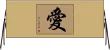

Chinese or Korean Army General in Chinese & Japanese Calligraphy
Compare the meanings and pronunciations of the entries related to Chinese or Korean Army General below. Choose “Customize & Buy” next to your preferred entry to personalize your calligraphy wall scroll.
See also: Selections of just old Korean Hanja Calligraphy
Switched to secondary search mode due to lack of results using primary.
These secondary results may not be very accurate. Try a different but similar meaning word or phrase for better results. Or:
Look up Chinese or Korean Army General in my Japanese Kanji & Chinese Character Dictionary(My dictionary is a different system then the calligraphy search you just tried)
If you want a special phrase, word, title, name, or proverb, feel free to contact me, and I will translate your custom calligraphy idea for you.
3. Work Unselfishly for the Common Good
6. Forgive
9. Past experience is the teacher for the future
10. Art of War
11. Fear God
Patience / Perseverance
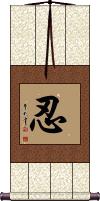
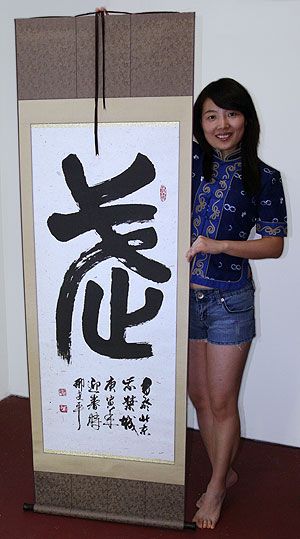
忍 contains the ideas of patience, equanimity, perseverance, forbearance, and endurance. Alone, this single character can be a bit ambiguous or flexible. It can also mean to endure, to bear, to put up with, or to conceal. If you want to simply decide what This means to you within the general meaning but keep it a mystery to others, this is a good choice.
If you want to be more direct, you may want to choose one of our other selections that mean perseverance or patience (you will see this character within those larger words/phrases).
There is a secondary meaning in Japanese since this is the first character of the word ninja. Note that when writing this as Kanji, Japanese will tend to write it in the form shown to the right. If you select our Japanese master calligrapher, please expect this Kanji form (yes, it's just one stroke that is slightly different in location, crossing another stroke in the Japanese Kanji form).
See Also: Perseverance | Patience and Preparation | Tenacious / Tenacity
Nothing / Nothingness
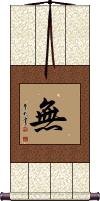
無 is the simple way to express “nothing.”
However, this single character leaves a bit of mystery as to what you might really mean if you hang it as a wall scroll. I'm not saying that's a bad thing; as you can decide what it means to you, and you won't be wrong if you stay within the general context.
More info: 無 is usually used as a suffix or prefix for Chinese and Japanese words (also old Korean). It can be compared to “un-” or “-less” in English. It can also mean “not to have,” no, none, not, “to lack,” or nothingness.
Work Unselfishly for the Common Good
kè jǐ fèng gōng
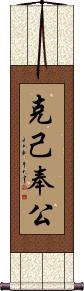
克己奉公 is a Chinese proverb that is often used to express how one should act as a government official. Most of us wish our public officials would hold themselves to higher standards. I wish I could send this scroll, along with the meaning to every member of Congress, and the President (or if I was from the UK, all the members of Parliament, and the PM)
This can also mean: “Place Strict Standards on Oneself in Public Service.”
The story behind this ancient Chinese idiom:
Cai Zun was born in China a little over 2000 years ago. In 24 AD, he joined an uprising led by Liu Xiu, who later became the emperor of the Eastern Han Dynasty.
Later, the new emperor put Cai Zun in charge of the military court. Cai Zun exercised his power in strict accordance with military law, regardless of the offender's rank or background. He even ordered the execution of one of the emperor's close servants after the servant committed a serious crime.
Cai Zun led a simple life but put great demands on himself to do all things honorably. The emperor rewarded him for his honest character and honorable nature by promoting him to the rank of General and granting him the title of Marquis.
Whenever Cai Zun would receive an award, he would give credit to his men and share the reward with them.
Cai Zun was always praised by historians who found many examples of his selfless acts that served the public interest.
Sometime long ago in history, people began to refer to Cai Zun as “ke ji feng gong.”
See Also: Work Unselfishly for the Common Good | Selflessness | Lotus
Strength / Ability
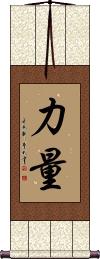
力量 is a general strength term.
It can refer to mental or physical strength (depending on context). 力量 can also be used to describe strength in terms of capability, capacity, ability, and even tact. Some may translate this as power or force.
The Middle Way
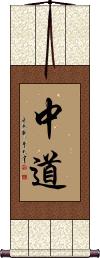
In the most basic translation, 中道 means road through the middle or middle road.
The expanded meaning can be moderation or the golden mean.
But if you are looking for this title, you are probably seeking the Buddhist definition, which is more complex.
中道 is the middle way or middle path of Buddhism. This has various interpretations. In general, it denotes the mean between two extremes and has special reference to the mean between realism and nihilism, or eternal substantial existence and annihilation.
The Buddha teaches that one should not take things to extremes. Don't be extremely evil and engage in debauchery and murder. But do not spend every waking out trying to be a perfect saint. Instead, take the middle path, try to help others, show loving kindness wherever you can, and try not to do harm. If you inadvertently harm another being, make amends if you can, and move on. Realize you are not perfect, but in time, a path of moderation lead toward proper living and enlightenment.
Forgive
yuán liàng
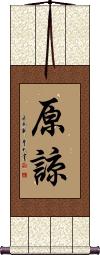
This two-character word means “forgive” in Chinese.
It can also be defined as “to pardon” or “to excuse.” 原諒 is a kind of general forgiveness.
Goodness / Good Deed
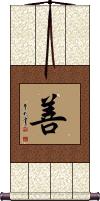
善 means goodness, virtue, good deed, charitable, benevolent, well-disposed, nice, pleasant, kind, or simply, “good.”
善 is the kind of good that applies to someone's good character, or a good person in general.
Referring to someone with This means that they have a well-aimed moral compass, and are charitable, giving, wise, and honest. this is a blanket statement for every good trait a human can have or all the things that make someone good.
In another context, it can mean to improve or perfect something or refer to someone who is good at something.
Heaven and Earth
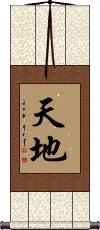
天地 is “Heaven and Earth” in Chinese, Japanese Kanji, and old Korean Hanja.
This title is used in many different contexts. It can be a general term but is also used by Buddhists and in other religions.
This can also be used to refer to all of nature, the universe, the top and bottom, the realm of life, or the sphere of existence.
Past experience is the teacher for the future
Past events not forgotten serve as teachers for later events.
qián shì bú wàng hòu shí zhī shī
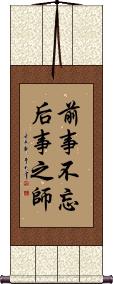
The most literal translation to English of this ancient 前事不忘后事之师 Chinese proverb is:
“Past events not forgotten serve as teachers for later events.”
However, it's been translated several ways:
Don't forget past events, they can guide you in the future.
Benefit from past experience.
Past experience, if not forgotten, is a guide for the future.
Past calamity is my teacher.
A good memory for the past is a teacher for the future.
The remembrance of the past is the teacher of the future.
If one remembers the lessons of the past; They will serve as a guide to avoid mistakes in the future.
The origin:
This proverb comes from the 5th century B.C., just before the Warring States Period in the territory now known as China.
The head of the State of Jin, Zhi Bo, seized power in a coup. He did this with help from the armies of the State of Han and Wei. Instead of being grateful for the help from Han and Wei, he treacherously took the land of Han and Wei. Never satisfied, Zhi Bo employed the armies of Han and Wei to attack and seize the State of Zhao.
The king of Zhao took advice from his minister Zhang Mengtan and secretly contacted the Han and Wei armies to reverse their plans and attack the army of Zhi Bo instead. The plan was successful, and the State of Zhao was not only saved but was set to become a powerful kingdom in the region.
Zhang Mengtan immediately submitted his resignation to a confused king of Zhao. When asked why, Zhang Mengtan said, “I've done my duty to save my kingdom, but looking back at past experience, I know sovereign kings are never satisfied with the power or land at hand. They will join others and fight for more power and more land. I must learn from past experiences, as those experiences are the teachers of future events.”
The king could not dispute the logic in that statement and accepted Zhang Mengtan's resignation.
For generations, the State of Zhao continued to fight for power and land until finally defeated and decimated by the State of Qin (which led to the birth of the Qin Dynasty in 221 B.C.).
Art of War
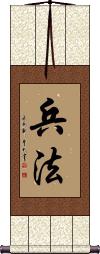
兵法 means “Art of War.”
It is also part of the title of a famous book of tactics by Sun Tzu. 兵法 could also be translated as “military strategy and tactics,” “military skills” or “army procedures.” If you are a military tactician, this is the wall scroll for you.
See Also: Military Veteran / Retired Soldier
Fear God
jìng wèi shàng dì
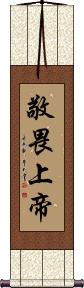
敬畏上帝 is probably the best way to translate the Christian English phrase “Fear God” into Chinese.
The first two characters mean to revere, be in awe of, or a general term of reverence. It can mean fear, but only in the context of respect or fear of authority.
yǎng bīng qiān rì, yàng bīng yì shí
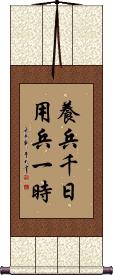
Nothing could be more true. When I was in the Marine Corps, we trained for years for combat that often lasts only hours.
養兵千日用兵一時 is a Chinese proverb that, also reminds me of a common phrase used in the military to describe combat: “Weeks of total boredom, punctuated with five minutes of sheer terror.”
This may have some roots in Sun Tzu's The Art of War. Though I cannot find this passage in his writings.
On the subject of the Art of War, if you have a favorite passage, we can create a custom calligraphy scroll with that phrase.
Value of Warrior Generals
bīng zài jīng ér bú zài duō jiàng zài móu ér bú zài yǒng
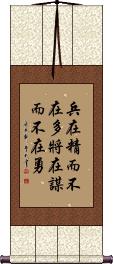
兵在精而不在多將在謀而不在勇 is a proverb that informs how it is better to have warriors of quality, rather than just a large quantity of warriors in your army/force.
This literally means: [Just as] warriors [are valued for their] quality and not [just] for quantity, [so] generals [are valued] for their tactics, not [just] for [their] bravery.
See Also: Zuihitsu
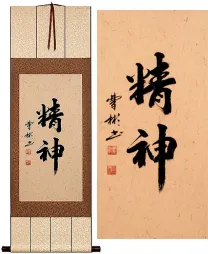
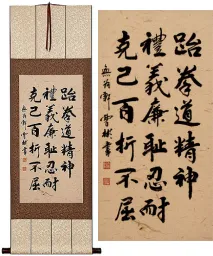
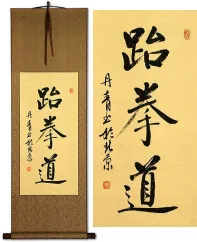
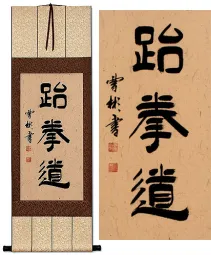
This in-stock artwork might be what you are looking for, and ships right away...


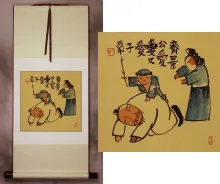
$39.88

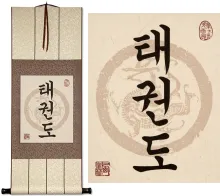


The following table may be helpful for those studying Chinese or Japanese:
| Title | Characters | Romaji (Romanized Japanese) | Various forms of Romanized Chinese | |
| Patience Perseverance | 忍 | nin | rěn / ren3 / ren | jen |
| Nothing Nothingness | 無 无 | mu | wú / wu2 / wu | |
| Work Unselfishly for the Common Good | 克己奉公 | kè jǐ fèng gōng ke4 ji3 feng4 gong1 ke ji feng gong kejifenggong | k`o chi feng kung kochifengkung ko chi feng kung |
|
| Strength Ability | 力量 | riki ryou / rikiryou / riki ryo | lì liàng / li4 liang4 / li liang / liliang | |
| The Middle Way | 中道 | chuu dou / chuudou / chu do | zhōng dào zhong1 dao4 zhong dao zhongdao | chung tao chungtao |
| Forgive | 原諒 原谅 | yuán liàng yuan2 liang4 yuan liang yuanliang | yüan liang yüanliang |
|
| Goodness Good Deed | 善 | zen | shàn / shan4 / shan | |
| Heaven and Earth | 天地 | tenchi | tiān dì / tian1 di4 / tian di / tiandi | t`ien ti / tienti / tien ti |
| Past experience is the teacher for the future | 前事不忘后事之師 前事不忘后事之师 | qián shì bú wàng hòu shí zhī shī qian2 shi4 bu2 wang4 hou4 shi2 zhi1 shi1 qian shi bu wang hou shi zhi shi | ch`ien shih pu wang hou shih chih shih chien shih pu wang hou shih chih shih |
|
| Art of War | 兵法 | hyou hou / hyouhou / hyo ho | bīng fǎ / bing1 fa3 / bing fa / bingfa | ping fa / pingfa |
| Fear God | 敬畏上帝 | jìng wèi shàng dì jing4 wei4 shang4 di4 jing wei shang di jingweishangdi | ching wei shang ti chingweishangti |
|
| Maintain An Army For 1000 Days, Use It For An Hour | 養兵千日用兵一時 养兵千日用兵一时 | yǎng bīng qiān rì, yàng bīng yì shí yang3 bing1 qian1 ri4 yang4 bing1 yi4 shi2 yang bing qian ri yang bing yi shi | yang ping ch`ien jih yang ping i shih yang ping chien jih yang ping i shih |
|
| Value of Warrior Generals | 兵在精而不在多將在謀而不在勇 兵在精而不在多将在谋而不在勇 | bīng zài jīng ér bú zài duō jiàng zài móu ér bú zài yǒng bing1 zai4 jing1 er2 bu2 zai4 duo1 jiang4 zai4 mou2 er2 bu2 zai4 yong3 bing zai jing er bu zai duo jiang zai mou er bu zai yong | ping tsai ching erh pu tsai to chiang tsai mou erh pu tsai yung | |
| In some entries above you will see that characters have different versions above and below a line. In these cases, the characters above the line are Traditional Chinese, while the ones below are Simplified Chinese. | ||||

Successful Chinese Character and Japanese Kanji calligraphy searches within the last few hours...
1 Corinthians 13:4-8AbaddoAbataAbbieAbdalrahmanAdahAdellAhmedAhriAidanAikaAiki-KenAikidoAileenAjayAkashAkiraAlfieAlizaAlonzoAlyciaAmberAmbreAminaAmmyAmnaAmonAmourAnabellaAnalissaAnarchyAndreasAndreeaAngelieAngiAngolaAniketAnilaAnkitaAnnabelleAnneAnnieAnniemaeAnukiAquariusArabaArabellaArabellahAraiArchieArdiAresAriadnaAriadneArinaArleneArletteArlyArniArnoldAronArraArubaAryanAshikAsiyaAstridAtlasAudraAureliueAustriaAvivaAyaanAzkaAznizaAzueloBadenBalloniBarabaraBarraganBauerBe Like WaterBeatriceBeautiful Woman ProverbBebaBellflowerBenevolenceBeninBest FriendsBettinaBharathiBibleBirdBjornBlack BearBlacksmithBodhidharmaBosatsuBosniaBradleyBrahmavihara - the Four ImmeasurablesBraxtonBreannaBreath in Breath OutBright and Promising FutureBrisbaneBryanBryleeBubuBuddhaBudoByakuranCadacioCallanCambodiaCamilaCamillaCanadaCantonCarinCarleeCarmelaCarmelitaCasperCasseyCassiaCelesteChabanaChaconChantelleCharacter and Self-ControlCharisseCharmerCheechCherelChesterChito-RyuChocolateChoice Choose SelectChoongChoujiaoChowaChristmasChristophChristyChumoCindyClaudiaCocoCodyColombiaConfuciusConnectConscienceCorinthians 13:4Courage and HonestyCourtneyannCraneCyprusCyrinDanaDana: Almsgiving and GenerosityDaniDaniellaDanielleDanteDaodejing Chapter 9DariusDarwinDatsuzakuDavidDeepakDelilahDellaDeniDeniseDenmarkDenzelDeutscheDietDisciplineDiscipline and DeterminationDistantDixonDojoDomenicoDominickDont Show Teeth if You Cant BiteDoodDouble LoveEagle ClawEddieEdithEdouardEduardoEgyptEliasElizaEllaEllie