Many custom options


And formats

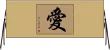

Samurai in Chinese & Japanese Calligraphy
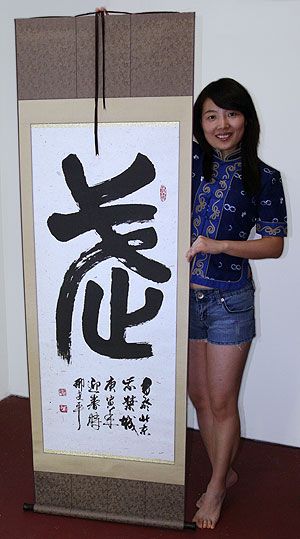
Compare the meanings and pronunciations of the entries related to Samurai below. Choose “Customize & Buy” next to your preferred entry to personalize your calligraphy wall scroll.
See also: Bushido - Code of the Samurai Warrior
1. Samurai
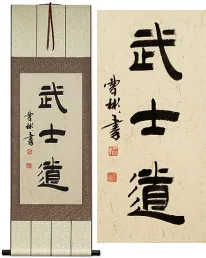
2. Bushido / The Way of the Samurai
3. Samurai Kata
Samurai
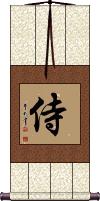
In Japanese, 侍 represents the warriors that attempted to hold peace when there was no Emperor in Japan.
Be cautious though, as it is an old way to express “servant” or “waiter” in Chinese and Korean. Of course, if you are a samurai, you are a servant to your Shogun-ate, Lord, or the people (which is the root meaning).
See Also: Warrior
Bushido / The Way of the Samurai
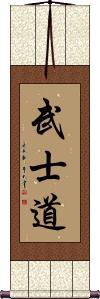
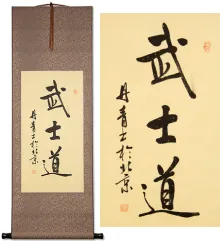
武士道 is the title for “The Code of the Samurai.”
Sometimes called “The Seven Virtues of the Samurai,” “The Bushido Code,” or “The Samurai Code of Chivalry.”
This would be read in Chinese characters, Japanese Kanji, and old Korean Hanja as “The Way of the Warrior,” “The Warrior's Way,” or “The Warrior's Code.”
It's a set of virtues that the Samurai of Japan and ancient warriors of China and Korea had to live and die by. However, while known throughout Asia, this title is mostly used in Japan and thought of as being of Japanese origin.
The seven commonly-accepted tenets or virtues of Bushido are Rectitude 義, Courage 勇, Benevolence 仁, Respect 礼(禮), Honour 名誉, Honesty 誠, and Loyalty 忠実. These tenets were part of oral history for generations, thus, you will see variations in the list of Bushido tenets depending on who you talk to.
See our page with just Code of the Samurai / Bushido here
See Also: Warrior
Samurai Kata
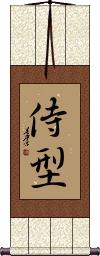
This is Samurai Kata in Japanese Kanji.
Life Of A Samurai

The 12th century phrase, 一所懸命 (Issho Kenmei) is often referred to as “Life Of A Samurai.”
Breaking it down:
一 = one
所 = place
懸 = devote
命 = life
一所懸命 literally means “to stake your life on one place.” Today, Japanese people use it to mean giving your full effort to something.
Other translations of 一所懸命 include: Very hard, with utmost effort, as hard as one can, with all one's might, for dear life, eagerly, and/or desperately.
In the context of the Samurai, it is devoting oneself to the defense of one's territory.
Originally 一生懸命 meaning “to stake your life on one birth.”
Ronin / Masterless Samurai
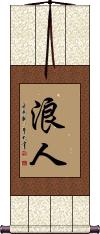
The 浪人 or Ronin have no master - The most famous are the 47 ronin created after their Lord committed suicide. This term was not a positive title for the Samurai of ancient Japan. However, in recent years, movies and video games have glorified the term Ronin.
In Chinese, this term has the original meaning of a hobo, vagabond, or ruffian.
In Korean Hanja, these characters would be read as adventurer, wanderer, someone without a steady job, or someone who is wasting away time.
In modern Japan, this term is used as a nickname for a high school student who has failed a college entry exam (and is trying again).
In Chinese and Korean, the Japanese definition of “Masterless Samurai” is known because of the historical context. Even in Japanese, the literal translation is closer to the Chinese and Korean definitions shown above.
This will make a fine wall scroll if you are a fan of the Ronin or see yourself as a Ronin of sorts. However, please think twice before getting a Ronin tattoo!
In Flowers the Cherry Blossom, In Men the Samurai
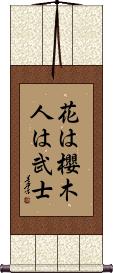
This Japanese proverb simply reads, “[In] Flowers it's Cherry Blossoms, [In] Men it's Warriors.”
花は櫻木人は武士 is meant to say that of all the flowers in the world, the cherry blossom is the best. And of all men in the world, the Samurai or Warrior is the best
This proverb has been around for a long time. It's believed to have been composed sometime before the Edo Period in Japan (which started in 1603).
Some will drop one syllable and pronounce this, “hana wa sakura hito wa bushi.” That's “sakura” instead of “sakuragi,” which is like saying “cherry blossom” instead of “cherry tree.”
The third character was traditionally written as 櫻. But in modern Japan, that became 桜. You may still see 櫻 used from time to time on older pieces of calligraphy. We can do either one, so just make a special request if you want 櫻.
Note: Because this selection contains some special Japanese Hiragana characters, it should be written by a Japanese calligrapher.
Heart of a Warrior / Samurai Heart
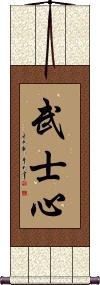
武士心 means “Warrior Heart.”
武士心 is more a Japanese title than Chinese, but it is understood in both languages.
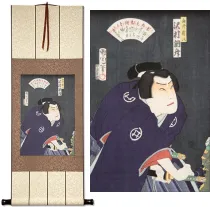
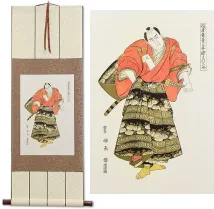
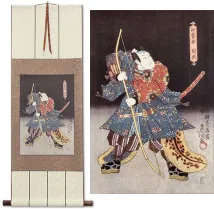
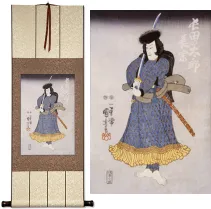
This in-stock artwork might be what you are looking for, and ships right away...


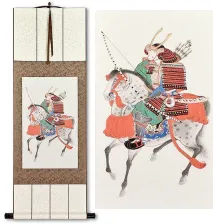
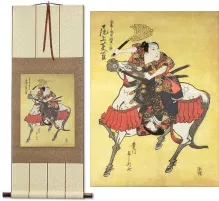

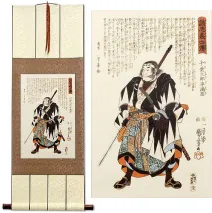
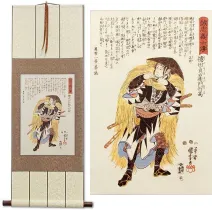


Not the results for Samurai that you were looking for?
Below are some entries from our dictionary that may match your Samurai search:
| Characters If shown, 2nd row is Simp. Chinese |
Pronunciation Romanization |
Simple Dictionary Definition |
侍 see styles |
shì shi4 shih hito ひと |
More info & calligraphy: Samurai(1) (archaism) man in attendance (on a person of high standing); retainer; (2) (abbreviation) (hist) (See 侍所・2) samurai guard house (Heian and Kamakura periods); (given name) Hito Attend; wait on; attendant. |
武士 see styles |
wǔ shì wu3 shi4 wu shih mononofu もののふ |
More info & calligraphy: Warriorsamurai; warrior; (place-name) Mononofu |
浪人 see styles |
làng rén lang4 ren2 lang jen rounin / ronin ろうにん |
More info & calligraphy: Ronin / Masterless Samurai(n,vs,adj-no) (1) ronin; wandering samurai without a master to serve; (2) out of work; (3) waiting for another chance to enter a university; (given name) Rounin |
騎士 骑士 see styles |
qí shì qi2 shi4 ch`i shih chi shih naito ないと |
More info & calligraphy: Knight(1) (hist) (medieval) knight; (2) (hist) samurai on horseback; (female given name) Naito |
武士道 see styles |
wǔ shì dào wu3 shi4 dao4 wu shih tao bushidou / bushido ぶしどう |
More info & calligraphy: Bushido / The Way of the SamuraiBushido; samurai code of chivalry |
一所懸命 see styles |
isshokenmei / isshokenme いっしょけんめい |
More info & calligraphy: Life Of A Samurai |
花は桜木人は武士 see styles |
hanahasakuragihitohabushi はなはさくらぎひとはぶし |
(expression) (proverb) the best flowers are the cherry blossoms, the best individuals are the samurai; as the cherry blossom is first among flowers, so is the samurai first among men |
卒 see styles |
zú zu2 tsu sosu そす |
soldier; servant; to finish; to die; finally; at last; pawn in Chinese chess (1) (hist) low-ranking soldier; (n-suf,n) (2) (abbreviation) (See 卒業・1) graduation; (n-suf,n-pref) (3) (abbreviation) (See 卒業・2) moving on (from); outgrowing (something); (4) (abbreviation) (hist) (See 卒族) low-ranking samurai (1870-1872); (5) (abbreviation) (See 卒去) death (of a noble, etc.); (given name) Sosu suddenly |
士 see styles |
shì shi4 shih mamoru まもる |
member of the senior ministerial class (old); scholar (old); bachelor; honorific; soldier; noncommissioned officer; specialist worker (1) man (esp. one who is well-respected); (2) (See 侍・1) samurai; (suffix noun) (3) person (in a certain profession, esp. licensed); member; (personal name) Mamoru A gentleman, scholar, officer. |
戎 see styles |
róng rong2 jung munemori むねもり |
generic term for weapons (old); army (matters); military affairs Ebisu; god of fishing and commerce; (1) (archaism) peoples formerly of northern Japan with distinct language and culture (i.e. the Ainu); (2) provincial (i.e. a person who lives far from the city); (3) brutish, unsophisticated warrior (esp. used by Kyoto samurai to refer to samurai from eastern Japan); (4) (derogatory term) foreigner; barbarian; (personal name) Munemori |
糒 see styles |
bèi bei4 pei hoshii / hoshi ほしい |
food for a journey; cakes dried boiled rice used mainly as provisions of samurai troops and travelers (travellers); (place-name, surname) Hoshii |
裃 see styles |
kamishimo かみしも |
samurai costume; old ceremonial costume; (surname) Kamishimo |
三一 see styles |
sān yī san1 yi1 san i mitsukazu みつかず |
(1) (abbreviation) (derogatory term) (See 三一侍) low-ranking samurai; (2) (orig. meaning) rolling three and one (in a dice game); (given name) Mitsukazu Trinity; also 31. |
両個 see styles |
ryanko りゃんこ |
(1) two; (2) (archaism) (derogatory term) samurai |
中臈 see styles |
chuurou / churo ちゅうろう |
(1) court ladies of the middle rank serving in the inner palace (Heian period); (2) female servant for a samurai family; (3) lady-in-waiting working in the inner palace of the Edo castle (Edo period) |
侍所 see styles |
samuraidokoro; saburaidokoro さむらいどころ; さぶらいどころ |
(1) (hist) (esp. さむらいどころ) Board of Retainers (Kamakura and Muromachi-period government office); (2) (hist) (esp. さぶらいどころ) samurai guard house (Heian and Kamakura periods) |
侍蟻 see styles |
samuraiari; samuraiari さむらいあり; サムライアリ |
(kana only) Polyergus samurai (species of amazon ant) |
其許 see styles |
sokomoto そこもと |
(1) (archaism) that place; there; (pn,adj-no) (2) you (usu. used by samurai when speaking to their equals or inferiors) |
出府 see styles |
shuppu しゅっぷ |
(n,vs,vi) (hist) going to the capital (esp. of a samurai or daimyo during the Edo period) |
切腹 see styles |
qiē fù qie1 fu4 ch`ieh fu chieh fu seppuku せっぷく |
harakiri (formal Japanese: seppuku), a samurai's suicide by disemboweling (n,vs,vi) (1) seppuku; harakiri; ritual suicide by disembowelment; (n,vs,vi) (2) (hist) seppuku as a death penalty (where the convict is decapitated by a second as they make the motions to disembowel themself; Edo period) |
剣劇 see styles |
kengeki けんげき |
sword play; samurai drama |
加禄 see styles |
karoku かろく |
increase in a samurai's stipend |
卒族 see styles |
sotsuzoku そつぞく |
low-ranking samurai (1870-1872) |
取り see styles |
dori どり tori とり |
(suffix noun) (1) samurai receiving this much rice as a fee; (2) offering of rice cake containing this much rice; (3) (obsolete) person receiving this amount of money as a salary; (n,n-suf) (1) taking; taker; collecting; collector; remover; removal; (2) last performer of the day (usu. the star performer); last performance of the day; (3) active partner (e.g. in judo demonstration); (prefix) (4) emphatic or formal prefix |
四民 see styles |
sì mín si4 min2 ssu min shimin しみん |
"the four classes" of ancient China, i.e. scholars, farmers, artisans, and merchants (hist) the four social classes (of Edo-period Japan; samurai, farmers, artisans, merchants) four classes of people |
国人 see styles |
kunihito くにひと |
(1) indigenous person; inhabitant of a country; (2) (くにびと only) local; native; (3) (hist) local lords and samurai; (4) (くにうど, くにゅうど only) (hist) (See 在国衆) daimyo who did not leave his domains to meet the shogun in Kyoto (during the Muromachi period); (given name) Kunihito |
国侍 see styles |
kunizamurai くにざむらい |
(hist) provincial samurai |
地侍 see styles |
jizamurai じざむらい |
provincial samurai in the middle ages, who engaged in agriculture in peacetime |
地士 see styles |
jizamurai じざむらい |
provincial samurai in the middle ages, who engaged in agriculture in peacetime |
士人 see styles |
shì rén shi4 ren2 shih jen shijin しじん |
scholar (1) samurai; (2) person of extensive learning; person of great culture; person of superior social standing a person of extensive learning |
Click here for more Samurai results from our dictionary
The following table may be helpful for those studying Chinese or Japanese:
| Title | Characters | Romaji (Romanized Japanese) | Various forms of Romanized Chinese | |
| Samurai | 侍 | samurai | shì / shi4 / shi | shih |
| Bushido The Way of the Samurai | 武士道 | bu shi do / bushido | wǔ shì dào wu3 shi4 dao4 wu shi dao wushidao | wu shih tao wushihtao |
| Samurai Kata | 侍型 | samurai kata samuraikata | ||
| Life Of A Samurai | 一所懸命 | issho kenmei isshokenmei isho kenmei | ||
| Ronin Masterless Samurai | 浪人 | rou nin / rounin / ro nin | làng rén / lang4 ren2 / lang ren / langren | lang jen / langjen |
| In Flowers the Cherry Blossom, In Men the Samurai | 花は櫻木人は武士 花は桜木人は武士 | hana wa sakuragi hito wa bushi | ||
| Heart of a Warrior Samurai Heart | 武士心 | bu shi kokoro bushikokoro | wǔ shì xīn wu3 shi4 xin1 wu shi xin wushixin | wu shih hsin wushihhsin |
| In some entries above you will see that characters have different versions above and below a line. In these cases, the characters above the line are Traditional Chinese, while the ones below are Simplified Chinese. | ||||

Successful Chinese Character and Japanese Kanji calligraphy searches within the last few hours...