Many custom options


And formats

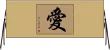

Righteousness in Chinese & Japanese Calligraphy
Compare the meanings and pronunciations of the entries related to Righteousness below. Choose “Customize & Buy” next to your preferred entry to personalize your calligraphy wall scroll.
3. Justice / Rectitude / Right Decision
5. Better to sacrifice your life than your principles
7. Courage To Do What Is Right
9. Psalm 23:1-6
Righteousness
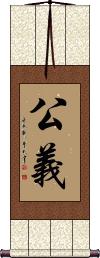
公義 means righteousness, justice, and/or equity in Chinese and Japanese.
Also a male given name, Masayoshi, in Japanese.
Justice / Righteousness
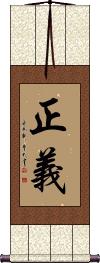
正義 means justice or righteousness in Chinese, Japanese Kanji, and old Korean Hanja.
Practicing justice and righteousness is being fair.
It solves problems, so everyone wins. You don't prejudge. You see people as individuals. You don't accept it when someone acts like a bully, cheats, or lies. Being a champion for justice takes courage. Sometimes when you stand for justice, you stand alone.
Note: This is also considered to be one of the Seven Heavenly Virtues.
Justice / Rectitude / Right Decision
Also means: honor loyalty morality righteousness
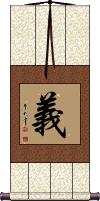
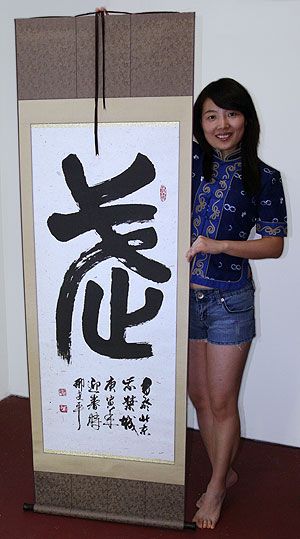
義 is about doing the right thing or making the right decision, not because it's easy but because it's ethically and morally correct.
No matter the outcome or result, one does not lose face if tempering proper justice.
義 can also be defined as righteousness, justice, morality, honor, or “right conduct.” In a more expanded definition, it can mean loyalty to friends, loyalty to the public good, or patriotism. This idea of loyalty and friendship comes from the fact that you will treat those you are loyal to with morality and justice.
義 is also one of the five tenets of Confucius's doctrine.
 There's also an alternate version of this character sometimes seen in Bushido or Korean Taekwondo tenets. It's just the addition of a radical on the left side of the character. If you want this version, click on the image to the right instead of the button above.
This is also a virtue of the Samurai Warrior
See our page with just Code of the Samurai / Bushido here
See Also: Judge | Unselfish: Perfectly Impartial | Ten
Loyalty / Devotion
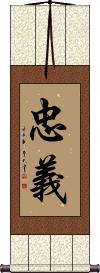
忠義 is another form of loyalty or devotion.
In Chinese, this is more specifically about being loyal and devoted to your friends.
In Japanese, this is more often used to mean loyalty to your country or nation.
Except for the slight difference noted above between Japanese and Chinese, this word is understood universally in Chinese, Japanese Kanji, and old Korean Hanja. It can also be used to describe devotion or fidelity.
It should be noted that this Kanji combination is being used less and less in modern Japan (this is a better choice if your audience is Chinese, though any Japanese person will clearly understand it).
Better to sacrifice your life than your principles
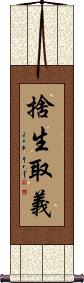
捨生取義 is a Chinese proverb that comes from the philosopher Mencius.
It can be translated in a few different ways:
To give up life for righteousness.
To choose honor over life
Better to sacrifice one's life than one's principles.
The Principles of Buddhism
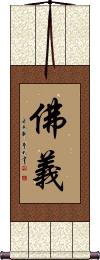
In short, 佛義 is the Principles of Buddhism, but there is more (especially for the second character):
佛 is the character for the Buddha and Buddhism.
義 has deeper meanings including justice, righteousness, morality, honour/honor, teachings, doctrine, right, proper, righteous, loyalty, purpose, or meaning. So the single word “principles” is often used to encompass all these ideas.
Courage To Do What Is Right
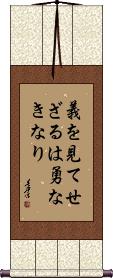
義を見てせざるは勇なきなり is a Japanese proverb that means “Knowing what is right and not doing is a want of courage.”
I've also seen it translated as:
To see what is right, yet fail to do so, is a lack of courage.
To know righteousness, but take no action is cowardice.
You are a coward if you knew what was the right thing to do, but you did not take action.
Knowing what is right without practicing it betrays one's cowardice.
Note: Because this selection contains some special Japanese Hiragana characters, it should be written by a Japanese calligrapher.
Shiken Haramitsu Daikomyo
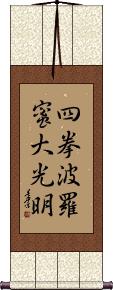
四拳波羅蜜大光明 is “shiken haramitsu daikōmyō,” a famous Japanese Buddhist mantra.
四拳 = shi-ken = four fists (many translate this as “four hearts”).
波羅蜜 = ha-ra-mitsu = A loanword representing pāramitā, or entrance into Nirvana. Awkwardly, it also means jackfruit.
大光明 = dai-kou-myo = big/great light bright (great bright light).
Shiken represents four hearts:
1. The Merciful Heart - Love and caring for all living things.
2. The Sincere Heart - Pursues righteousness, or the right path - sincerely trying to do what is right.
3. The Attuned Heart - Knows that nature and fate have their ways, and thus stay in tune with the universe.
4. The Dedicated Heart - Steadfast on the chosen path to the end.
Psalm 23:1-6

This is Psalm 23:1-6 in Chinese, from the Chinese Union Version (和合本).
In English, the King James Version reads, “The LORD is my shepherd; I shall not want. He maketh me to lie down in green pastures: he leadeth me beside the still waters. He restoreth my soul: he leadeth me in the paths of righteousness for his name’s sake. Yea, though I walk through the valley of the shadow of death, I will fear no evil: for thou art with me; thy rod and thy staff they comfort me. Thou preparest a table before me in the presence of mine enemies: thou anointest my head with oil; my cup runneth over. Surely goodness and mercy shall follow me all the days of my life: and I will dwell in the house of the LORD for ever.”
Psalm 23:1-6

This is Psalm 23:1-6 in Japanese, from the 1954–55 Japanese Kōgo-yaku (口語訳).
In English, the King James Version reads, “The LORD is my shepherd; I shall not want. He maketh me to lie down in green pastures: he leadeth me beside the still waters. He restoreth my soul: he leadeth me in the paths of righteousness for his name’s sake. Yea, though I walk through the valley of the shadow of death, I will fear no evil: for thou art with me; thy rod and thy staff they comfort me. Thou preparest a table before me in the presence of mine enemies: thou anointest my head with oil; my cup runneth over. Surely goodness and mercy shall follow me all the days of my life: and I will dwell in the house of the LORD for ever.”
Note: Because this selection contains some special Japanese Hiragana characters, it should be written by a Japanese calligrapher.
Dana: Almsgiving and Generosity
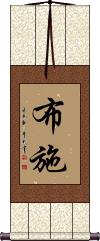
布施 is the Buddhist practice of giving known as Dāna or दान from Pali and Sanskrit.
Depending on the context, this can be alms-giving, acts of charity, or offerings (usually money) to a priest for reading sutras or teachings.
Some will put Dāna in these two categories:
1. The pure or unsullied charity, which looks for no reward here but only in the hereafter.
2. The sullied almsgiving whose object is personal benefit.
The first kind is, of course, the kind that a liberated or enlightened person will pursue.
Others will put Dāna in these categories:
1. Worldly or material gifts.
2. Unworldly or spiritual gifts.
You can also separate Dāna into these three kinds:
1. 財布施 Goods such as money, food, or material items.
2. 法布施 Dharma, as an act to teach or bestow the Buddhist doctrine onto others.
3. 無畏布施 Courage, as an act of facing fear to save someone or when standing up for someone or standing up for righteousness.
The philosophies and categorization of Dāna will vary among various monks, temples, and sects of Buddhism.
Breaking down the characters separately:
布 (sometimes written 佈) means to spread out or announce, but also means cloth. In ancient times, cloth or robs were given to the Buddhist monks annually as a gift of alms - I need to do more research, but I believe there is a relationship here.
施 means to grant, to give, to bestow, to act, to carry out, and by itself can mean Dāna as a single character.
Dāna can also be expressed as 檀那 (pronounced “tán nà” in Mandarin and dan-na or だんな in Japanese). 檀那 is a transliteration of Dāna. However, it has colloquially come to mean some unsavory or unrelated things in Japanese. So, I think 布施 is better for calligraphy on your wall to remind you to practice Dāna daily (or whenever possible).
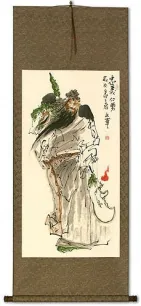
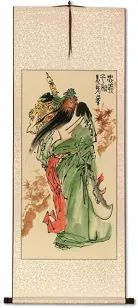
This in-stock artwork might be what you are looking for, and ships right away...
These search terms might be related to Righteousness:
Beautiful Virtue
Ethics / Ethical / Morality
Honesty
Honesty / Fidelity
Integrity / Honesty
Justice / Rectitude / Right Decision
Justice / Righteousness
Martial Morality / Martial Arts Ethics / Virtue
Morality of Deed
Morality of Mind
One Justice Can Overpower 100 Evils
Self-Discipline and Martial Virtue
Uprightness
The following table may be helpful for those studying Chinese or Japanese:
| Title | Characters | Romaji (Romanized Japanese) | Various forms of Romanized Chinese | |
| Righteousness | 公義 公义 | kou gi / kougi / ko gi | gōng yì / gong1 yi4 / gong yi / gongyi | kung i / kungi |
| Justice Righteousness | 正義 正义 | sei gi / seigi | zhèng yì / zheng4 yi4 / zheng yi / zhengyi | cheng i / chengi |
| Justice Rectitude Right Decision | 義 义 | gi | yì / yi4 / yi | i |
| Loyalty Devotion | 忠義 忠义 | chuu gi / chuugi / chu gi | zhōng yì / zhong1 yi4 / zhong yi / zhongyi | chung i / chungi |
| Better to sacrifice your life than your principles | 捨生取義 舍生取义 | shě shēng qǔ yì she3 sheng1 qu3 yi4 she sheng qu yi sheshengquyi | she sheng ch`ü i sheshengchüi she sheng chü i |
|
| The Principles of Buddhism | 佛義 佛义 | butsu gi / butsugi | fó yì / fo2 yi4 / fo yi / foyi | fo i / foi |
| Courage To Do What Is Right | 義を見てせざるは勇なきなり | giomitesezaruhayuunakinari giomitesezaruhayunakinari | ||
| Shiken Haramitsu Daikomyo | 四拳波羅蜜大光明 | shi ken ha ra mitsu dai kou myou shi ken ha ra mitsu dai ko myo | ||
| Psalm 23:1-6 | 耶和華是我的牧者我必不致缺乏他使我躺臥在青草地上領我在可安歇的水邊他使我的靈魂甦醒為自己的名引導我走義路我雖然行過死蔭的幽谷也不怕遭害因為你與我同在你的杖你的竿都安慰我在我敵人面前你為我擺設筵席你用油膏了我的頭使我的福杯滿溢我一生一世必有恩惠慈愛隨著我我且要住在耶和華的殿中直到永遠 耶和华是我的牧者我必不致缺乏他使我躺卧在青草地上领我在可安歇的水边他使我的灵魂苏醒为自己的名引导我走义路我虽然行过死荫的幽谷也不怕遭害因为你与我同在你的杖你的竿都安慰我在我敌人面前你为我摆设筵席你用油膏了我的头使我的福杯满溢我一生一世必有恩惠慈爱随着我我且要住在耶和华的殿中直到永远 | yē hé huá shì wǒ de mù zhě wǒ bì bú zhì quē fá tā shǐ wǒ tǎng wò zài qīng cǎo dì shàng lǐng wǒ zài kě ān xiē de shuǐ biān tā shǐ wǒ de líng hún sū xǐng wèi zì jǐ de míng yǐn dǎo wǒ zǒu yì lù wǒ suī rán xíng guò sǐ yìn de yōu gǔ yě bú pà zāo hài yīn wèi nǐ yǔ wǒ tóng zài nǐ de zhàng nǐ de gān dōu ān wèi wǒ zài wǒ dí rén miàn qián nǐ wèi wǒ bǎi shè yán xí nǐ yòng yóu gào le wǒ de tóu shǐ wǒ de fú bēi mǎn yì wǒ yì shēng yí shì bì yǒu ēn huì cí ài suí zhe wǒ wǒ qiě yào zhù zài yē hé huá de diàn zhōng zhí dào yǒng yuǎn ye1 he2 hua2 shi4 wo3 de mu4 zhe3 wo3 bi4 bu2 zhi4 que1 fa2 ta1 shi3 wo3 tang3 wo4 zai4 qing1 cao3 di4 shang4 ling3 wo3 zai4 ke3 an1 xie1 de shui3 bian1 ta1 shi3 wo3 de ling2 hun2 su1 xing3 wei4 zi4 ji3 de ming2 yin3 dao3 wo3 zou3 yi4 lu4 wo3 sui1 ran2 xing2 guo4 si3 yin4 de you1 gu3 ye3 bu2 pa4 zao1 hai4 yin1 wei4 ni3 yu3 wo3 tong2 zai4 ni3 de zhang4 ni3 de gan1 dou1 an1 wei4 wo3 zai4 wo3 di2 ren2 mian4 qian2 ni3 wei4 wo3 bai3 she4 yan2 xi2 ni3 yong4 you2 gao4 le wo3 de tou2 shi3 wo3 de fu2 bei1 man3 yi4 wo3 yi4 sheng1 yi2 shi4 bi4 you3 en1 hui4 ci2 ai4 sui2 zhe wo3 wo3 qie3 yao4 zhu4 zai4 ye1 he2 hua2 de dian4 zhong1 zhi2 dao4 yong3 yuan3 ye he hua shi wo de mu zhe wo bi bu zhi que fa ta shi wo tang wo zai qing cao di shang ling wo zai ke an xie de shui bian ta shi wo de ling hun su xing wei zi ji de ming yin dao wo zou yi lu wo sui ran xing guo si yin de you gu ye bu pa zao hai yin wei ni yu wo tong zai ni de zhang ni de gan dou an wei wo zai wo di ren mian qian ni wei wo bai she yan xi ni yong you gao le wo de tou shi wo de fu bei man yi wo yi sheng yi shi bi you en hui ci ai sui zhe wo wo qie yao zhu zai ye he hua de dian zhong zhi dao yong yuan | yeh ho hua shih wo te mu che wo pi pu chih ch`üeh fa t`a shih wo t`ang wo tsai ch`ing ts`ao ti shang ling wo tsai k`o an hsieh te shui pien t`a shih wo te ling hun su hsing wei tzu chi te ming yin tao wo tsou i lu wo sui jan hsing kuo ssu yin te yu ku yeh pu p`a tsao hai yin wei ni yü wo t`ung tsai ni te chang ni te kan tou an wei wo tsai wo ti jen mien ch`ien ni wei wo pai she yen hsi ni yung yu kao le wo te t`ou shih wo te fu pei man i wo i sheng i shih pi yu en hui tz`u ai sui che wo wo ch`ieh yao chu tsai yeh ho hua te tien chung chih tao yung yüan yeh ho hua shih wo te mu che wo pi pu chih chüeh fa ta shih wo tang wo tsai ching tsao ti shang ling wo tsai ko an hsieh te shui pien ta shih wo te ling hun su hsing wei tzu chi te ming yin tao wo tsou i lu wo sui jan hsing kuo ssu yin te yu ku yeh pu pa tsao hai yin wei ni yü wo tung tsai ni te chang ni te kan tou an wei wo tsai wo ti jen mien chien ni wei wo pai she yen hsi ni yung yu kao le wo te tou shih wo te fu pei man i wo i sheng i shih pi yu en hui tzu ai sui che wo wo chieh yao chu tsai yeh ho hua te tien chung chih tao yung yüan |
|
| Psalm 23:1-6 | 主はわたしの牧者であって、わたしには乏しいことがない。主はわたしを緑の牧場に伏させ、いこいのみぎわに伴われる。主はわたしの魂をいきかえらせ、み名のためにわたしを正しい道に導かれる。たといわたしは死の陰の谷を歩むとも、わざわいを恐れません。あなたがわたしと共におられるからです。あなたのむちと、あなたのつえはわたしを慰めます。あなたはわたしの敵の前で、わたしの前に宴を設け、わたしのこうべに油をそそがれる。わたしの杯はあふれます。わたしの生きているかぎりは必ず恵みといつくしみとが伴うでしょう。わたしはとこしえに主の宮に住むでしょう。 | Shu wa watashi no bokusha de atte, watashi ni wa toboshii koto ga nai. Shu wa watashi o midori no makiba ni fusase, ikoi no migiwa ni tomonawareru. Shu wa watashi no tamashii o ikikaerase, mina no tame ni watashi o tadashii michi ni michibikareru. Tatoi w Shu wa watashi no bokusha de atte, watashi ni wa toboshi koto ga nai. Shu wa watashi o midori no makiba ni fusase, ikoi no migiwa ni tomonawareru. Shu wa watashi no tamashi o ikikaerase, mina no tame ni watashi o tadashi michi ni michibikareru. Tatoi w | ||
| Dana: Almsgiving and Generosity | 布施 | fuse | bù shī / bu4 shi1 / bu shi / bushi | pu shih / pushih |
| In some entries above you will see that characters have different versions above and below a line. In these cases, the characters above the line are Traditional Chinese, while the ones below are Simplified Chinese. | ||||

Successful Chinese Character and Japanese Kanji calligraphy searches within the last few hours...