I am shipping orders on Thursday this week. News and More Info

Many custom options...

Tan Paper and Copper Silk Love Wall Scroll
Red Paper and Ivory Silk Love Wall Scroll
Orange Paper Love Scroll
Crazy Blue and Gold Silk Love Scroll


And formats...

Love Vertical Portrait
Love Horizontal Wall Scroll
Love Vertical Portrait

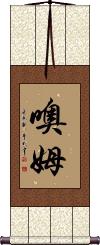
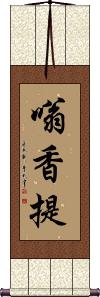
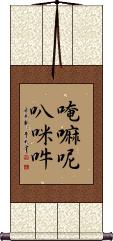
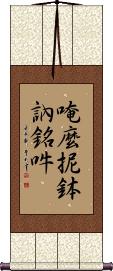
Om in Chinese / Japanese...

Buy an Om calligraphy wall scroll here!

Personalize your custom “Om” project by clicking the button next to your favorite “Om” title below...

Switched to secondary search mode due to lack of results using primary.
These secondary results may not be very accurate. Try a different but similar meaning word or phrase for better results. Or...

Look up Om in my Japanese Kanji & Chinese Character Dictionary(My dictionary is a different system then the calligraphy search you just tried)

If you want a special phrase, word, title, name, or proverb, feel free to contact me, and I will translate your custom calligraphy idea for you.


  1. Even a fool may sometimes come up with a good idea

  2. Abercrombie

  3. Absalom

  4. Achievement / Accomplishment

  5. Adnanomar

  6. Adonis / Handsome Young Man

  7. Advance Bravely / Indomitable Spirit

  8. Alom

  9. Alone with only your shadow for company

10. Amaterasu Oomikami

11. Amoma

12. Animal Kingdom

13. Any success can not compensate for failure in the home

14. No man knows what he owes to his parents until he comes to have children of his own

15. Avshalom

16. Awesome / Really Cool

17. Awesome / Awe-Inspiring

18. Baldomero

19. Bartholomew

20. Bartlomiej

21. Bartolome

22. Bartolomeo

23. Baucom

24. Wisdom from Hard Knocks

25. Beauty / Beautiful / Handsome

26. Beautiful Woman

27. Beautiful Woman Proverb

28. Blessings on this Home

29. Bloomfield

30. Bounce Back / Stage a Comeback

31. Bright and Promising Future

32. English / Briton / Person from England

33. You May Learn from Victory, You Will Learn from Failure

34. Broom

35. Wisdom and Insight of the Buddha

36. Seeing one’s Nature and becoming a Buddha

37. No Trouble / Freedom from Problems

38. Caromean

39. Cherry Blossom / Sakura

40. Cherry Blossom

41. Seeking Wisdom

42. Colombe

43. Colombia

44. Colombo

45. Combs

46. Come

47. Comfortable

48. Commitment

49. Community

50. Comoros

51. Comparison Leads to Truth and Enlightenment

52. Compassion

53. Compassion / Kindness

54. Mercy / Compassion / Love

55. Compassionate Heart / Benevolent Heart

56. The True and Complete Enlightenment

57. Compton

58. Coombs

59. Every Creature Has A Domain

60. Crisostomo

61. Great Wisdom

62. Great Illumination of Wisdom

63. Brought Together from 1000 Miles Away by Fate

64. Diomedes

65. Dom

66. Doman

67. Domenico

68. Family Love / Domestic Bliss

69. Domi

70. Domiciano

71. Domingas

72. Domingo


Even a fool may sometimes come up with a good idea

 qiān lǜ yī dé
 senryonoittoku
Even a fool may sometimes come up with a good idea Scroll

千慮一得 means “1000 tries, one success,” or “[a] thousand tries [leads to] one success.”

This proverb is a humble way to express your success, ideas, or accomplishments. As if you are a fool who just got lucky in inventing or creating something.

Translations for this proverb include:
Even without any notable ability on my part, I may still get it right sometimes by good luck.
Even a fool may sometimes come up with a good idea.

Compare this to the English idiom, “Even a broken clock is right twice a day.”

 ā bó kè lóng bǐ
Abercrombie Scroll

阿伯克龍比 is the name Abercrombie in Chinese (Mandarin).

 abakuronbii
Abercrombie Scroll

アバクロンビー is the name Abercrombie in Japanese Katakana.


Note: Because this title is entirely Japanese Katakana, it should be written by a Japanese calligrapher.

 ā bù sà lóng
Absalom Scroll

阿布薩隆 is the name Absalom in Chinese (Mandarin).

 abusaromu
Absalom Scroll

アブサロム is the name Absalom in Japanese.


Note: Because this title is entirely Japanese Katakana, it should be written by a Japanese calligrapher.

Achievement / Accomplishment

 chéng jiù
 jouju
Achievement / Accomplishment Scroll

成就 is the word most often used in Chinese, Korean and Japanese to mean accomplishment or achievement.

成就 can also be used to mean success, attain a result, fulfillment, realization, or completion.

 ā dé nuò mǎ ěr
Adnanomar Scroll

阿德諾馬爾 is the name Adnanomar in Chinese (Mandarin).

 adonanomaa
Adnanomar Scroll

アドナノマー is the name Adnanomar in Japanese Katakana.


Note: Because this title is entirely Japanese Katakana, it should be written by a Japanese calligrapher.

Adonis / Handsome Young Man

 bi sei nen
Adonis / Handsome Young Man Scroll

美青年 means handsome young man, or figuratively, Adonis, in Japanese.

Advance Bravely / Indomitable Spirit

 yǒng wǎng zhí qián
Advance Bravely / Indomitable Spirit Scroll

This proverb creates an image of a warrior bravely advancing against an enemy regardless of the odds.

This proverb can also be translated as “indomitable spirit” or “march fearlessly onward.”


See Also:  Indomitable | Fortitude

 ā lóng
Alom Scroll

阿龍 is the name Alom in Chinese (Mandarin).

 aromu
Alom Scroll

アロム is the name Alom in Japanese Katakana.


Note: Because this title is entirely Japanese Katakana, it should be written by a Japanese calligrapher.

Alone with only your shadow for company

 qióng qióng jié lì xíng yǐng xiāng diào
Alone with only your shadow for company Scroll

煢煢孑立形影相吊 is a Chinese proverb about the state of being as alone as you possibly can be.

It can be translated as “Alone with only your shadow for comfort/company.”


See Also:  I Miss You

Amaterasu Oomikami

 amaterasu oomikami
Amaterasu Oomikami Scroll

天照大神 is the Japanese Shinto deity often referred to as the Sun Goddess.

The full name is often romanized as Amaterasu Oomikami/Omikami.
Sometimes also written as 天照大御神 (just the addition of 御 near the end) or 天照皇大神 (with 皇 added in the middle).

 ā mǎ mǎ
Amoma Scroll

阿馬馬 is the name Amoma in Chinese (Mandarin).

 amoma
Amoma Scroll

アモマ is the name Amoma in Japanese Katakana.


Note: Because this title is entirely Japanese Katakana, it should be written by a Japanese calligrapher.

Animal Kingdom

 dòng wù wáng guó
 doubutsu oukoku
Animal Kingdom Scroll

動物王國 is literally what it says.

There is even a TV show in China that is similar to Wild Kingdom or what you would currently see on the Discovery Channel that has this same title.

For your information: In the Chinese way of thinking, the Tiger is the king of the animal kingdom (lions are not native to China, so the tiger took the role that we have given to the lion in our western way of thinking).

The modern Japanese version has a slight variation on the last character (国 instead of 國). Let me know if you want the modern Japanese version (國 would be considered the old or traditional version).

Any success can not compensate for failure in the home

 suǒ yǒu de chéng gōng dōu wú fǎ bǔ cháng jiā tíng de shī bài
Any success can not compensate for failure in the home Scroll

所有的成功都無法補償家庭的失敗 is a Chinese proverb that can be translated into English as “No success can compensate for failure in the home.”

Also, the word “home” can be exchanged with “family.”

No man knows what he owes to his parents until he comes to have children of his own

 ko wo motte shiru oya no on
No man knows what he owes to his parents until he comes to have children of his own Scroll

子を持って知る親の恩 literally translates as: Only after you have a baby, you would appreciate your parents (feel the way they do, etc).

This is a bit like the “walk a mile in another man's shoes” saying. Basically, it's about you cannot fully understand the plight of others until you experience it yourself. It also shows appreciation for the plight of parents.

This Japanese proverb can also be translated a few more ways:

No man knows what he owes to his parents till he comes to have children of his own.

One knows not what one owes to one's parents till one comes to have children of one's own.

Only after you have a baby, you will appreciate your parents or feel the way they do.

Only after becoming a parent yourself do you realize how much you owe [how indebted you are] to your own parents.


Note: Because this selection contains some special Japanese Hiragana characters, it should be written by a Japanese calligrapher.

 ē fú shā luò mǔ
Avshalom Scroll

阿夫沙洛姆 is the name Avshalom in Chinese (Mandarin).

 eebusharomu
Avshalom Scroll

エーブシャロム is the name Avshalom in Japanese (Katakana).


Note: Because this title is entirely Japanese Katakana, it should be written by a Japanese calligrapher.

Awesome / Really Cool

Chinese Slang

 zhēn niú
Awesome / Really Cool Scroll

真牛 is Chinese slang for something really cool or awesome.

真牛 is probably not appropriate for a calligraphy wall scroll unless you have a specific reason.

This literally translates as “the real bull” or “the genuine cow.”

Awesome / Awe-Inspiring

 osore ooi
Awesome / Awe-Inspiring Scroll

恐れ多い is a Japanese word for something awe-inspiring or awesome (in some odd context, it can refer to August).

恐れ多い is probably not appropriate for a calligraphy wall scroll unless you have a specific reason.

The word awesome is misused a lot in English or used too casually. This Japanese word is the real form of awesome, and it kind of means numerous fears and anxiety that you would feel in response to encountering something truly awesome (such as God, a tornado, a tsunami, etc.).


Note: Because this selection contains some special Japanese Hiragana characters, it should be written by a Japanese calligrapher.

 bā ěr duō méi luó
Baldomero Scroll

巴爾多梅羅 is the transliteration to Mandarin Chinese for the Latin / Spanish name Baldomero.

 barudomero
Baldomero Scroll

バルドメロ is the name Baldomero in Japanese (Katakana).


Note: Because this title is entirely Japanese Katakana, it should be written by a Japanese calligrapher.

 bā sāi luò mù
Bartholomew Scroll

巴塞洛繆 is the name Bartholomew in Chinese (Mandarin).

 baasoroomuuu
Bartholomew Scroll

バーソロームーウ is the name Bartholomew in Japanese (Katakana).


Note: Because this title is entirely Japanese Katakana, it should be written by a Japanese calligrapher.

 bā ěr tuō mǐ
Bartlomiej Scroll

This is a common Mandarin Chinese transliteration for the male Polish name Bartłomiej or Bartholomew.

 baatoromieji
Bartlomiej Scroll

バートロミエジ is the name Bartlomiej or Bartłomiej in Japanese (Katakana).


Note: Because this title is entirely Japanese Katakana, it should be written by a Japanese calligrapher.

 bā tuō luò méi
Bartolome Scroll

巴托洛梅 is the transliteration to Mandarin Chinese for the Latin / Spanish name Bartolomé.

 baatoroomu
Bartolome Scroll

バートローム is the name Bartolome in Japanese (Katakana).


Note: Because this title is entirely Japanese Katakana, it should be written by a Japanese calligrapher.

 bā tuō luò dāi ào
Bartolomeo Scroll

巴托洛梅奧 is the name Bartolomeo in Chinese (Mandarin).

 barutoromeo
Bartolomeo Scroll

バルトロメオ is the name Bartolomeo in Japanese Katakana.


Note: Because this title is entirely Japanese Katakana, it should be written by a Japanese calligrapher.

 bào kāng
Baucom Scroll

鮑康 is the name Baucom in Chinese (Mandarin).

 baukomu
Baucom Scroll

バウコム is the name Baucom in Japanese Katakana.


Note: Because this title is entirely Japanese Katakana, it should be written by a Japanese calligrapher.

Wisdom from Hard Knocks

The school of hard knocks

 ái yī quán dé yī zhāo ái shí quán biàn zhū gě
Wisdom from Hard Knocks Scroll

挨一拳得一招挨十拳變諸葛 is a Chinese proverb that literally translates as: Receive one blow, [and one] learns a lesson; Receive ten blows, [and one] becomes a great Zhuge [Liang].

You must first understand that a man named Zhuge Liang was one of the great strategists and philosophers in Chinese history. He's known as a man of great wisdom.

Figuratively, this phrase means:
One can learn much from failure or “hard knocks.”

Beauty / Beautiful / Handsome

 měi
 bi
 
Beauty / Beautiful / Handsome Scroll

美 is often used to describe the beauty of a woman.

However, when applied to a man, it can mean handsome. It's also the first character in the word for “beauty salon” which you will see all over China and Japan.

This can be used as the given name for a girl (spell it or say it as “Mei” or “May”).

For a bit of trivia: The title for the “USA” in Chinese is “Mei Guo” which literally means “Beautiful Country.” This name was bestowed at a time before Chairman Mao came to power and decided that China didn't like the USA anymore (even though we fought together against the Japanese in WWII). But these days, Chinese people love Americans (but have a distaste for American politics and policy). But I digress...

美 is also how “Beautiful” is written in Japanese Kanji and Korean Hanja. 美 can also mean: very satisfactory; good; to be pleased with oneself; abbreviation for the USA; fine; handsome; admirable; madhura; sweet; and/or pleasant.


See Also:  Beautiful Woman | Beautiful Girl

Beautiful Woman

 měi lì de nǚ rén
Beautiful Woman Scroll

美麗的女人 is the best and most polite way to express “beautiful woman” in Chinese.

Note: Some people may like the simple 2-character 美女 way to express this, but there are some bad connotations with that, so better to stay with this longer and more respectful title.


See Also:  Beautiful Girl | Beauty

Beautiful Woman Proverb

 chén yú luò yàn
 chin gyo raku gan
Beautiful Woman Proverb Scroll

沈魚落雁 is an old proverb that literally means “fish sink, goose alights.”

...But this takes some explaining. This is a proverb from Zhuangzi (莊子), who lived in the late 4th century BC.

This figuratively refers to female beauty that is so captivating that even the birds and beasts take notice.

Perhaps a better and more accurate way to describe this is to say that it speaks of the charms of a uniquely beautiful woman who is so beautiful that fish stay on the bottom of the water and flying wild geese fall from the sky in shame.

This proverb is so famous that it is also known and used in Japan (same characters, different pronunciation).


Note: This can also be written 沉魚落雁 instead of 沈魚落雁 (just the first character varies slightly).

Blessings on this Home

 wǔ fú lín mén
Blessings on this Home Scroll

五福臨門 means “five good fortunes arrive [at the] door.”

It is understood to mean “may the five blessings descend upon this home.”

These blessings are known in ancient China to be: longevity, wealth, health, virtue, and natural death (living to old age). This is one of several auspicious sayings you might hear during the Chinese New Year.

 bù lú mǔ fēi ěr dé
Bloomfield Scroll

布盧姆菲爾德 is the name Bloomfield in Chinese (Mandarin).

 buruumufiirudo
Bloomfield Scroll

ブルームフィールド is the name Bloomfield in Japanese Katakana.


Note: Because this title is entirely Japanese Katakana, it should be written by a Japanese calligrapher.

Bounce Back / Stage a Comeback

 dōng shān zài qǐ
Bounce Back / Stage a Comeback Scroll

東山再起 is a Chinese proverb that means “make a comeback” or “resuming after a failure.”

It's sometimes used in terms of losing a job and then getting it back. However, it applies to any kind of comeback after difficulty.

The literal meaning of this Chinese idiom is, “[The] Eastern Mountain Again [will] Rise.”

Bright and Promising Future

 akarui mirai
Bright and Promising Future Scroll

明るい未来 is a Japanese proverb that means “Bright Future.”

It suggests a lot of possibilities and potential awaits in your future. A great gift for a graduate.

The first part of this proverb literally means bright or light. The second part means the future but can also be translated as “the world to come.”


Note: Because this selection contains some special Japanese Hiragana characters, it should be written by a Japanese calligrapher.

English / Briton / Person from England

 yīng guó rén
 ei koku jin
English / Briton / Person from England Scroll

英國人 is the traditional Chinese and Japanese way to write British person, Briton, English person, Englishman, Englishwoman, etc.

In modern Japan, the middle character has been simplified, making it 英国人. This same simplification is used in mainland China as well.

You May Learn from Victory, You Will Learn from Failure

 bǎi shèng nán lǜ dí sān zhé nǎi liáng yī
You May Learn from Victory, You Will Learn from Failure Scroll

百胜难虑敌三折乃良医 is a Chinese proverb that literally translates as: [Even a general who has won a] hundred victories [may be] hard put to see through the enemy's [strategy], [but one who has] broken [his] arm three [times] [will] be a good doctor.

Figuratively, this means: One cannot always depend on past successes to guarantee future success but one can always learn from lessons drawn from failure.


See Also:  Failure - Mother of Success | Experience - Mother of Success | Fall Down 7 Times Get Up 8 | Hard Knocks

 bù lǔ mǔ
Broom Scroll

布魯姆 is the name Broom in Chinese (Mandarin).

 buruumu
Broom Scroll

ブルーム is the name Broom in Japanese Katakana.


Note: Because this title is entirely Japanese Katakana, it should be written by a Japanese calligrapher.

Wisdom and Insight of the Buddha

 fó zhī jiàn
 bucchiken
Wisdom and Insight of the Buddha Scroll

This title represents the wisdom and insight of the Buddha, or the penetrative power of Buddha's wisdom, or vision.

佛知見 is a term derived from the Lotus Sutra, perhaps up to 1900 years ago.

Seeing one’s Nature and becoming a Buddha

 jiàn xìng chéng fó
 ken shou jou butsu
Seeing one’s Nature and becoming a Buddha Scroll

見性成佛 is a universal phrase that suggests that one may see one's nature and accomplish Buddhahood.

見性 suggests penetrating deep inside oneself to see one's “Original finally Mind.”

成佛 refers to a sentient being who dispenses with illusions and delusions through ascetic practice, is enlightened to the truth, and becomes a Buddha.

This is used by Mahayana, Chan, and Zen Buddhists in China, Korea, and Japan.


You will also see this with the last character written as 仏 in Japanese. In the religious context, 佛 is commonly used to mean Buddha. If you want the other version, see Kenshō Jōbutsu 見性成仏

No Trouble / Freedom from Problems

 wú shì
 buji
No Trouble / Freedom from Problems Scroll

無事 is a Zen Buddhist term meaning no problem and no trouble.

無事 is the Zen state of perfect freedom from troubles and leaving secular affairs behind.

Sometimes this is used to describe the state of satori and complete tranquility of mind.

Written as 無事に with an extra Hiragana at the end, this becomes an adverb to describe something in the condition of safety, peace, quietness, and without troubles.

無事 (Buji) can also be a given name in Japan.

This has more meaning in the Japanese Zen Buddhist community than in China or Korea, where it can mean “be free” or “nothing to do or worry about.”

 kǎ luó mǐ ēn
Caromean Scroll

卡羅米恩 is the name Caromean in Chinese (Mandarin).

 kyaromian
Caromean Scroll

キャロミアン is the name Caromean in Japanese Katakana.


Note: Because this title is entirely Japanese Katakana, it should be written by a Japanese calligrapher.

Cherry Blossom / Sakura

 yīng
 sakura
 
Cherry Blossom / Sakura Scroll

櫻 is the single-character (short) way to write “cherry blossom” or “cherry tree” in Chinese and traditional Japanese Kanji.


桜There is an alternate version of this character, which has become the standard for Japanese Kanji. If you want this version, instead of the one shown to the upper left, please click on the Kanji shown to the right instead of the button above. Although this is an alternate form in Chinese, most Chinese people will think this is just the Japanese version (Chinese people don’t necessarily know the history and all alternate forms of Chinese characters from the past). Therefore, this version shown to the right is best if your audience is Japanese (though most Japanese will recognize the form shown in the upper left).

Cherry Blossom

 yīng huā
 ouka
Cherry Blossom Scroll

櫻花 is how to write “cherry blossom” in Chinese and traditional Japanese Kanji.

The first character means “cherry” or sometimes “cherry tree.”
The second character means “flowers” or “blossoms.”

Oddly, my Chinese dictionary also defines these two characters as “Japanese oriental cherry tree” or “Oriental cherry blossom.” However, the first character is the only one that means “cherry,” so it can refer to any cherry blossoms in the whole world (not just those in Asia).


桜There is an alternate version of the first character, which has become the standard for Japanese Kanji. If you want this version, instead of the one shown to the upper left, please click on the Kanji shown to the right instead of the button above. Although this is an alternate form in Chinese, most Chinese people will think this is just the Japanese version (Chinese people don’t necessarily know the history and all alternate forms of Chinese characters from the past). Therefore, this version shown to the right is best if your audience is Japanese (though most Japanese will recognize the form shown in the upper left).

Seeking Wisdom

 chiomigaku
Seeking Wisdom Scroll

智を磨く is an old obscure Japanese phrase that means to refine, cultivate, or improve one's wisdom.

This is the mantra of one who is a seeker of wisdom. They will always want to polish, shine, refine, improve, and expand their knowledge and understanding.


Note: Because this selection contains some special Japanese Hiragana characters, it should be written by a Japanese calligrapher.

 kē lóng
Colombe Scroll

This is a common Mandarin Chinese transliteration for the female French name Colombe.

 koronbii
Colombe Scroll

コロンビー is the name Colombe in Japanese (Katakana).


Note: Because this title is entirely Japanese Katakana, it should be written by a Japanese calligrapher.

 gē lún bǐ yà
Colombia Scroll

This is the Chinese name for the country of Colombia.


See Also:  South America

 ko ron bi a
Colombia Scroll

This is Colombia in Japanese Katakana.


Note: Because this title is entirely Japanese Katakana, it should be written by a Japanese calligrapher.

 kē lún pō
Colombo Scroll

科倫坡 is the name Colombo in Chinese (Mandarin).

 koronbo
Colombo Scroll

コロンボ is the name Colombo in Japanese Katakana.


Note: Because this title is entirely Japanese Katakana, it should be written by a Japanese calligrapher.

 kù mǔ sī
Combs Scroll

庫姆斯 is the name Combs in Chinese (Mandarin).

 koomuzu
Combs Scroll

コームズ is the name Combs in Japanese Katakana.


Note: Because this title is entirely Japanese Katakana, it should be written by a Japanese calligrapher.

 kē mǔ
Come Scroll

This is a common Mandarin Chinese transliteration for the male French name Côme or Come.

 shū fu
Comfortable Scroll

舒服 is a common Chinese term that means comfortable or feeling well.

 chéng nuò
 shoudaku
Commitment Scroll

承諾 embodies the idea of commitment but also means to make a big effort or to undertake a great task.

Commitment is caring deeply about something or someone. It is deciding carefully what you want to do and then giving it 100%, holding nothing back. You give your all to a friendship, a task, or something you believe in. You finish what you start. You keep your promises.

In Chinese, this word directly means to undertake something or to make a promise to do something.

Outside of the commitment idea, this particular word can also mean approval, acceptance, consent, assent, acquiescence, or agreement, depending on context (especially in Japanese and Korean). Therefore, this word is probably best if your audience is Chinese.


See Also:  Partnership | Hard Work | Dedication

 shè qū
Community Scroll

社區 is how to write community in Chinese.

社區 can mean the neighborhood you live in. It can also be used the same way we use the word community in English.

Examples: African-American community, Christian community, Asian community, etc.


If you need a special calligraphy wall scroll to describe your community, just contact me, and I’ll translate it and make it for you.

 kē mó luó
Comoros Scroll

This is the Chinese name for the country of Comoros.


See Also:  Africa

Comparison Leads to Truth and Enlightenment

 bù bǐ bù zhī dào yī bǐ xià yì tiào
Comparison Leads to Truth and Enlightenment Scroll

不比不知道一比吓一跳 is a Chinese proverb that literally means: [If one not does] not make comparisons, [one will] not know [the truth] when [one] compares, [one will be] greatly surprised.

This goes to the idea that if you do not know bad times, you cannot know what good times are.
...And...
You can not know light without experiencing darkness.

Another way to translate this would be: If you wish to be enlightened, you need to make comparisons and analyze every aspect (of a situation, issue, or problem).

 tóng qíng
 dou jou
Compassion Scroll

These two characters mean compassion and sympathy in Chinese, Japanese, and Korean, which makes this word universal.

Compassion is caring and understanding someone is hurt or troubled (even if you don't know them). It is wanting to help, even if all you can do is listen and say kind words. You forgive mistakes. You are a friend when someone needs a friend.


See Also:  Caring | Kindness

Compassion / Kindness

 omoi yari
Compassion / Kindness Scroll

思いやり is compassion, kindness, or sympathy in Japanese.

The first part of this word suggests feelings, emotion, sentiment, love, affection, wish, and hope are connected with this idea of compassion and sympathy.


Note: Because this selection contains some special Japanese Hiragana characters, it should be written by a Japanese calligrapher.

Mercy / Compassion / Love

 cí
 ji
 
Mercy / Compassion / Love Scroll

慈 is the simplest way to express the idea of compassion.

This can also mean love for your fellow humans, humanity, or living creatures. Sometimes this is extended to mean charity.

This term is often used in a Buddhist or Christian context. The concept was also spoken of by Laozi (Lao Tzu) in the Dao De Jing (Tao Te Ching).

慈 is considered the direct translation of the Sanskrit word मैत्री (maitrī) Pali word मेत्ता (mettā). In this context, it means benevolence, loving kindness, and goodwill.

This Chinese character is understood in Japanese but is usually used in compound words (not seen alone). Also used in old Korean Hanja, so it's very universal.


See Also:  Mercy | Benevolence | Forgiveness | Kindness

Compassionate Heart / Benevolent Heart

 cí xīn
 jishin
Compassionate Heart / Benevolent Heart Scroll

慈心 means “Compassionate Heart” or “Benevolent Heart.”

It's used in day-to-day speech to refer to someone who has the traits of benevolence, mercy, and compassion for their fellow humans.

This title is also used in Buddhism with the same profound meaning.

The True and Complete Enlightenment

 zhēn jué
 shinkaku
The True and Complete Enlightenment Scroll

眞覺 means true and complete enlightenment.

This can refer to the perfect nirvana of the Buddha or the perception of ultimate truth or true awareness of all things (reality and unreality).

 kāng pǔ dùn
Compton Scroll

康普頓 is the name Compton in Chinese (Mandarin).

 komuputon
Compton Scroll

コムプトン is the name Compton in Japanese (Katakana).


Note: Because this title is entirely Japanese Katakana, it should be written by a Japanese calligrapher.

 kù mǔ sī
Coombs Scroll

庫姆斯 is the name Coombs in Chinese (Mandarin).

 kuumuzu
Coombs Scroll

クームズ is the name Coombs in Japanese Katakana.


Note: Because this title is entirely Japanese Katakana, it should be written by a Japanese calligrapher.

Every Creature Has A Domain

 hǎi wéi lóng shì jiè yún shì hè jiā xiāng
Every Creature Has A Domain Scroll

海為龍世界雲是鶴家鄉 is a somewhat poetic way to say that everyone and everything has its place in the world.

Every Creature has a Domain The first line (which is the column on the right) says, “The Ocean is the World of the Dragon.” The next column says, “The Clouds are the Domain of the Cranes.”

The image to the right is what this calligraphy can look like in xing-kaishu style by a Master Calligrapher.

 kè lǐ sī sī tuō mò
Crisostomo Scroll

克里斯斯托莫 is the name Crisostomo in Chinese (Mandarin).

 kurisosutomo
Crisostomo Scroll

クリソストモ is the name Crisostomo in Japanese (Katakana).


Note: Because this title is entirely Japanese Katakana, it should be written by a Japanese calligrapher.

Great Wisdom

 dà zhì
 daichi
Great Wisdom Scroll

大智 is a Zen Buddhist title that means supreme wisdom, great wisdom, Buddha-wisdom, omniscience, or transcendental wisdom.

Great Illumination of Wisdom

 dà zhì míng
 dai chi myou
Great Illumination of Wisdom Scroll

大智明 is a Zen Buddhist title that means the great illumination of wisdom.

This refers to wisdom so bright that it shines through obviously to all in its presence.

Brought Together from 1000 Miles Away by Fate

 yǒu yuán qiān lǐ lái xiāng huì
Brought Together from 1000 Miles Away by Fate Scroll

有緣千里來相會 means that fate or destiny has caused us to meet from a thousand miles away.

The 有緣 part suggests something that is connected as if by a thread due to fate, destiny, or karma.

This romantic phrase is seen in Chinese greeting cards. It relays the idea that your love was meant to be and that you were destined to meet (regardless of what distance or obstacles might have made such a meeting unlikely).


See Also:  Red Thread

 dí ào méi dé sī
Diomedes Scroll

狄奧梅德斯 is the name Diomedes in Chinese (Mandarin).

 diomedesu
Diomedes Scroll

ディオメデス is the name Diomedes in Japanese (Katakana).


Note: Because this title is entirely Japanese Katakana, it should be written by a Japanese calligrapher.

 duō mǔ
Dom Scroll

多姆 is the name Dom in Chinese (Mandarin).

 domu
Dom Scroll

ドム is the name Dom in Japanese Katakana.


Note: Because this title is entirely Japanese Katakana, it should be written by a Japanese calligrapher.

 duō màn
Doman Scroll

多曼 is the name Doman in Chinese (Mandarin).

 dooman
Doman Scroll

ドーマン is the name Doman in Japanese Katakana.


Note: Because this title is entirely Japanese Katakana, it should be written by a Japanese calligrapher.

 duō méi ní kē
Domenico Scroll

多梅尼科 is the name Domenico in Chinese (Mandarin).

 domeniko
Domenico Scroll

ドメニコ is the name Domenico in Japanese Katakana.


Note: Because this title is entirely Japanese Katakana, it should be written by a Japanese calligrapher.

Family Love / Domestic Bliss

 tiān lún zhī lè
Family Love / Domestic Bliss Scroll

天倫之樂 means family love and joy, or domestic bliss.

The first two characters mean “the bonds of the family.”
The third character connects this to the fourth character which means happiness, joy, and cheerfulness.

 duō mǐ
Domi Scroll

This is a common Mandarin Chinese transliteration for the male French name Domi.

 duō mǐ xī yà nuò
Domiciano Scroll

多米西亞諾 is the transliteration to Mandarin Chinese for the Latin / Spanish name Domiciano.

 domishiano
Domiciano Scroll

ドミシアノ is the name Domiciano in Japanese (Katakana).


Note: Because this title is entirely Japanese Katakana, it should be written by a Japanese calligrapher.

 duō míng jiā sī
Domingas Scroll

多明加斯 is the name Domingas in Chinese (Mandarin).

 domingasu
Domingas Scroll

ドミンガス is the name Domingas in Japanese Katakana.


Note: Because this title is entirely Japanese Katakana, it should be written by a Japanese calligrapher.

 duō míng gē
Domingo Scroll

多明戈 is the transliteration to Mandarin Chinese for the Latin / Spanish name Domingo.

 domingo
Domingo Scroll

ドミンゴ is the name Domingo in Japanese Katakana.


Note: Because this title is entirely Japanese Katakana, it should be written by a Japanese calligrapher.


Dictionary

Lookup Om in my Japanese & Chinese Dictionary


Successful Chinese Character and Japanese Kanji calligraphy searches within the last few hours...


5 Tenets of Taekwondo50th Anniversary7 Heavenly VirtuesAadenAadonAakashAaroAbayaAbbasAbbeyAbbieAbhishekAbigaiAbundance and ProsperityAdamAdamarisAdapt and OvercomeAddyAdejahAdelineAdityaAdnanAdonisAdrianaAdriannaAdrielAguilarAhmadAileenAimiAishaAjayAkariAkbarAkilaAlanaAlbertoAleishaAlessandraAlessioAlexAlexandraAlexandriaAlfiAliaAlinaAlishaAliyaAllaAllahAlliAllieAllyAlmedaAlmighty OmnipotentAloraAlvinAlyshaAlyssaAlyssiaAmadAmalAmelAminAmirAnasAnastasiaAndersonAndreAndreiAndyAngelAnilAnjaniAnne-SophieAntonAntonellaAntonioAnuarApolloArelyAriaArisaArlenArletArloArmanArnisArunaAshrafAslamAubreeAubreyAudiAuraAureliaAuroraAyanAydenAymanAzharAzraAzuraBaileeBaileyBalanceBashaBasilBeautyBeauty of NatureBellaBelovedBeniBennettBentleyBeverlyBhumikaBiancaBibekBibiBible VerseBillieBishalBlacksmithBlairBlessed by GodBradenBradyBraedenBraydenBrianBristolBritneyBrockBryanBrysonBubbaBuddha Dharma SanghaButterflyCallieCamdenCarenCarleenCarmenCasperCassieCatrinCecilienCelicaChandelierChantalChanteChen SurnameCheriCherryChevelleChinoChop Wood Carry WaterChristinaClaireCobraColeCompassionConnieConnorConstanceCorbinCosmoCourageCrisCullenCyrilDanaDaniDaniaDaniealDaniloDaodejingDaodejing Tao Te Ching - Chapter 54DaphneDariaDark AngelDarrenDarrylDaruDeath Before DishonorDebbieDeclanDeepikaDefenseDerrickDeterminationDevonDharmaDianaDillowDimaDogenDominicDood

All of our calligraphy wall scrolls are handmade.

When the calligrapher finishes creating your artwork, it is taken to my art mounting workshop in Beijing where a wall scroll is made by hand from a combination of silk, rice paper, and wood.
After we create your wall scroll, it takes at least two weeks for air mail delivery from Beijing to you.

Allow a few weeks for delivery. Rush service speeds it up by a week or two for $10!

When you select your calligraphy, you'll be taken to another page where you can choose various custom options.


A nice Chinese calligraphy wall scroll

The wall scroll that Sandy is holding in this picture is a "large size"
single-character wall scroll.
We also offer custom wall scrolls in small, medium, and an even-larger jumbo size.

A professional Chinese Calligrapher

Professional calligraphers are getting to be hard to find these days.
Instead of drawing characters by hand, the new generation in China merely type roman letters into their computer keyboards and pick the character that they want from a list that pops up.

There is some fear that true Chinese calligraphy may become a lost art in the coming years. Many art institutes in China are now promoting calligraphy programs in hopes of keeping this unique form of art alive.

Trying to learn Chinese calligrapher - a futile effort

Even with the teachings of a top-ranked calligrapher in China, my calligraphy will never be good enough to sell. I will leave that to the experts.

A high-ranked Chinese master calligrapher that I met in Zhongwei

The same calligrapher who gave me those lessons also attracted a crowd of thousands and a TV crew as he created characters over 6-feet high. He happens to be ranked as one of the top 100 calligraphers in all of China. He is also one of very few that would actually attempt such a feat.


Check out my lists of Japanese Kanji Calligraphy Wall Scrolls and Old Korean Hanja Calligraphy Wall Scrolls.

Some people may refer to this entry as Om Kanji, Om Characters, Om in Mandarin Chinese, Om Characters, Om in Chinese Writing, Om in Japanese Writing, Om in Asian Writing, Om Ideograms, Chinese Om symbols, Om Hieroglyphics, Om Glyphs, Om in Chinese Letters, Om Hanzi, Om in Japanese Kanji, Om Pictograms, Om in the Chinese Written-Language, or Om in the Japanese Written-Language.

118 people have searched for Om in Chinese or Japanese in the past year.
Om was last searched for by someone else on Nov 13th, 2025