Buy a Music Chinese/Japanese Calligraphy Wall Scroll
We have many options to create artwork with the Chinese characters / Asian symbols / Japanese Kanji for Music on a wall scroll or portrait.
Switched to secondary search mode due to lack of results using primary.
These secondary results may not be very accurate. Try a different but similar meaning word or phrase for better results. Or:
Look up in my Japanese Kanji & Chinese Character Dictionary(My dictionary is a different system then the calligraphy search you just tried)
If you want a special phrase, word, title, name, or proverb, feel free to contact me, and I will translate your custom calligraphy idea for you.
3. Bamboo Moon
4. The Beatles
6. Benzaiten
8. Dance
10. Dance
11. Dancer
12. Diva
13. Echo
14. Geisha
15. Happy / Laughter / Cheerful Bliss
16. Happu Fudo
18. The Whole Room Rocks With Laughter
19. Jikata
20. King
21. Life is Fun
22. Lion Dance
23. Live and Let Die
24. Madonna
25. Melody / Song
26. Sensei / Master / Teacher / Mister
27. Monkey Fist
28. Music
29. Music is Life
30. Musician
31. Musick
32. Nguyen / Ruan
34. Opera
35. A Rising Tide Lifts All Boats
36. Ritsu
37. Sing / Singing
38. Star Lotus
39. Sunshine
40. Ten Commandments
41. Viola
43. Wing Chun
44. Wing Chun Fist
45. Yue Fei
Blue Dragon / Azure Dragon
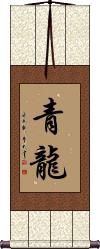
青龍 is a scholarly title for “Blue Dragon” or “Azure Dragon.”
You'll find this title used in ancient Chinese literature and astronomy. This dragon has dominion over the eastern sky or eastern heavens. The Azure Dragon is also noted for representing the spring season. Also seen as an auspicious omen.
Emperor Huizong of the Song Dynasty canonized the five colored dragons as “kings.” The Azure Dragon represents the most compassionate of kings.
In Japanese, this title is known with the same meaning but can also be a given name, Seiryuu or Seiryu.
Note, the first character can be written as  OR
OR  . Same character, just two ways to write it.
Unmoved by the Eight Winds

八風吹不動 is an ancient Buddhist phrase from about 1000 years ago.
Literal meaning: “The Eight Winds cannot move [me].”
The original famous anecdote is from Song Dynasty China, involving the poet-official 蘇東坡 (Su Dongpo / Su Shi, 1037–1101) and Zen master 佛印 (Foyin).
Su Dongpo wrote 八風吹不動,一屁打過江
“The Eight Winds cannot move me; Yet one fart blows me across the river.”
Foyin’s irreverent reply exposed Su Dongpo’s ego, which is kind of a classic Zen/Chan teaching story.
利 gain
衰 loss
毀 disgrace
譽 praise
稱 honor
譏 ridicule
苦 suffering
樂 pleasure
“The Eight Winds cannot move [him / the mind].”
“Unmoved by the Eight Winds.”
“The Eight Winds do not move me.”
“Not moved by the Eight Winds.”
“Unshaken by the Eight Winds.”
“Unaffected by the Eight Winds.”
“Unmoved by worldly forces.”
“Steadfast against the Eight Winds.”
“Remaining unmoved amid the Eight Winds.”
There is a shorter Japanese Zen version, 八風不動, which drops the middle character. Often romanized as happū fudō. The romanization of 八風吹不動 is arguably happū fukedomo ugokazu or happū sui fudō.
Bamboo Moon
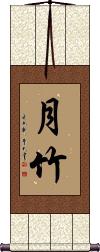
月竹 is the title, “Bamboo Moon” - Technically, it's in the order of “moon bamboo,” but that's the most natural order in Chinese and Japanese.
With a little research, I found this title has been used as the name of a linen company, a band, a song title, an actual person's name, the title for a piece of artwork featuring bamboo with a moon in the background, and a few other things. I added it here because many people searched for “bamboo moon” on my website, so here it is for you.
The typical Japanese pronunciation would probably be “tsu-ki ta-ke.” However, this would not be the only possible pronunciation in Japanese (especially if used as a given name).
The Beatles
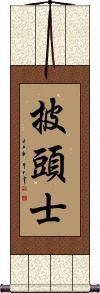
披頭士 is the most common Chinese title for the Beatles.
Of course, this refers to the famous fab-four music band of the 1960s.
Other less-common titles for the Beatles include 披頭四樂隊 and 披頭四樂團.
Beautiful Dreamer
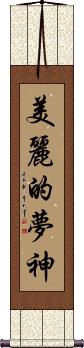
美麗的夢神 is the Chinese title for the song Beautiful Dreamer.
It translates as Beautiful Dream Saint.
Benzaiten
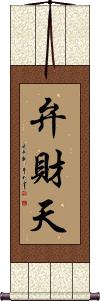
弁財天 is a Buddhist term that can be translated or transliterated as Benzaiten or Saraswati.
弁財天 is the Buddhist goddess of music, eloquence, wealth, and water.
This goddess of eloquence came into Buddhism from the Hindu goddess Saraswati. Benzaiten and Saraswati are considered by most to be one and the same. However, in Japanese culture, Benzaiten has been conflated with several other deities.
Born To Be Wild
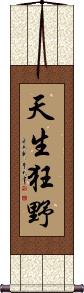
天生狂野 is “Born To Be Wild” (like the Steppenwolf song) in Chinese (Mandarin).
If you get to the deep meaning, the first two characters can mean “born” but refer as much to the nature, disposition, calling, or innate qualities of something or someone.
The last two mean coarse and/or wild.
So it roughly means that it is your nature to be wild.
Born To Be Wild
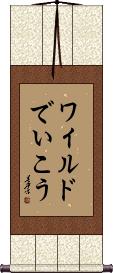
This is the Japanese version of “Born To Be Wild” (title of the Steppenwolf song).
The more literal meaning in Japanese for this phrase is “Let's go wild.”
Note: Because this title is entirely Japanese Hiragana and Katakana, it should be written by a Japanese calligrapher.
Dance
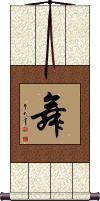
舞 is the simplest way to write dance in Chinese, Japanese Kanji, and old Korean Hanja.
It can also be translated as to dance, to wield, to brandish, or to circle.
舞 reads more clearly as dance in Chinese than it does in Japanese (see our two-character word for dancing if you want to be absolutely clear in both languages).
Dance / Dancing
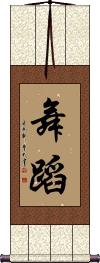
舞蹈 is the clearest way to express the art of dancing in Chinese, Japanese, and Korean.
If you are a dancer or love the art of dance, this is the calligraphy selection for you.
Dance
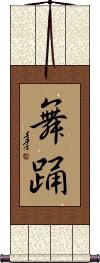
舞踊 is the most proper term for dance or dancing in Japanese.
The first Kanji means “dance,” and the second means to jump or leap. Together, they are just a strong way to say “dance” (the second Kanji just clarifies the first - nobody will translate this as “dance jumping”).
Dancer
Classic Chinese
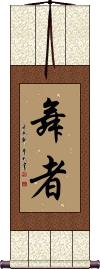
舞者 is the classic or literary way to say dancer in Chinese.
This is probably the most eloquent way to say dancer and the most appropriate for a wall scroll.
Dancer
Modern Chinese Version
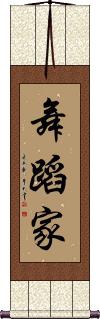
舞蹈家 is the modern way to say dancer in Chinese.
Dancer
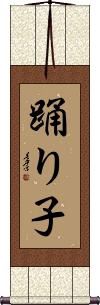
踊り子 means dancer in Japanese.
This title usually refers to a female dancer.
Diva
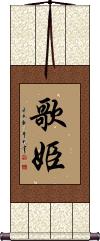
歌姫 is a Japanese and Chinese word that means songstress or diva.
This can refer to a famous female singing star like Madonna, Cher, Lady Gaga, Celine Deon, etc.
When pronounced “Rara,” it can be a Japanese female given name.
Echo
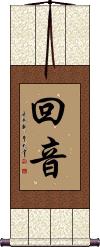
回音 is the word echo in Chinese.
It can also mean reply or turn (ornament in music).
In Japanese, this just has the meaning of turn (melodic ornament) or gruppetto. Only select this if your audience is Chinese.
Geisha
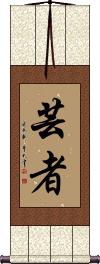
芸者 is the real basis for the way we spell geisha.
However, there are many more ways to refer to a woman that fills the role that westerners think of when they hear the word geisha.
In Japanese, these characters literally mean “artful person.” But in English, it might be better translated as “a person (woman) highly trained/accomplished in the arts.”
However, my Japanese dictionary says “a singing and dancing girl.”
Many will argue as to whether “geisha” = “prostitute” or not. My Japanese friends seem to have the opinion that a geisha is so highly trained in the art of playing musical instruments and dancing that the fact she might also be a prostitute is secondary to her performance on stage.
芸者 is a “Japanese only” term, they use a slightly different first character to express “geisha” in Chinese. Since this is a Japanese term, I have not included the Chinese version.
Happy / Laughter / Cheerful Bliss
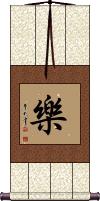
樂 is a single-character form of happiness or bliss that holds the ideas of laughing and having a good time.
This can also be translated as happy, glad, enjoyable, fun, and sometimes, music.
This a really good character if your audience is Chinese.
This is not a word seen alone very often in Korean.
 In Japanese, this character is written like the image shown to the right. If you order this from the Japanese master calligrapher, it will look like this instead of the character shown above.
Note: In Japanese, this has a meaning of comfort, ease, and enjoyment.
See Also: Joyfulness / Happiness
Happu Fudo
Unmoved by the Eight Winds

八風不動 is the short version, popularized in Japanese Zen Buddhism, of the original Chinese phrase 八風吹不動.
Literal meaning: “Unmoved by the Eight Winds”
The origin is Chinese, but it was later adopted into Japanese Zen. Here’s a little backstory:
The original famous anecdote is from Song Dynasty China, involving the poet-official 蘇東坡 (Su Dongpo / Su Shi, 1037–1101) and Zen master 佛印 (Foyin).
Su Dongpo wrote 八風吹不動,一屁打過江
“The Eight Winds cannot move me; Yet one fart blows me across the river.”
Foyin’s irreverent reply exposed Su Dongpo’s ego, which is kind of a classic Zen teaching story.
Harmony / Balance
Cho Wa
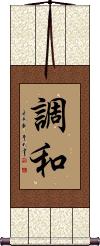
調和 is one of the several ways to express harmony in Chinese and Japanese.
Note: The first character means harmony but also suggests a musical meaning. It can also describe warriors marching in perfect cadence (in step) or to regulate something.
The second character carries the meaning of harmony and peace by itself.
Together, these characters create a word that can mean harmonious, to mediate, to reconcile, to compromise; mediation, temper, to mix, blend, blended, season, seasoning (getting the flavors of the food in balance), to placate, or be in harmonious proportion.
The meaning varies depending on the context. However, when hanging as a wall scroll, this will refer to the person (you) being balanced and in harmony while rational and under control simultaneously.
The Whole Room Rocks With Laughter
The perfect scroll if you love humor or as a gift for the comedian in your life
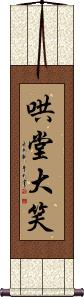
In China, 哄堂大笑 is a proverb that is used in response to a good joke or witty comment.
The story goes that Mr. Feng and Mr. He were both senior officials in the Song Dynasty (about a thousand years ago). One day, Mr. Feng walked into their shared office wearing a new pair of boots. The boots caught the eye of Mr. He who said, “New boots! - how much were they?.” Mr. Feng lifted one of the boots off the ground as if to show it off and responded, “900 coins.”
Astonished, Mr. Feng explained, “900? How can that be? - I paid 1800 coins for my boots!.” Mr. Feng then lifted his other foot off the ground and said, “This boot was also 900 coins.”
It is said that the whole room was shaking from the laughter of all that heard Mr. Feng's joke on Mr. He.
Jikata

This word has a few possible meanings.
It can refer to a room, hall, or place (a dojo or small theater). The dictionary suggests that in some context, this can refer to a special geisha who is talented in certain musical arts.
King
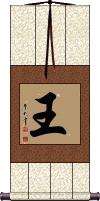
王 is wang which means king. It is not pronounced the way you think in Chinese. It is more like English speakers would want to pronounce wong. It has roughly the same vowel sound as tong, song, or long in English.
Note that this means king only, not the emperor. An emperor is higher than a king, and theoretically is chosen by God, according to ancient Chinese culture. However, the definition is often blurred at various points in Asian history.
王 can also be defined as ruler, sovereign, monarch, or magnate. It is also can refer to a game piece in the chess-like Japanese strategic game of shoji.
Note: This can also be a family name in Chinese, Korean and Vietnamese (in Vietnamese it's Vương).
See Also: Queen
Life is Fun
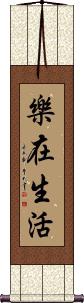
This means “life is fun” in Chinese.
樂 means fun, happy, or in some contexts, joyful music.
在 means at/is.
生活 means life or living.
Lion Dance
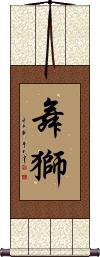
舞獅 is the Chinese title for “lion dance.”
舞獅 is the traditional Chinese costumed dance seen at festivals (especially Chinese New Year), ceremonies, and often at the beginning of Chinese martial arts events.
Lion Dance
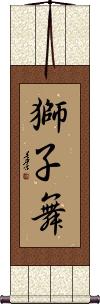
獅子舞 is the Japanese title for lion dancing.
This refers to the Japanese version borrowed from traditional Chinese culture. The Japanese version almost always features a red-faced lion with a green cloak with a white pattern.
Live and Let Die
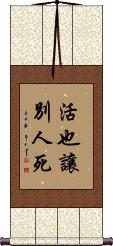
活也讓別人死 means “live and let die” in Chinese.
This is the Chinese translation of the song lyric by Guns 'n Roses for the James Bond 007 movie of the same name.
Madonna
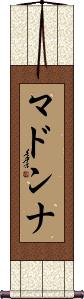
マドンナ is the name Madonna in Japanese.
This is also used to refer to the American singing star, Madonna.
Note: Because this title is entirely Japanese Katakana, it should be written by a Japanese calligrapher.
Melody / Song
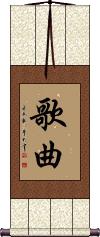
歌曲 is a Chinese, Japanese Kanji, and old Korean Hanja for song, melody, or tune.
There are a few other words that can mean melody, but this is probably the most common and universal.
Sensei / Master / Teacher / Mister
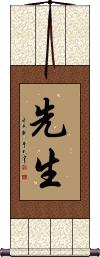
先生 is sensei, which is associated in the west with a master or instructor of karate, aikido, judo, and other Japanese martial arts.
In reality, this is a term of respect for almost any professional or skilled person (doctor, lawyer, teacher, etc.). Sometimes, it is used for musicians and artists who have achieved a certain level of fame, skill, or accomplishment.
It should be noted that this is also a courtesy title in Chinese but more like calling someone “mister” or “gentleman.” It doesn't have the “master” or “teacher” meaning in Chinese - see our Chinese “Master / Sifu / Shi Fu” entry if your audience is Chinese.
In Korean Hanja, this means teacher, instructor, schoolmaster, or schoolmistress.
This entry is for educational purposes. 先生 is kind of a strange thing to put on a wall scroll. It's a title that is used more orally to show respect rather than something written in calligraphy. If you feel it is appropriate in your circumstances, we will create a piece of sensei Japanese calligraphy artwork for you.
Monkey Fist
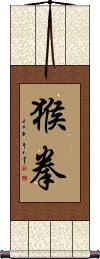
猴拳 literally means what you think, it's the “Monkey Fist” school of Kung Fu. A style that mimics the punches and movements of monkeys and apes.
Becoming popular during the Qing Dynasty, this style can trace its origins back to as early as the Song Dynasty. Some of the romance and popularity of this style comes from the novel “Journey to the West” which features the Monkey King and his fighting skills.
This novel and martial arts style has spawned a stream of Hong Kong movies featuring the Monkey King and other Kung Fu style variations such as “Drunken Monkey” and “Monkey Stealing Peaches” (a technique of disabling your opponent by grabbing and yanking on his testicles).
Note: This kind of makes sense in Korean Hanja and Japanese Kanji but probably unknown by all Koreans and Japanese except those who have an interest in this form of Kung Fu.
Music
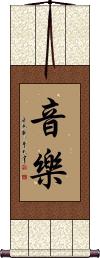
音樂 is how to write music in most Asian languages.
It can also express the idea of a musical movement, depending on context.
The second character has morphed a bit in Japanese Kanji. If you want the specifically modern Japanese version, please click on the Kanji to the right, instead of the button above. The version shown to the left was used in ancient Japan, prior to the Japanese language reformations after WWII (so technically,
it’s
still Japanese).
Music is Life
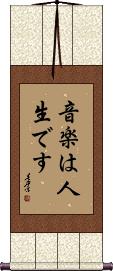
This means “music is life” in Japanese.
Note: Because this selection contains some special Japanese Hiragana characters, it should be written by a Japanese calligrapher.
Music is Life
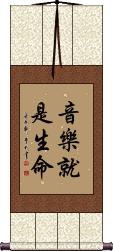
音樂就是生命 means “Music is Life,” in Chinese.
This is a title that we composed after so many people searched for it on our website.
Musician
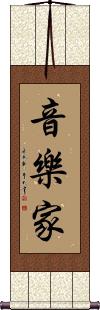
音樂家 is how to write “musician” in most Asian languages.
There is more than one way to express “musician” in China, but this is the traditional and most respectful title.
The second character has morphed a bit in Japanese Kanji. If you want the specifically modern Japanese version, please click on the Kanji to the right, instead of the button above. The version shown to the left was used in ancient Japan, prior to the Japanese language reformations after WWII (so technically,
it’s
still Japanese).
See Also: Peace / Harmony | There is One Single Thread Binding My Way Together
Musick

穆西克 is the name Musick in Chinese (Mandarin).
Musick

ミュージック is the name Musick in Japanese Katakana.
Note: Because this title is entirely Japanese Katakana, it should be written by a Japanese calligrapher.
Nguyen / Ruan
Surname
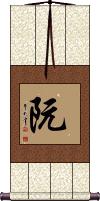
阮 is the original Chinese character that represented the Vietnamese surname Nguyễn before Vietnam stopped using Chinese characters and romanized their language. It is probably the most common surname in all of Vietnam. While romanized as Nguyen, it sounds more like the English word “Win” or “When.” 阮 can also represent the Nguyen Dynasty in Vietnam, which lasted from 1802 to 1945.
阮 is also the Chinese surname Ruan, most Chinese with this surname have ancestors from a small state named Ruan during the Shang Dynasty (1600-1046 BC) located in the southeast of modern-day Gansu Province.
In Japanese, this can be the rare surnames pronounced Min, Gen, Ken, Gan, or En.
Besides a surname, this character also represents an ancient musical instrument.
Northern Praying Mantis
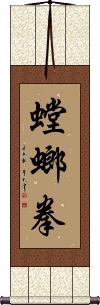
This can be translated literally as “Praying Mantis Fist.”
螳螂拳 is sometimes called Shandong Praying Mantis after its place of origin. It was created by Wang Lang and was named after the praying mantis, an insect, the aggressiveness of which inspired the style.
Shaolin records document that Wang Lang was one of the 18 masters gathered by the Shaolin Abbot Fu Ju, which dates him and Northern Praying Mantis style to the Song Dynasty (960-1279 A.D.).
The fact that the word “Northern” is used in the English title has more to do with where this style came from (Shandong is in northern China), but “north” is absent from this Chinese title.
Note: 螳螂拳 is also a title in Japanese - however, only a Japanese person who practices or is familiar with the “Praying Mantis Fist” style would recognize it.
Opera
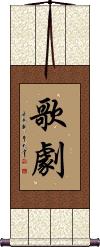
歌劇 is the Chinese, Japanese Kanji, and old Korean Hanja for opera.
This term applies in almost all cases to western opera versus Asian operas or musical plays.
A Rising Tide Lifts All Boats
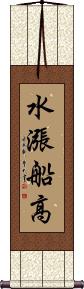
水漲船高 means “A rising tide lifts all boats/ships” in Chinese.
This idiom first appeared in the “Wudeng Huiyuan” (五燈會元) by the Song Dynasty monk Puji (普濟).
There is also a version that says “The longer the water flows, the higher the boat rises” or “水長船高.”
Acknowledgments: Thanks to Mac Lee for a factual correction to this entry.
Ritsu
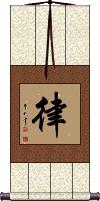
While this character literally means law, regulation or rules, it's also a surname Lü in Chinese and name Ritsu in Japanese.
In more ancient times (and for some people still), this can refer to East Asian criminal code, or vinaya (rules for the monastic community). For Japanese Buddhists, this can be the Ritsu school.
In some context, this can refer to certain musical scales used in Asia.
Sing / Singing
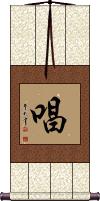
唱 is how to refer to singing or song in Chinese.
In Japanese, the meaning is similar but more closely means chant, recite or yell. Best if your audience is Chinese.
Star Lotus
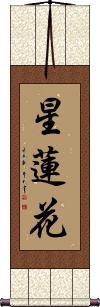
星蓮花 is the title Star Lotus in Chinese.
For star lotus, some may write 星荷 instead - especially in Taiwan for reasons I am not sure of. 星荷 is sometimes romanized as “sing he” or “sing ho” though it would be “xīng hé” in mainland pinyin romanization. If you need a particular version or more info, please get in touch with me.
Sunshine
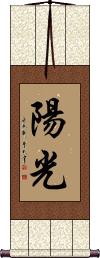
陽光 is the Chinese word for sunshine.
陽光 is a more emotional word compared to another Asian word that means “sunlight.” If you were going to sing a song or write a poem, this is the word you would use.
Note: This is a rarely-used word in Korean or Japanese.
Ten Commandments
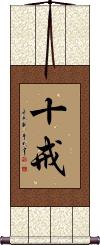
十戒 means Ten Commandments or Ten Precepts.
In the Buddhist context, these are prohibitions consisting of five commandments for the layman:
1. Not to destroy life 不殺生 Pāṇātipātāveramaṇi.
2. Not to steal 不倫盜 Adinnādānāver.
3. Not to commit adultery 不婬慾 Abrahmacaryaver.
4. Not to lie 不妄語 Musāvādāver.
5. Not to take intoxicating liquor 不飮酒 Suramereyya-Majjapamādaṭṭhānāver.
The ten commandments for the monk are the preceding five plus:
6. Not to eat food outside of regulated hours 不非時食 Vikāla-Bhojanāver.
7. Not to use garlands or perfumes 不著華鬘好香塗身 Mālā- Gandha-Vilepana-Dhāraṇa-Maṇḍana-Vibhūṣanaṭṭhānā.
8. Not to sleep on high or broad beds (chastity) 不坐高廣大牀 Uccāsayanā-Mahāsayanā.
9. Not to take part in singing, dancing, musical or theatrical performances 不歌舞倡伎不往觀聽 Nacca-Gīta-Vādita-Visūkadassanāver.
10. To refrain from acquiring uncoined or coined gold, or silver, or jewels 不得捉錢金銀寶物 Jātarūpa-Rajata-Paṭīggahaṇāver.
These original Buddhist commandments date back to about 2500 years ago. The English definitions above are followed by Chinese characters and original Pali pronunciation.
Under the Māhayāna Buddhism, these ten commands for the monk were changed, to accord with the new environment of the monk, to the following: not to kill, not to steal, to avoid all unchastity, not to lie, not to slander, not to insult, not to chatter, not to covet, not to give way to anger, to harbor no skepticism.
Viola
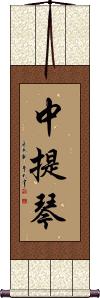
中提琴 is the Chinese title for the stringed musical instrument known in English as the viola.
Wing Chun Kung Fu
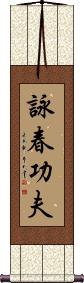
詠春功夫 is Wing Chun Kung Fu.
The first two characters literally mean “Singing Spring” (as in springtime).
The last two are “Kung Fu” (high skill).
Wing Chun
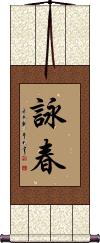
詠春 is a martial arts technique that has an oral history (versus a written one) so very little can be said for sure about its origins.
Wing Chun (or Wing Cheun) is a Chinese martial art that emphasizes short combat strokes.
The characters 詠春 literally mean “Singing Spring” (as in springtime).
If you are wondering, the spelling and pronunciation of this martial arts style in English come from the Cantonese pronunciation of these characters. The second character sounds similar in both Mandarin and Cantonese, but the first is quite different.
Note: This title can be pronounced in Japanese, but only a Japanese practitioner of Wing Chun would recognize or understand this title. It is not considered a Japanese word or martial art at all.
Wing Chun Fist
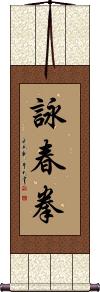
詠春拳 is the title for the “Wing Chun” school of martial arts but with the addition of the character for “fist” at the end. So this is “Wing Chun Fist” or literally “Singing Spring Fist.”
There are lots of alternate Cantonese romanizations for this, such as “Wing Chun Kuen,” “Wing Tsun Cheun,” “Eng Chun Pai,” and “Wing Ceon Kyun.” The characters are the same; just the lack of a standard Cantonese romanization means that people make up their own based on what they think it sounds like.
Yue Fei
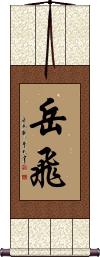
岳飛 is the name of General Yue Fei (1103-1142). He was a famous General of the Song Dynasty army in China. Many legendary stories have been written about him, and passed down through the generations.
In Japanese, this can be the personal name, Gakuhi.
This in-stock artwork might be what you are looking for, and ships right away...





The following table may be helpful for those studying Chinese or Japanese:
| Title | Characters | Romaji (Romanized Japanese) | Various forms of Romanized Chinese | |
| Blue Dragon Azure Dragon | 青龍 / 靑龍 青龙 | sei ryuu / seiryuu / sei ryu | qīng lóng qing1 long2 qing long qinglong | ch`ing lung chinglung ching lung |
| Unmoved by the Eight Winds | 八風吹不動 八风吹不动 | happuu sui fudou happuusuifudou hapu sui fudo | bā fēng chuī bù dòng ba1 feng1 chui1 bu4 dong4 ba feng chui bu dong bafengchuibudong | pa feng ch`ui pu tung pafengchuiputung pa feng chui pu tung |
| Bamboo Moon | 月竹 | tsuki take / tsukitake | yuè zhú / yue4 zhu2 / yue zhu / yuezhu | yüeh chu / yüehchu |
| The Beatles | 披頭士 披头士 | pī tóu shì pi1 tou2 shi4 pi tou shi pitoushi | p`i t`ou shih pitoushih pi tou shih |
|
| Beautiful Dreamer | 美麗的夢神 美丽的梦神 | měi lì de mèng shén mei3 li4 de meng4 shen2 mei li de meng shen meilidemengshen | mei li te meng shen meilitemengshen |
|
| Benzaiten | 弁財天 弁财天 | ben zai ten benzaiten | biàn cái tiān bian4 cai2 tian1 bian cai tian biancaitian | pien ts`ai t`ien pientsaitien pien tsai tien |
| Born To Be Wild | 天生狂野 | tiān shēng kuáng yě tian1 sheng1 kuang2 ye3 tian sheng kuang ye tianshengkuangye | t`ien sheng k`uang yeh tienshengkuangyeh tien sheng kuang yeh |
|
| Born To Be Wild | ワイルドでいこう | wairudode ikou wairudodeikou wairudode iko | ||
| Dance | 舞 | mai | wǔ / wu3 / wu | |
| Dance Dancing | 舞蹈 | butou / buto | wǔ dǎo / wu3 dao3 / wu dao / wudao | wu tao / wutao |
| Dance | 舞踴 舞踊 | buyou / buyo | ||
| Dancer | 舞者 | wǔ zhě / wu3 zhe3 / wu zhe / wuzhe | wu che / wuche | |
| Dancer | 舞蹈家 | wǔ dǎo jiā wu3 dao3 jia1 wu dao jia wudaojia | wu tao chia wutaochia |
|
| Dancer | 踊り子 | odoriko | ||
| Diva | 歌姫 | utahime | gē jī / ge1 ji1 / ge ji / geji | ko chi / kochi |
| Echo | 回音 | kaion | huí yīn / hui2 yin1 / hui yin / huiyin | |
| Geisha | 芸者 | geisha | yún zhě / yun2 zhe3 / yun zhe / yunzhe | yün che / yünche |
| Happy Laughter Cheerful Bliss | 樂 / 楽 乐 | raku | lè / le4 / le | |
| Happu Fudo | 八風不動 八风不动 | happuu fudou happuufudou hapu fudo | bā fēng bù dòng ba1 feng1 bu4 dong4 ba feng bu dong bafengbudong | pa feng pu tung pafengputung |
| Harmony Balance | 調和 调和 | chou wa / chouwa / cho wa | tiáo hé / tiao2 he2 / tiao he / tiaohe | t`iao ho / tiaoho / tiao ho |
| The Whole Room Rocks With Laughter | 哄堂大笑 | hōng tāng dà xiào hong1 tang1 da4 xiao4 hong tang da xiao hongtangdaxiao | hung t`ang ta hsiao hungtangtahsiao hung tang ta hsiao |
|
| Jikata | 地方 | jikata | dì fāng / di4 fang1 / di fang / difang | ti fang / tifang |
| King | 王 | ou / o | wáng / wang2 / wang | |
| Life is Fun | 樂在生活 乐在生活 | lè zài shēng huó le4 zai4 sheng1 huo2 le zai sheng huo lezaishenghuo | le tsai sheng huo letsaishenghuo |
|
| Lion Dance | 舞獅 舞狮 | wǔ shī / wu3 shi1 / wu shi / wushi | wu shih / wushih | |
| Lion Dance | 獅子舞 | shi shi mai shishimai | ||
| Live and Let Die | 活也讓別人死 活也让别人死 | huó yě ràng bié rén sǐ huo2 ye3 rang4 bie2 ren2 si3 huo ye rang bie ren si huoyerangbierensi | huo yeh jang pieh jen ssu huoyehjangpiehjenssu |
|
| Madonna | マドンナ | madonna | ||
| Melody Song | 歌曲 | kakyoku | gē qǔ / ge1 qu3 / ge qu / gequ | ko ch`ü / kochü / ko chü |
| Sensei Master Teacher Mister | 先生 | sen sei / sensei | xiān shēng xian1 sheng1 xian sheng xiansheng | hsien sheng hsiensheng |
| Monkey Fist | 猴拳 | hóu quán / hou2 quan2 / hou quan / houquan | hou ch`üan / houchüan / hou chüan | |
| Music | 音樂 音乐 / 音楽 | ongaku | yīn yuè / yin1 yue4 / yin yue / yinyue | yin yüeh / yinyüeh |
| Music is Life | 音楽は人生です | ongaku wa jinseidesu ongakuwajinseidesu | ||
| Music is Life | 音樂就是生命 音乐就是生命 | yīn yuè jiù shì shēng mìng yin1 yue4 jiu4 shi4 sheng1 ming4 yin yue jiu shi sheng ming yinyuejiushishengming | yin yüeh chiu shih sheng ming | |
| Musician | 音樂家 音乐家 / 音楽家 | ongakuka | yīn yuè jiā yin1 yue4 jia1 yin yue jia yinyuejia | yin yüeh chia yinyüehchia |
| Musick | 穆西克 | mù xī kè mu4 xi1 ke4 mu xi ke muxike | mu hsi k`o muhsiko mu hsi ko |
|
| Musick | ミュージック | myuujikku / myujiku | ||
| Nguyen Ruan | 阮 / 阮 阮 | Min / Gen | ruǎn / ruan3 / ruan | juan |
| Northern Praying Mantis | 螳螂拳 | tou rou ken tourouken to ro ken | táng láng quán tang2 lang2 quan2 tang lang quan tanglangquan | t`ang lang ch`üan tanglangchüan tang lang chüan |
| Opera | 歌劇 歌剧 | kageki | gē jù / ge1 ju4 / ge ju / geju | ko chü / kochü |
| A Rising Tide Lifts All Boats | 水漲船高 水涨船高 | shuǐ zhǎng chuán gāo shui3 zhang3 chuan2 gao1 shui zhang chuan gao shuizhangchuangao | shui chang ch`uan kao shuichangchuankao shui chang chuan kao |
|
| Ritsu | 律 | ritsu | lǜ / lu:4 / lu: | lü |
| Sing Singing | 唱 | chàng / chang4 / chang | ch`ang / chang | |
| Star Lotus | 星蓮花 星莲花 | xīng lián huā xing1 lian2 hua1 xing lian hua xinglianhua | hsing lien hua hsinglienhua |
|
| Sunshine | 陽光 阳光 | you kou / youkou / yo ko | yáng guāng yang2 guang1 yang guang yangguang | yang kuang yangkuang |
| Ten Commandments | 十戒 | jukkai / jukai | shí jiè / shi2 jie4 / shi jie / shijie | shih chieh / shihchieh |
| Viola | 中提琴 | zhōng tí qín zhong1 ti2 qin2 zhong ti qin zhongtiqin | chung t`i ch`in chungtichin chung ti chin |
|
| Wing Chun Kung Fu | 詠春功夫 咏春功夫 | yǒng chūn gōng fu yong3 chun1 gong1 fu yong chun gong fu yongchungongfu | yung ch`un kung fu yungchunkungfu yung chun kung fu |
|
| Wing Chun | 詠春 咏春 | ei haru / eiharu | yǒng chūn yong3 chun1 yong chun yongchun | yung ch`un yungchun yung chun |
| Wing Chun Fist | 詠春拳 咏春拳 | yǒng chūn quán yong3 chun1 quan2 yong chun quan yongchunquan | yung ch`un ch`üan yungchunchüan yung chun chüan |
|
| Yue Fei | 岳飛 岳飞 | gakuhi | yuè fēi / yue4 fei1 / yue fei / yuefei | yüeh fei / yüehfei |
| In some entries above you will see that characters have different versions above and below a line. In these cases, the characters above the line are Traditional Chinese, while the ones below are Simplified Chinese. | ||||



