Switched to secondary search mode due to lack of results using primary.
These secondary results may not be very accurate. Try a different but similar meaning word or phrase for better results. Or:
Look up in my Japanese Kanji & Chinese Character Dictionary(My dictionary is a different system then the calligraphy search you just tried)
If you want a special phrase, word, title, name, or proverb, feel free to contact me, and I will translate your custom calligraphy idea for you.
Forever Chinese / Japanese Calligraphy Wall Scroll
You can select from many options to create artwork with the Chinese characters / Asian symbols / Japanese Kanji for "Forever" on a wall scroll or portrait.
Note: It is hard to distinguish between what means "forever" and what means "eternal" in Chinese and Japanese. In many cases, they can be used interchangeably.
Start your "Forever" project by clicking on the "Customize & Buy" button next to your favorite "Forever" title below...
4. Fix the roof before the rain; Dig the well before you are thirsty
6. You are always a beauty in your lover’s eyes
8. Better to be Happy than Rich
10. You May Learn from Victory, You Will Learn from Failure
11. Brotherly and Sisterly Love
12. Mark the boat to find the lost sword / Ignoring the changing circumstances of the world
13. Seeking Wisdom
14. Choose Life
16. Confucius: Golden Rule / Ethic of Reciprocity
17. Crisis equals Danger plus Opportunity?
18. Daodejing / Tao Te Ching - Chapter 1
19. Dark Sister
20. Dark Angel
21. I am the Master of My Destiny
22. Devotion / Dedication / Attentive / Focused
23. Drain the pond to get all the fish
24. Drinking the water of a well: One should never forget who dug it
25. Dynamic
27. Eternal Beauty
28. Eternal Energy / Eternal Matter
29. Eternal Friendship / Friends Forever
32. Eternal Love
33. Eternal Peace
35. Eternal Life / Everlasting Life / Immortality
36. Eternal Life / Future Life
38. Eternal Peace and Happiness
41. Eternity / Always and Forever
42. Sky / Ether / Void / Emptiness / Unreality
43. Fall Down Seven Times, Get Up Eight
44. The Mysterious Bond Between People
45. Fear God
46. Five Families / Tsoi Li Hoi Fut Hung
49. Soccer / Football / Futbol
53. Forever Love
54. Forever Young
55. Forever Young / Eternal Youth
57. Forever Family
58. Forever Sisters
60. Eternal Friendship / Friends Forever
61. Gassho
63. God Bless You
64. God Bless You / God Be With You
69. Happy Family
70. Use Hard Work to Overcome Adversity
72. Heaven
73. Hebrews 13:8
75. Impermanence
76. The incompetent boat pilot blames the river for his shortcomings
77. Infinite Love
78. Infinity / Infinite / Endless / Boundless
79. Inner Strength / Self-Improvement
80. Ivy
82. Jesus
83. Joshua 1:9
84. Safety and Well-Being of the Family
85. To Know Hardship, One Must Experience It
86. Contentment
88. You May Learn from Victory, You Will Learn from Failure
90. Life Energy / Spiritual Energy
91. Lion Dance
93. Eternal Love / Love Eternally
94. Love Forever / Love Eternal
96. Loyalty
1 Corinthians 13:4-8
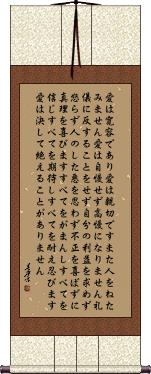
Here is 1st Corinthians 13:4-8 (just the first sentence of verse 8) in Japanese.
In the familiar NIV, this would read:
Love is patient, love is kind. It does not envy, it does not boast, it is not proud.
It does not dishonor others, it is not self-seeking, it is not easily angered, it keeps no record of wrongs.
Love does not delight in evil but rejoices with the truth.
It always protects, always trusts, always hopes, always perseveres.
Love never fails...
The Japanese text is from the 新改訳聖書 (Shinkaiyaku) or New Japanese Bible. Popular among most Protestant denominations in modern Japan.
Note: Because this selection contains some special Japanese Hiragana characters, it should be written by a Japanese calligrapher.
Always Try to do Better
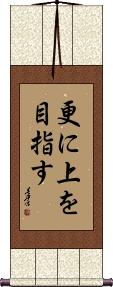
This Japanese proverb literally translates as: [After having achieved a fair degree of success,] one should still try to do better.
Others may translate this as “Always try to improve,” or “Always try to be better.”
Note: Because this selection contains some special Japanese Hiragana characters, it should be written by a Japanese calligrapher.
See Also: Never Give Up
Always with a Book in Hand
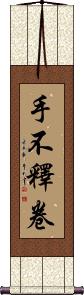
手不釋卷 is a Chinese proverb that literally means “always with a book in hand.”
It's a proverb said of a hardworking scholar or student.
This may refer to a student or scholar who is diligent and hardworking. It's a great gift for a student or scholar who loves books.
Fix the roof before the rain; Dig the well before you are thirsty
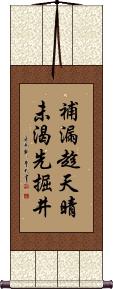
补漏趁天晴未渴先掘井 is a Chinese proverb that literally translates as: Mend the roof while the weather is fine, [and when you are] not yet thirsty, dig the well beforehand.
In simple terms, this means: Always being prepared in advance.
See Also: Have a Walking Stick at the Ready Before You Stumble
You are Always in My Heart
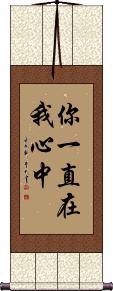
你一直在我心中 means “You are always in my heart” in Chinese.
你 = You
一直 = Always
在 = In/At
我 = Me/My
心中 = Heart/Mind
The idea or definition of heart and mind overlap somewhat in ancient Chinese, so this can also mean “You are always in my mind.”
You are always a beauty in your lover’s eyes
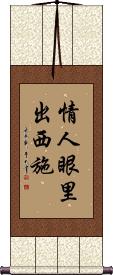
Any woman with affection for Asian art will love a gift of this Chinese proverb calligraphy on a wall scroll.
She will melt in your arms as you tell her the meaning of these characters.
Contained in this phrase is a reference to the most beautiful woman in Chinese history. Her name was Xi Shi, and she was known to have good looks that need not have fine robes or makeup. Her charms were so powerful that she brought down an entire kingdom (in a successful effort to bring honor and pride back to her people).
情人眼里出西施 is a great way to express that the woman in your life is your one love.
Mind of the Beginner
Shoshin
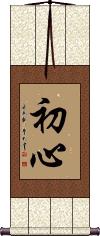
初心 is often translated in Japanese as “beginner's mind” or “beginner's spirit.”
In Chinese, the dictionary definition is “one's original intention.”
The first character means first, initial, primary, junior, beginning, or basic.
The second character means heart, mind, soul, or essence.
初心 is one of the five spirits of the warrior (budo) and is often used as a Japanese martial arts tenet. Under that context, places such as the Budo Dojo define it this way: The state of shoshin is that of a beginners mind. It is a state of awareness that always remains fully conscious, aware, and prepared to see things for the first time. The attitude of shoshin is essential to continued learning.
Better to be Happy than Rich
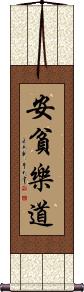
安貧樂道 means “It's better to be happy than rich” in Chinese.
Even if you are poor, you should still feel satisfied in your life...
...Satisfaction, happiness and the meaning of your life come from within yourself and not from money or riches of the world.
In Chinese, there are many four-character proverbs which express some very old philosophies.
Though there are only four characters on this scroll, in Chinese, the meanings often surpass the dictionary definition of each character.
In this case, you should not set your expectations too high for the money or riches you wish to have. One who sets their expectations too high is almost always disappointed. Instead, you should cherish what you have, seek to improve yourself from within, and not measure your worth by the size of your bank account.
Love Binds Us Together
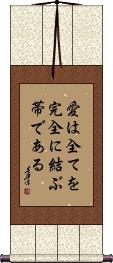
愛は全てを完全に結ぶ帯である is a Japanese phrase that suggests we (or a couple) are bound together by love.
I searched the web and found all of these English translation variations for this phrase:
Have love; The only way in which you may be completely joined together.
Love is the sash that perfectly binds us together.
Love is what binds us together
Love binds all things together in perfect unity.
This same Japanese phrase is used as part of Colossians 3:14 in at least one version of the Japanese Bible.
A few Biblical versions include:
...Charity, which is the bond of perfectness. (KJV)
...Love, which binds them all together in perfect unity. (NIV)
Note: Because this selection contains some special Japanese Hiragana characters, it should be written by a Japanese calligrapher.
You May Learn from Victory, You Will Learn from Failure
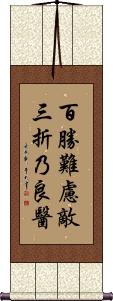
百胜难虑敌三折乃良医 is a Chinese proverb that literally translates as: [Even a general who has won a] hundred victories [may be] hard put to see through the enemy's [strategy], [but one who has] broken [his] arm three [times] [will] be a good doctor.
Figuratively, this means: One cannot always depend on past successes to guarantee future success but one can always learn from lessons drawn from failure.
See Also: Failure is the Mother of Success | Success | Time | Schooled by Experience and Hard Knocks
Brotherly and Sisterly Love
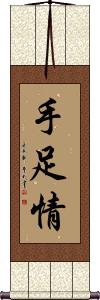
手足情 is the love between siblings.
When you love, protect, care for, and have a deep bond that only brothers or sisters can.
The actual translation is “Hand and Foot,” but the relationship between brothers or sisters is like that of hands and feet. They belong together and complete the body. Even though this says “hand and foot,” it will always be read with the brotherly and sisterly love meaning in Chinese.
Note: During the past 20 years, the “One child policy” in China is slowly making this term obsolete.
Mark the boat to find the lost sword / Ignoring the changing circumstances of the world
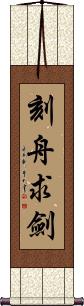
刻舟求劍 is an originally-Chinese proverb that serves as a warning to people that things are always in a state of change.
Thus, you must consider that and not depend on the old ways or a way that may have worked in the past but is no longer valid.
This idiom/proverb comes from the following story:
A man was traveling in a ferry boat across a river. With him, he carried a treasured sword. Along the way, the man became overwhelmed and intoxicated by the beautiful view and accidentally dropped his prized sword into the river. Thinking quickly, he pulled out a knife and marked on the rail of the boat where exactly he had lost his sword.
When the boat arrived on the other side of the river, the man jumped out of the boat and searched for his sword right under where he'd made the mark. Of course, the boat had moved a great distance since he made the mark, and thus, he could not find the sword.
While this man may seem foolhardy, we must take a great lesson from this parable: Circumstances change, so one should use methods to handle the change. In modern China, this is used in business to mean that one should not depend on old business models for a changing market.
This proverb dates back to the Spring and Autumn period (770–476 BC) of the territory now known as China. It has spread and is somewhat known in Japan and Korea.
Seeking Wisdom
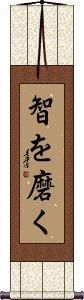
智を磨く is an old obscure Japanese phrase that means to refine, cultivate, or improve one's wisdom.
This is the mantra of one who is a seeker of wisdom. They will always want to polish, shine, refine, improve, and expand their knowledge and understanding.
Note: Because this selection contains some special Japanese Hiragana characters, it should be written by a Japanese calligrapher.
Choose Life
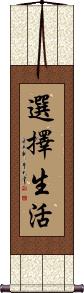
選擇生活 can mean to choose life instead of death (or suicide) or to choose to live life to the fullest.
I think of it as the key phrase used by Renton (Ewan McGregor) in the movie Trainspotting. While Chinese people will not think of Trainspotting when they see this phrase, for me, it will always be what comes near the end of this colorful rant:
Choose life. Choose a job. Choose a career. Choose a family. Choose a fucking big television. Choose washing machines, cars, compact disc players, and electrical tin can openers. Choose good health, low cholesterol, and dental insurance. Choose fixed-interest mortgage repayments. Choose a starter home. Choose your friends. Choose leisure wear and matching luggage. Choose a three-piece suite on-hire purchase in a range of fucking fabrics. Choose DIY and wondering who the fuck you are on a Sunday morning. Choose sitting on that couch watching mind-numbing, spirit-crushing game shows, stuffing fucking junk food into your mouth. Choose rotting away at the end of it all, pissing your last in a miserable home, nothing more than an embarrassment to the selfish, fucked-up brats you have spawned to replace yourself. Choose your future. Choose life.
Word of God / The Gospel
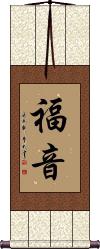
福音 is the Chinese, Korean and Japanese word for “Gospel” or “Word of God.”
福音 is a specifically Christian word in Asia (not used for any other religion).
The first character means blessing, good fortune, or good luck. This first character is a special character used throughout China to bring good tidings and fortune - especially during Chinese New Year. The second character means sound, noise, or news.
Together, these characters create a word that means “The Good News” or “The Sound of Good Fortune.”
When read by a Chinese or Japanese person, this word is always perceived as “The Christian Gospel,” “Word of God,” or even “The Voice of God.”
See Also: Christ | Jesus Christ | God of Zion / God of Abraham
Confucius: Golden Rule / Ethic of Reciprocity
Do not do to others what you do not want done to yourself
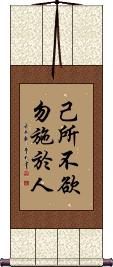
Some may think of this as a “Christian trait,” but actually, it transcends many religions.
This Chinese teaching dates back to about 2,500 years ago in China. Confucius had always taught the belief in being benevolent (ren), but this idea was hard to grasp for some of his students, as benevolence could be kind-heartedness or an essence of humanity itself.
When answering Zhong Gong's question as to what “ren” actually meant, Confucius said:
己所不欲勿施于人 or “When you go out, you should behave as if you were in the presence of a distinguished guest; when people do favors for you, act as if a great sacrifice was made for you. Whatever you wouldn't like done to you, do not do that thing to others. Don't complain at work or home.”
Hearing this, Zhong Gong said humbly, “Although I am not clever, I will do what you say.”
From this encounter, the Chinese version of the “Golden Rule” or “Ethic of Reciprocity” came to be.
The characters you see above express, “Do not do to others whatever you do not want to be done to yourself.”
See Also: Tea | Benevolence
Crisis equals Danger plus Opportunity?
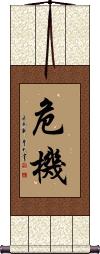
危機 means crisis in Chinese and Japanese.
Separately, the first character here does mean “danger” or “to endanger,” and the second character can mean “opportunity.”
However, I want to debunk a myth that was propagated by some westerners who did not have a clear understanding of Asian languages...
While often, Chinese/Japanese/Korean compound words (words of two or more characters) are the sum of their parts, this is not always the case. The compound is often understood with a completely different meaning than the two characters individually.
Many have said that the Chinese/Japanese/Korean word for Crisis is made up of the characters for “danger” and “opportunity.” 危機 is true when phrased this way.
However, it's not absolutely correct to say that “danger + opportunity = crisis” in Asian cultures.
English example:
If I tell you that...
Bovine creature + Guy behind the plate in baseball = Locomotive train protection

...you would think I was mad. But consider that “cow + catcher = cowcatcher,” which is the device that used to be found on steam engines to protect them if they hit an animal on the tracks. When we hear the word “cowcatcher,” we don't separate the words into their individual meanings (necessarily).
The same is true with the word for crisis in Chinese/Japanese/Korean. While you can separate the characters, few Asian people would automatically do so in their minds.
The final answer:
It is a half-truth to say, “danger plus opportunity equals crisis” in Chinese/Japanese/Korean. Use this statement and concept with caution.
Also, the second character can mean “secret” or “machine,” depending on context so I guess you have to say “a dangerous machine = crisis” or “danger + a secret = crisis.” Both of these are only slightly more ridiculous than the first premise.
PS: 危機 is probably not a great word for a scroll unless you have a special use for it.
Daodejing / Tao Te Ching - Chapter 1
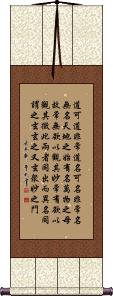
This text is the first chapter of the Daodejing / Tao Te Ching.
The Way that can be followed is not the eternal Way.
The name that can be named is not the eternal name.
The nameless is the origin of heaven and earth
While naming is the origin of a myriad of things.
Therefore, always desireless, you see the mystery
Ever desiring, you see the manifestations.
These two are the same—
When they appear, they are given different names.
This sameness is the mystery,
Mystery within mystery;
The door to all marvels.
Dr. Muller's translation of all 81 Daodejing chapters
The text reads:
道可道、非常道。名可名、非常名。 無名天地之始 有名萬物之母。故常無欲以觀其妙、常有欲以觀其徼。此兩者同出而異名。同謂之玄。玄之又玄、衆妙之門。
This classical Chinese passage comes from the Mawangdui (馬王堆帛書) text.
Dark Sister
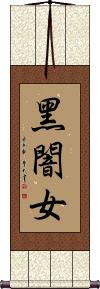
黑闇女 is a Buddhist title that means “dark sister,” “dark one,” or “dark woman.”
There are two sisters:
One is the deva, 功德女 (“merit” or “achieving”), who causes people to acquire wealth.
The other is the “dark one,” 黑闇女, which causes people to spend and waste.
These sisters always accompany each other.
Dark Angel
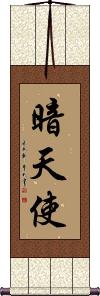
暗天使 is the shortest way to write, “Dark Angel,” in Chinese.
This literally reads, “dark heaven's messenger.”
天使 means “heaven's messenger” but is always understood as “angel.”
This would be pronounced “kura tenshi” in Japanese. This has the same meaning in Japanese, but not a common title. If you manage to find dark angel written in Japan, it would probably be ダーク エンジェル (Dāku Enjeru), which is a transliteration of the English title into Japanese, or 暗い天使 (kurai tenshi) which is a specifically Japanese title.
I am the Master of My Destiny
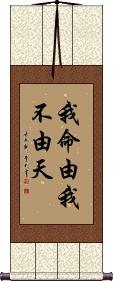
我命由我不由天 is often translated as “The one that shapes my destiny will always be myself rather than the God” or “Rather than Heaven, I am the master of my fate.”
Breaking down the words directly:
我命 = My fate/destiny
由我 = depends (on) me
不 = not
由天 dependant (on) Heaven.
See Also: Choose Your Own Destiny
Devotion / Dedication / Attentive / Focused
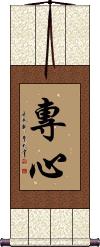
專心 makes a word that means “paying attention with your heart.”
It's often translated as “dedication,” as in “be absorbed in” or “concentrate one's efforts.” It's also used to mean “with the single mind,” “whole-heartedly,” “paying attention,” “undivided attention,” “concentration (-ed),” “engrossed,” “devotionally (listening/watching),” and/or “attentive.”
The first character means “for a particular person, occasion, or purpose,” “focused on one single thing,” “concentrated,” and sometimes, “special.”
The second character means “heart” or “mind” by itself.
My favorite translation, which comes from the Oxford Advanced Chinese/English Dictionary, is, “wholehearted devotion.”
If it seems like the meaning of this word is quite open, you are correct. The context in which the word is used matters a lot. It can mean different things depending on how you use it. This makes it useful as you can decide what this means to you (within some limits). This is always positive in meaning, so even if a Chinese person reads it differently than you, it will still have a good meaning.
 In Japanese, they tend to use a variation of the second character which has one less stroke. If you want your calligraphy written this Japanese form, please click on the Kanji shown to the right instead of the button above. Note: Japanese and Chinese people will recognize either form.
See Also: Faith | Sincerity and Devotion
Drain the pond to get all the fish
Kill the goose that lays the golden eggs
In 632 BC, Duke Wen of the Kingdom of Jin was about to lead an army against the forces of the Kingdom of Chu.
The Duke asked one of his advisers, Jiu Fan, how they could win the impending battle, as they were drastically outnumbered.
Jiu Fan said, “All is fair in war,” and suggested a plan of dishonorable tactics (cheating).
The Duke was unsure of this advice, so he asked another adviser, Yong Ji, who replied, “If you catch fish by draining the pond, you can certainly get all the fish. But there will be no fish the following year. You can cheat this one time in battle, but such tactics can only be used once, as the enemy will be wise in future encounters.”
The Duke heard the words of his wiser adviser but cheated to gain victory in the battle. However, he rewarded Yong Ji more than Jiu Fan at the victory celebration, stating that while Jiu Fan's advice gained one victory, the wise words of Yong Ji would last forever.
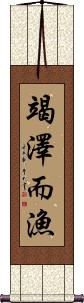
This Chinese idiom/proverb is still used, over 2600 years later to remind people not to burn bridges, cheat, or dishonor themselves in exchange for a short-term gain while sacrificing the future.
竭澤而漁 is very similar to the meaning of the English phrase, “Kill the goose that lays the golden eggs.”
Drinking the water of a well: One should never forget who dug it
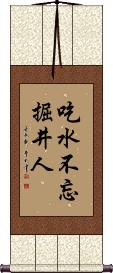
This proverb suggests that one should always be grateful to those who helped one succeed.
And remember your ancestors and those that came before you whose sacrifices made your present life better.
Some Chinese will separate the intended meaning from this proverb and translate this as “Don't forget the people who once helped you.” In Modern China, this idiom is virtually never used to refer to an actual well.
Note: This can be pronounced in Korean but it's not a commonly used phrase.
Dynamic
Moving / Motion / Ever-Changing
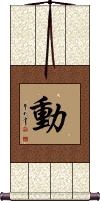
動 is the only Chinese/Japanese/Korean word that can encompass the idea of “dynamic” into one character.
動 can also mean:
to use; to act; to move; to change; motion; stir.
In the Buddhist context, it means: Movement arises from the nature of wind which is the cause of motion.
The key point of this word is that it represents motion or always moving. Some might say “lively” or certainly the opposite of something that is stagnant or dead.
Note: In Japanese, this can also be a female given name, Yurugi.
Dynamic
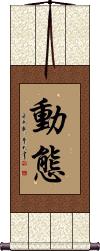
動態 is the Chinese, Japanese Kanji, and old Korean Hanja for a word that means “dynamic state.”
This word can also mean:
movement; motion; development; trend; dynamic (science); the state of being dynamic.
This word can be used to describe someone or an organization that keeps up with cutting-edge trends. Always flexible, always changing, always moving.
Enlightened Warrior
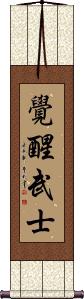
覺醒武士 is not a commonly used title in Chinese but is sometimes used in Martial arts and military contexts to refer to a warrior who seems always to be fully aware, enlightened, knowledgeable, noble, and just.
The first two characters are a word that means: to awaken; to come to realize; awakened to the truth; the truth dawns upon one; scales fall from the eyes; to become aware.
The last two characters mean warrior but can also refer to a samurai, soldier, or fighter.
Eternal Beauty
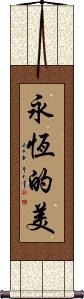
永恆的美 is how to write “Eternal Beauty” in Chinese.
Eternal Energy / Eternal Matter
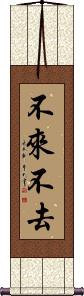
不來不去 is a Buddhist term, originally anāgamana-nirgama from Sanskrit.
This implies that things are neither coming into nor going out of existence.
This can also mean “all things are eternal,” or others will call this the Buddhist concept of the eternal conservation of energy.
This theory predates Albert Einstein and Isaac Newton.
Note: 不來不去 is not a well-known word for both Buddhists and non-Buddhists, so not all will recognize it.
Eternal Friendship / Friends Forever
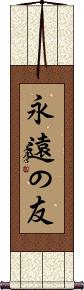
永遠の友 is a Japanese phrase about eternal friendship.
The first two characters mean eternal, eternity, perpetuity, forever, immortality, and permanence.
The third character is a possessive article which sort of makes this selection mean “Love, of the eternal kind.”
The last character is “friend” or “Friendship.”
See Also: Best Friends
Eternal Happiness
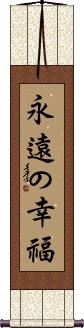
永遠の幸福 means “eternal happiness” in Japanese.
永遠 means eternal, eternity, perpetuity, forever, immortality, and permanence.
の is a possessive article which sort of makes this selection mean “happiness, of the eternal kind.”
幸福 means happiness, though this word can mean truly blessed, joy, happy, welfare, well-being, or fortunate.
Learning is Eternal
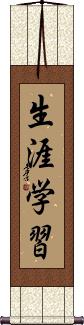
生涯學習 means “Learning is Eternal” or “Lifelong Learning,” in Japanese.
See Also: An Open Book Benefits Your Mind | Wisdom | Learn From Wisdom
Eternal Love
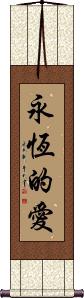
永恆的愛 is the best way to write “Eternal Love” in Chinese.
The first two characters mean eternal, eternally, everlasting, and/or perpetual.
The third character is a possessive article which sort of makes this selection mean “Love of the eternal kind.”
The last character is “love.”
This version is best if your audience is Chinese. We also have a Japanese version of eternal love.
See Also: Forever Love | Love
Eternal Love
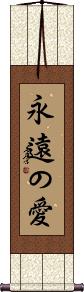
永遠の愛 is a great way to write “Eternal Love” in Japanese.
The first two characters mean eternal, eternity, perpetuity, forever, immortality, and permanence.
The third character is a possessive article which sort of makes this selection mean “Love, of the eternal kind.”
The last character is “love.”
Cultural note: Most of the time, it is taboo to use the word “love” in Japanese. For instance, a Japanese man will say, “I like you,” rather than, “I love you,” to his spouse/girlfriend. However, this entry for eternal love is acceptable because of the way it is composed.
This entry is only appropriate if your audience is Japanese. We also have a Chinese version of this eternal love.
See Also: Forever Love | Love
Eternal Peace
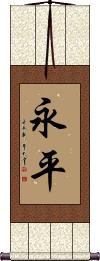
永平 is a way to write “eternal peace” in Chinese and Japanese.
This may also refer to Yongping county in Dali Bai autonomous prefecture. 永平 is also a Japanese surname that romanizes as Nagahira.
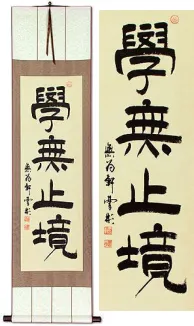
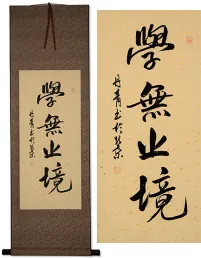
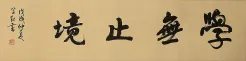
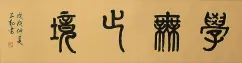
Learning is Eternal
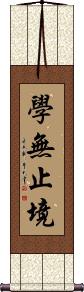
This Chinese philosophy tells of how we continue to learn throughout our lives.
This proverb can be translated in a few ways such as “Study has no end,” “Knowledge is infinite,” “No end to learning,” “There's always something new to study,” or “You live and learn.”
The deeper meaning: Even when we finish school we are still students of the world gaining more knowledge from our surroundings with each passing day.
See Also: An Open Book Benefits Your Mind | Wisdom | Learn From Wisdom
Eternal Life / Everlasting Life / Immortality
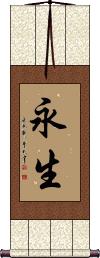
永生 are the last two words from John 3:16 in the Chinese Union Bible.
Although not specifically Christian, this is the way to express ever-lasting life or eternal life in Chinese.
In Japanese, this can either mean eternal life or immortality.
See Also: From Here to Eternity | Samsara / Endless Cycle of Rebirth | Reincarnation / Life in Flux | the Key to Immortality is First Living a Life Worth Remembering
Eternal Life / Future Life
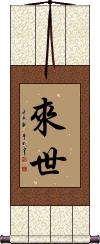
來世 is a word that can be used in many different ways.
It is often used to express the next life (life in heaven or wherever your soul is bound for). So it does have a religious overtone. However, it can also be used to express your life in the future - perhaps during your present lifetime.
It can also be translated as “the next world,” “the next generation,” “the time that is to come,” “otherworld,” or simply “posterity.”
See Also: From Here to Eternity | Samsara / Endless Cycle of Rebirth | Reincarnation / Life in Flux | the Key to Immortality is First Living a Life Worth Remembering
Eternal Happiness
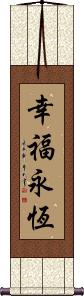
幸福永恆 is a short way to say eternal happiness in Chinese.
Breaking down the parts:
幸福 means happiness, happy, blessed, blessedness, joy, and/or well-being.
永恆 means eternal, everlasting, and/or forever.
Another way to write this is 永恆的幸福. It reverses the word order and adds a possessive article. I prefer the shorter version, which is slightly more natural in Chinese.
Eternal Peace and Happiness

永恆和平與幸福 means “Eternal Peace And Happiness” in Chinese.
Eternal / Eternity
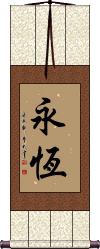
永恆 is the Chinese word for eternity.
The first character means always, forever, and perpetual. The second character holds the meaning of permanent. Together, they create a word that means eternal, eternally, or infinite time.
See Also: The Key to Immortality is First Living a Life Worth Remembering
Eternity / Forever
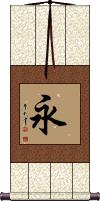
永 is the simplest form of eternity or “always and forever.”
永 can sometimes mean forever, always, perpetual, infinite, or “without end,” depending on context.
Note: Not often seen as a single Kanji in Japanese. Best if your audience is Chinese.
See Also: Together Forever in Love | Eternal / Long-Lasting
Eternity / Always and Forever
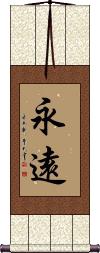
永遠 is the Chinese, Korean and Japanese word for forever.
If we take this word apart, the first character means always, forever, or perpetual. While the second character means far or distant.
See Also: The Key to Immortality is First Living a Life Worth Remembering
Sky / Ether / Void / Emptiness / Unreality
(Used in Japanese version of five elements)
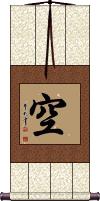
空 is a single character that means empty, void, hollow, vacant, vacuum, blank, nonexistent, vacuity, voidness, emptiness, non-existence, immateriality, unreality, the false or illusory nature of all existence, and being unreal.
In the Buddhist context, this relates to the doctrine that all phenomena and the ego have no reality but are composed of a certain number of skandhas or elements, which disintegrate. The void, the sky, space. The universal, the absolute, complete abstraction without relativity. The doctrine further explains that all things are compounds, or unstable organisms, possessing no self-essence, i.e. are dependent, or caused, come into existence only to perish. The underlying reality, the principle of eternal relativity, or non-infinity, i.e. śūnya, permeates all phenomena making possible their evolution.
From Sanskrit and/or Pali, this is the translation to Chinese and Japanese of the title śūnya or śūnyatā.
In Japanese, when pronounced as “ron” (sounds like “roan”) this can be a given name. It should be noted that this Kanji has about 5 different possible pronunciations in Japanese: kuu, kara, sora, ron, and uro. 空 is also an element in the Japanese version of the five elements.
Fall Down Seven Times, Get Up Eight
Always rising after a fall or repeated failures
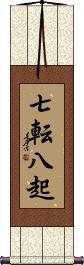
七転八起 is a Japanese proverb that relays the vicissitudes of life, with the meaning “seven times down eight times up.”
Some would more naturally translate it into English as “Always rising after a fall or repeated failures” or compare it to the English, “If at first, you don't succeed, try, try again.”
The first Kanji is literally “7.” The second means “fall down” (sometimes this Kanji means “turn around,” “revolve” or “turn over” but in this case, it holds the meaning of “fall”). The third is “8.” And the last is “get up,” “rouse,” or “rise.”
if you fail 7 times, you should recover from those events and be prepared to rise an 8th time. This also applies if it is the world or circumstances that knock you down seven times...
...just remember that you have the ability to bounce back from any type of adversity.
Note: This can be pronounced in two ways. One is “shichi ten hakki” or “shichitenhakki.” The other is “nana korobi ya oki” also written, “nanakorobi-yaoki.”
Special Note: The second character is a Kanji that is not used in China. Therefore, please select a Japanese calligrapher for this title.
The Mysterious Bond Between People
The invisible force that brings people together forever
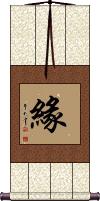
緣 represents the fate that brings and bonds people together.
緣 is a complicated single character. It can mean many different things depending on how you read it.
In Japanese, it can mean fate, destiny, a mysterious force that binds two people together, a relationship between two people, bond, link, connection, family ties, affinity, opportunity, or chance (to meet someone and start a relationship). It can also mean “someone to rely on,” relative, reminder, memento, or the female given name, Yori.
It's the same in Chinese, where it's defined as cause, reason, karma, fate, or predestined affinity.
In the Buddhist context, it's Pratyaya. This is the concept of indirect conditions, as opposed to direct causes. It's when something happens (meeting someone) by circumstance or a contributing environment. Instead of a direct cause or act, it is a conditioning cause without direct input or action by the involved people.
Occasionally, this character is used in a facetious way to say hem, seam, or edge of clothing. In this case, it's the seam that brings or holds the clothing together.
 Note: Japanese will tend to use the variant of this Kanji shown to the right. If you want this version (and are ordering this from the Japanese master calligrapher), click on the Kanji at the right instead of the button above.
Fear God
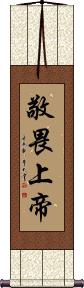
敬畏上帝 is probably the best way to translate the Christian English phrase “Fear God” into Chinese.
The first two characters mean to revere, be in awe of, or a general term of reverence. It can mean fear, but only in the context of respect or fear of authority.
Five Families / Tsoi Li Hoi Fut Hung
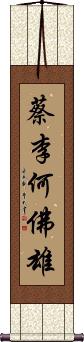
蔡李何佛雄 is the five families associated with San Soo Kung Fu.
The characters are always the same, but there are several ways these are romanized from Cantonese, Mandarin, and other dialects. Some common ones include Tsoi Li Hoi Fut Hung and Choi Li Ho Fut Hung.
If you are using a different romanization, that does not mean it's wrong. It might just be that your school is using a different dialect or romanization scheme.
Flying Tigers AVG
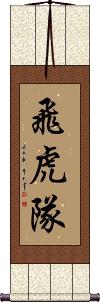
飛虎隊 is the full Chinese title of the “Flying Tigers Group.”
These were the American pilots that volunteered to go to China and fight the Japanese before the entry of the USA into World War Two. These fighter pilots were so esteemed in China that fallen American pilots could always find refuge in villages and safe passage and escape to areas of China that were not occupied by Japan at that time. Chinese villagers helped such fallen pilots with full knowledge that when the Japanese occupation forces found out, all the men, women, and children in the village would be massacred by Japanese troops (there are more than a few known cases of such massacres).
The Flying Tigers successfully kept supply lines to the Chinese resistance open and divided Japanese forces at a crucial time while America prepared to join WWII officially.
A wall scroll like this honors the men who risked or gave their lives as noble volunteers and is a reminder of the best moment in the history of Sino-American relations.
These three characters literally mean “flying tiger(s) group/team/squad.”
Note: Hanging these characters on your wall will not make you any friends with Japanese people who are aware of this history (most Japanese have no idea, as Japan’s involvement in WWII has all but been erased from school textbooks in Japan).
Always Be Prepared
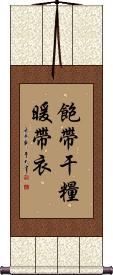
饱带干粮暖带衣 is a proverb that translates as:
Carry [extra] food when [you are] full and [extra] clothes when [you are] warm.
Figuratively, this means:
Always be prepared for a rainy day.
Soccer / Football / Futbol
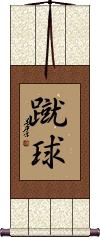
蹴球 is the title for football or soccer in Japanese Kanji and old Korean Hanja.
The sport is very popular in both Japan and Korea (Korea and Japan co-hosted the football World Cup in 2002 - a world-class sporting event held every four years that rivals the Olympics).
In Japan, they sometimes say サッカ (sakka) or フットボール (futto bouru) in place of the pronunciation shown above. 蹴球 is supposed to sound like the English word soccer and football/futbol respectively.
The first Kanji means kick and the second means ball. So technically, this means “kick ball” in Japanese and Korean (this is just an educational note - this will always be understood as the game of soccer/football).
FYI: This game would never be confused with American Football in Japan or Korea. Unlike the game of American basketball and baseball (both quite popular in Japan and Korea), there is only a vague awareness of a rugby-like game that is also called football in the USA.
Forever In My Heart
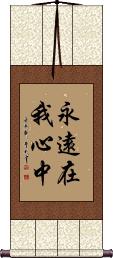
永远在我心中 means “forever in my heart” or “always in my heart” in Chinese.
Always in My Heart
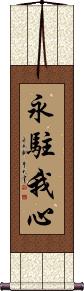
永駐我心 is one of a few ways to write “always in my heart” or “forever in my heart” in Chinese.
The first character means eternal, forever, or always.
The second character means resides, in, or stationed (in the case of troops).
The third character means me, my, or mine.
The last character means heart (but can also mean mind or soul).
Forever In My Heart
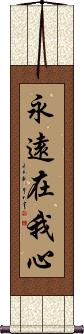
永遠在我心 means “forever in my heart” or “always in my heart” in Chinese.
This is the shorter, somewhat lyrical version of this phrase.
永遠 forever/eternal
在 at/in/exists
我 me/myself/my
心 heart/mind/soul
Forever In My Heart
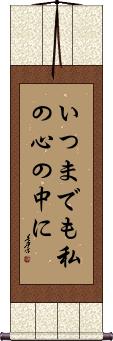
いつまでも私の心の中に means “forever in my heart” or “always in my heart” in Japanese.
Note: Because this selection contains some special Japanese Hiragana characters, it should be written by a Japanese calligrapher.
Forever In My Heart
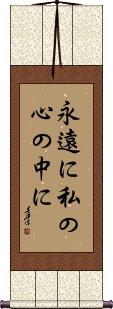
永遠に私の心の中に means “forever in my heart” or “always in my heart” in Japanese.
The character breakdown:
永遠 (eien) eternity; perpetuity; immortality; permanence.
に (ni) indicates the location of a person or thing.
私の (watashi no) my; mine.
心の中 (kokoro no naka) the middle of one's mind; the midst of one's heart.
に (ni) indicates the location of a person or thing (makes this “in” the middle of one's heart).
Note: There’s more than one way to say “Forever in My Heart” in Japanese, so you’ll find another version in our database. This is the very verbose version.
Note: Because this selection contains some special Japanese Hiragana characters, it should be written by a Japanese calligrapher.
Forever Love
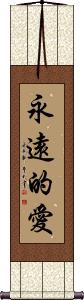
永遠的愛 refers to love that will last forever.
The first two characters mean forever, eternal, eternity, perpetuity, immortality, and/or permanence.
The third character is a possessive article which sort of makes this selection mean “The forever kind of love.”
The last character is “love.”
See Also: Love
Forever Young
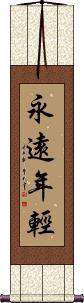
永遠年輕 is “forever young” in Chinese characters.
Forever Young / Eternal Youth
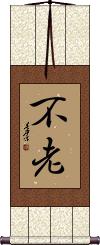
不老 is a Japanese word that means “perpetual youth” or “forever young.”
It contains the idea of never getting old. It literally means “never aging,” or “not [getting] old.”
Forever Young / Long Life
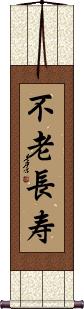
This Japanese phrase means “perpetual youth and longevity.”
It contains the ideas of never getting old and eternal life.
Forever Family
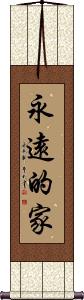
永遠的家 is a special phrase that we composed for a “family by adoption” or “adoptive family.”
It's the dream of every orphan and foster child to be formally adopted and find their “forever family.”
The first two characters mean forever, eternal, eternity, perpetuity, immortality, and/or permanence. The third character connects this idea with the last character which means “family” and/or “home.”
See Also: One Family Under Heaven
Forever Sisters
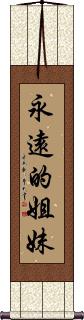
This literally means forever sisters in Chinese.
This is a weird phrase in Chinese, as by default, sisters are forever. I added this because people were searching for it.
Fountain of Youth
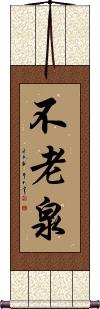
不老泉 is a fountain of youth in Chinese, Japanese Kanji, and old Korean Hanja.
不老 directly means not [getting] old. 不老泉 is usually translated as eternal youth.
泉 means fountain.
Eternal Friendship / Friends Forever
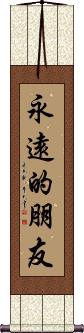
永遠的朋友 means friends that are eternal or a friendship that will last forever - you will remain the best of friends as long as you live.
The first two characters mean forever, eternal, eternity, perpetuity, immortality, and/or permanence.
The middle character links the words (it's a possessive article).
The last two characters represent friendship, or simply “friends.”
See Also: Best Friends
Gassho
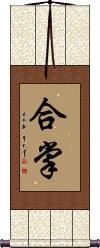
合掌 is the act of greeting someone (can also be done when departing) with hands brought together prayerfully.
In India, this would be accompanied by the verbal greeting and blessing of “Namaste.” In China, Japan, and Korea, this is how Buddhists will greet each other. Sometimes done by people who are not devout Buddhists in China, Japan, and Korea to show respect, reverence, or great thanks to someone for a gift, forgiveness, or some honor that has been bestowed.
In Japan, this is almost always associated with a deep bow. In China, where bowing is not an everyday occurrence, there may be a shallow bow, but the act will be done with deep feeling. Korean culture seems to have more bowing than China but less than Japan.
See Also: Namaste - Greeting
God is Always With You
God is With Me Always
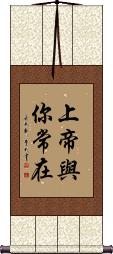
The direct translation of the Chinese characters, 上帝与你常在, is “God Together [with] You Always Exist.”
Keep in mind that Chinese grammar is sometimes very different from English. This makes perfect sense in Chinese.
Note: The title for God is the first two characters - the other words in the direct translation represent one character each.
God Bless You
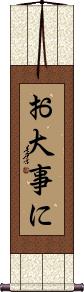
お大事に means “God bless you” in Japanese.
It can also mean “take care of yourself,” or “get well soon.” It's not always associated with religious meaning.
Note: Because this selection contains some special Japanese Hiragana characters, it should be written by a Japanese calligrapher.
God Bless You / God Be With You
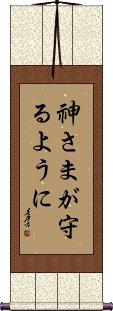
神さまが守るように is about as close as you can get to, “God Bless You” in Japanese.
This literally means “[May] God Protect [You].” It can also mean “God is Always With You,” as the word in this phrase that means “protect” can also mean to follow or be with. In fact, the Japanese dictionary entry for that word reads like this: to protect; to guard; to defend; to keep (i.e. a promise); to abide; to observe; to follow.
Note: Because this selection contains some special Japanese Hiragana characters, it should be written by a Japanese calligrapher.
God Is With You Always
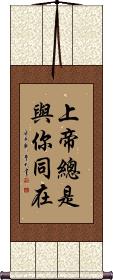
I was going to write this phrase as “God is with me always” but as a wall scroll, hanging in your room, it is talking to you (you're not talking), so it works better with you.
上帝總是與你同在 is a nice phrase that any Chinese Christian would enjoy on their wall.
If I annotate this, it sounds a little strange in English but it's perfectly natural in Chinese:
上帝 God | 总是 always | 与 and | 你 you | 同 together | 在 existing
God is Always With Me
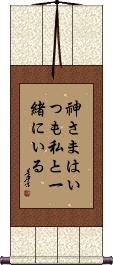
神さまはいつも私と一緒にいる is a Japanese phrase that means “God is always with me.”
Note: Because this selection contains some special Japanese Hiragana characters, it should be written by a Japanese calligrapher.
God is Always With You
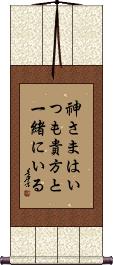
神さまはいつも貴方と一緒にいる is a Japanese phrase that means “God is always with you.”
Note: Because this selection contains some special Japanese Hiragana characters, it should be written by a Japanese calligrapher.
Greatest Infinite Love
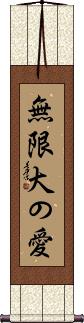
無限大の愛 is a Japanese title meaning infinite great love, unlimited great love, or eternal love.
無 means never, not, or like a prefix “un-.”
限 means limited, restricted, or bound.
大 means great or big.
の is a possessive article.
愛 means love or affection.
Happy Family
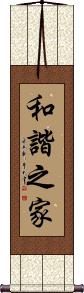
和諧之家 means “harmonious family” or “happy family” in Chinese.
The first two characters relay the idea of happiness and harmony.
The third character is a connecting or possessive article (connects harmony/happiness to family).
The last character means family but can also mean home or household.
Happy Family
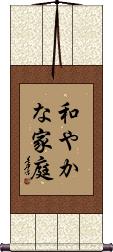
和やかな家庭 means “happy family” or “harmonious family” in Japanese.
The first three Kanji create a word that means mild, calm, gentle, quiet, or harmonious. After that is a connecting article. The last two Kanji mean family, home, or household.
Note: Because this selection contains some special Japanese Hiragana characters, it should be written by a Japanese calligrapher.
Use Hard Work to Overcome Adversity
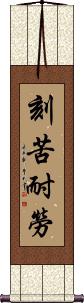
刻苦耐勞 is a Chinese proverb that suggests that you should always bear hardships and work hard.
Some will translate it as a suggestion to be assiduous and long-suffering.
My favorite is to use this to remind myself to be hard-working and capable of overcoming adversity.
Eternal / Long-Lasting
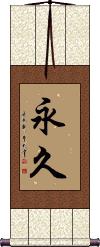
永久 is a Japanese, Chinese, and old Korean word that means everlasting, perpetual, lasting, forever, permanent, eternity, perpetuity, and/or immortality.
This can also be a female given name Haruku in Japan.
Heaven
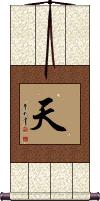
天 means “heaven” or “sky” in Chinese, Japanese Kanji, and old Korean Hanja.
The context determines if you are talking about heaven or the sky above (often they are the same concept).
When combined with other characters, words like “today” and “tomorrow” are created. While sometimes the character for “sun” is used to mean “day,” often “sky” represents “day” in Asian languages.
Example: 今天 (this sky) = “today,” 明天 (next sky) = “tomorrow” in modern Chinese and Japanese.
In Chinese culture, regardless of which religion, it's almost always assumed that God (and any other deities) live up above the sky. The concept of God living in the sky is likely the reason heaven is associated with this character.
The equation goes something like this: God's domain is the sky, thus, the sky is heaven.
Note: As a single character, this is a little ambiguous, so you might want to choose our Kingdom of Heaven selection instead.
See Also: Heaven | Xuan Wu / Genbu / Black Tortoise God | Never Put Off Until Tomorrow What You Can Do Today | Sun
Hebrews 13:8
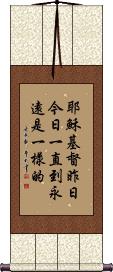
耶穌基督昨日今日一直到永遠是一樣的 is Hebrews 13:8 which reads, Jesus Christ the same yesterday, and today, and forever.
Immortal / Immortality
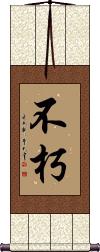
不朽 means immortal or immortality in Chinese, Japanese Kanji, and old Korean Hanja.
The literal translation is “without decay” or “never rotting.” This title speaks of something or someone who never dies and thus never rots or decays.
This can also be translated as everlasting, eternal, or imperishable.
Impermanence
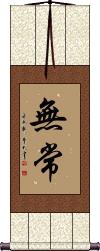
無常 is the state of being “not permanent,” “not enduring,” transitory, or evolving.
It can also mean variable or changeable. In some contexts, it can refer to a ghost that is supposed to take a soul upon death. Following that, this term can also mean to pass away or die.
In the Buddhist context, this is a reminder that everything in this world is ever-changing, and all circumstances of your life are temporary.
If you take the Buddhist philosophy further, none of these circumstances are real, and your existence is an illusion. Thus, the idea of the eternal soul is perhaps just your attachment to your ego. Once you release your attachment to all impermanent things, you will be on your way to enlightenment and Buddhahood.
Language notes for this word when used outside the context of Buddhism:
In Korean Hanja, this means uncertainty, transiency, mutability, or evanescent.
In Japanese, the definition orbits closer to the state of being uncertain.
The incompetent boat pilot blames the river for his shortcomings
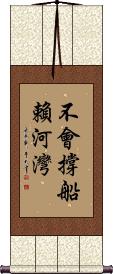
不會撐船賴河灣 literally translates as: [One who] cannot steer the boat blames the bends in the river.
Figuratively, this means: One who is incompetent always tries to shift the blame elsewhere.
This is similar to the English idiom, “a poor workman/craftsman blames his tools.”
Infinite Love
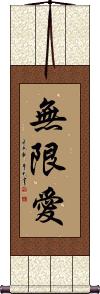
無限愛 is the Chinese and Japanese title meaning infinite love, unlimited love, or unbounded love.
The first character means never, not, or like the prefix “un-.”
The second means limited, restricted, or bound.
The third means love or affection.
Infinity / Infinite / Endless / Boundless
(Chinese / Korean)
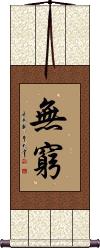
無窮 is the Chinese and Korean word meaning infinity, eternity, infinitude, infinite or endless.
無窮 literally translates as “without [ever becoming] exhausted/poor,” and in that context, can mean “inexhaustible” or “boundless” but this is usually read as “without end.” Some extended definitions include eternity, infinitude, or immortality.
In certain contexts, it can mean “immortality.”
The first character means “never” or “not.” The second means “exhausted,” “finished,” or “ending.”
Note: 無窮 is a Japanese word but rarely used in modern Japan.
Inner Strength / Self-Improvement
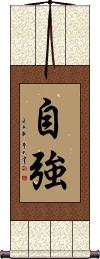
自強 is the kind of inner strength that applies to a person who has will-power and can inspire themselves to do great things.
自強 can also be the creed of a person that always pursues self-improvement.
Other translations: self-strengthening, striving for improvement, self-improvement, striving to become stronger, and self-renewal.
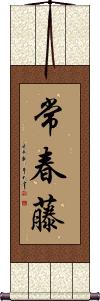
This is a common way to write “ivy” in Chinese.
There are varieties of ivy plant, and other ways to say ivy in Chinese but this version is probably the nicest. It's the one you would use if writing a poem about ivy etc.
If you want the actual meaning, this is, “Always Young Vine,” or “Ever Living Vine.” The literal meaning of the characters is more like, “Always Spring[time] Vine.” But Spring can have other representations in Chinese such as new life, youth, freshness, joyfulness, etc.
I walk my own path
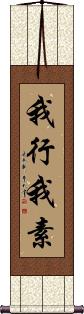
我行我素 is a way to say, “I walk my own path,” or “to continue in one's own way,” in Chinese.
This does not always have a completely positive connotation. It can mean ignoring advice or to persist in your path, no matter what others say or think.
Jesus
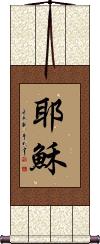
This is simply the name “Jesus” transliterated into Chinese. 耶穌 hold a pronunciation in Mandarin that is closer to the real and original Hebrew Yeshua, instead of the incorrect way we have always pronounced Jesus in English with a hard “J” sound. While this name sounds like the real “Jesus” in Chinese, Christians in China are more likely to say “Christ” (Jidu) which holds more meaning than just sound.
If you are Latino and have been given the name “Jesus,” this is also how to write your name in Chinese.
Joshua 1:9
Do not be afraid, God is always with you
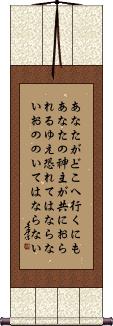
あなたがどこへ行くにもあなたの神主が共におられるゆえ恐れてはならないおののいてはならない is a Japanese translation of a large portion of Joshua 1:9.
The Japanese passage includes, “The Lord God is with you wherever you are; Therefore do not fear or be discouraged.”
Note: Because this selection contains some special Japanese Hiragana characters, it should be written by a Japanese calligrapher.
Safety and Well-Being of the Family
Kanai Anzen
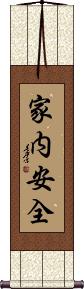
家內安全 is the Japanese way of saying “Family First.”
It's a Japanese proverb about the safety and well-being of your family and/or peace and prosperity in the household.
Some Japanese will hang an amulet in their home with these Kanji. The purpose is to keep your family safe from harm.
According to Shinto followers, hanging this in your home is seen as an invocation to God to always keep family members free from harm.
We were looking for a way to say “family first” in Japanese when this proverb came up in the conversation and research. While it doesn't say “family first,” it shows that the safety and well-being of your family is your first or most important priority. So, this proverb is the most natural way to express the idea that you put your family first.
See Also: Worldwide Wish for Peace and Prosperity
To Know Hardship, One Must Experience It
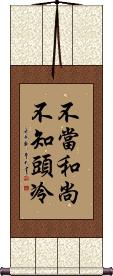
不當和尚不知頭冷 is a Chinese proverb that literally translates as: [One who has] not been a monk [does] not know [the feeling of a] cold head.
I need to explain that a Chinese Buddhist monk always has a shaved head, and thus a cold head in winter.
Figuratively, this means: One cannot know the true meaning of hardship until one has experienced it oneself.
This is an idiom in Chinese, so the figurative meaning is what people perceive when they hear or read this phrase. Just as in English, when someone says, “The grass is always greener,” one will think about the idea of jealousy, rather than the quality of one’s lawn.
Contentment
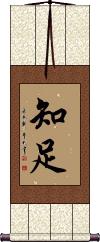
知足 means content with one's situation or to know contentment (hence happiness).
From the Zen Buddhist context, Chisoku or 知足 (knowing what’s enough) means always to know and be
satisfied with one’s lot.
Human pain and suffering are born of greed, and that greed arises because we do not know what’s enough.
The Chinese philosopher, Menzi (372-289 BCE) said, “to nourish the mind, there is nothing better than to make the desires few.”
This relays the idea that the best method to cultivate the mind is to have little desire.
Kung Fu / Gong Fu
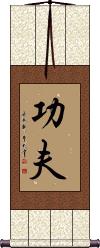
功夫 or Kung Fu is one of the most famous types of martial arts in the world - and not just because of Bruce Lee.
Some translate the meaning as “Accomplishment by Great Effort.” I think this is partially true, but directly translated, it literally means “Merit/Achievement/Accomplishment Man.” The word “fu” can sometimes mean “husband” or “porter,” but in this case, it can only mean “man.” However, few in China will think “man” when they hear the word “Gong Fu” spoken.
This term is also used for things other than martial arts. In fact, it's used to refer to a person with excellent skills in crafts that require many effort to master, such as cooking, tea ceremonies, and calligraphy.
What many people don't know is that the spelling of “Kung Fu” was actually taken from the old Wade Giles form of Romanization. Using this method, the sounds of the English “G” and “K” were both written as “K” and an apostrophe after the “K” told you it was supposed to sound like a “G.” Nobody in the west knew this rule, so most people pronounce it with a “K-sound.” And so, Gong Fu will always be Kung Fu for most westerners.
Also, just to educate you a little more, the “O” in “Gong” has a sound like the English word “oh.”
The popular Chinese dish “Kung Pao Chicken” suffers from the same problem. It should actually be “Gong Bao Chicken.”
Historical note: Many will claim that Kung Fu was invented by the monks of the Shaolin monastery. This fact is argued in both directions by scholars of Chinese history. Perhaps it is more accurate to say that the Shaolin Monks brought the original fame to Kung Fu many generations ago.
Japanese note: While most Japanese martial artists will recognize these characters, Katakana is more often used to approximate the pronunciation of “Kung Fu” with “カンフー.” Some will argue as to whether this should be considered a Japanese word at all.
See Also: Bruce Lee
You May Learn from Victory, You Will Learn from Failure
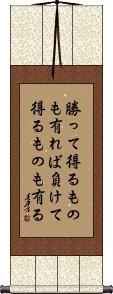
You may learn when everything goes right but the lessons learned when everything goes wrong are more vivid and lead to long-lasting wisdom.
Another way to look at this: One cannot always depend on past successes to guarantee future success but one can always learn from lessons drawn from failure.
Note: Because this selection contains some special Japanese Hiragana characters, it should be written by a Japanese calligrapher.
See Also: Failure is the Mother of Success | Success | Time | Schooled by Experience and Hard Knocks
Learn from Wisdom
(When you see a wise person, try to be like them)
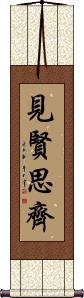
When you meet a wise person, you should learn from them and be inspired to become as wise as they are.
見賢思齊 is a pretty long proverb in English, but in Chinese, it's only four characters.
However, in Chinese, the deeper meaning often surpasses the dictionary definition of each character.
In this case, you should seek wise people to learn from throughout your life...
Always try to learn enough to become equal to them. It also suggests that learning and seeking wisdom is a non-ending cycle.
See Also: Realization and Knowledge
Life Energy / Spiritual Energy
Chi Energy: Essence of Life / Energy Flow
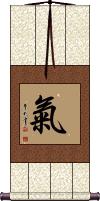
This 氣 energy flow is a fundamental concept of traditional Asian culture.
氣 is romanized as “Qi” or “Chi” in Chinese, “Gi” in Korean, and “Ki” in Japanese.
Chi is believed to be part of everything that exists, as in “life force” or “spiritual energy.” It is most often translated as “energy flow” or literally as “air” or “breath.” Some people will simply translate this as “spirit,” but you must consider the type of spirit we're talking about. I think this is weighted more toward energy than spirit.
The character itself is a representation of steam (or breath) rising from rice. To clarify, the character for rice looks like this: 
Steam was apparently seen as visual evidence of the release of “life energy” when this concept was first developed. The Qi / Chi / Ki character is still used in compound words to mean steam or vapor.
The etymology of this character is a bit complicated. It's suggested that the first form of this character from bronze script (about 2500 years ago) looked like these samples: 

However, it was easy to confuse this with the character for the number three. So the rice radical was added by 221 B.C. (the exact time of this change is debated). This first version with the rice radical looks like this: 
The idea of Qi / Chi / Ki is really a philosophical concept. It's often used to refer to the “flow” of metaphysical energy that sustains living beings. Yet there is much debate that has continued for thousands of years as to whether Qi / Chi / Ki is pure energy or consists partially or fully of matter.
You can also see the character for Qi / Chi / Ki in common compound words such as Tai Chi / Tai Qi, Aikido, Reiki, and Qi Gong / Chi Kung.
In the modern Japanese Kanji, the rice radical has been changed into two strokes that form an X.
 The original and traditional Chinese form is still understood in Japanese, but we can also offer that modern Kanji form in our custom calligraphy. If you want this Japanese Kanji, please click on the character to the right instead of the “Select and Customize” button above.
More language notes: This is pronounced like “chee” in Mandarin Chinese, and like “key” in Japanese.
This is also the same way to write this in Korean Hanja where it is Romanized as “gi” and pronounced like “gee” but with a real G-sound, not a J-sound.
Though Vietnamese no longer use Chinese characters in their daily language, this character is still widely known in Vietnam.
See Also: Supernatural Energy | Life Force | Vitality | Eternal Wheel of Life | Birth Old-Age Sickness Death | Wolf Spirit / Soul of a Wolf
Lion Dance
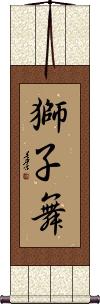
獅子舞 is the Japanese title for lion dancing.
This refers to the Japanese version borrowed from traditional Chinese culture. The Japanese version almost always features a red-faced lion with a green cloak with a white pattern.
Live in Prosperity
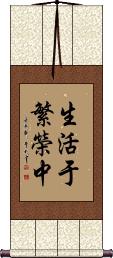
生活于繁榮中 means “live in prosperity.” It's kind of a suggestion to be prosperity the center of your world.
This is the way some people want to live (and you should always live for what you love). However, this phrase does not suggest a peaceful life - rather one that is always busy. It's not for everyone, but it might be for you.
See Also: Prosperity
Eternal Love / Love Eternally
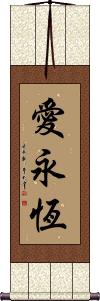
愛永恆 is the shortest way to express the idea of “love eternally” in Chinese.
The first character here means “love”
The last two mean eternal, eternally, everlasting, and/or perpetual.
See Also: Forever Love
Love Forever / Love Eternal
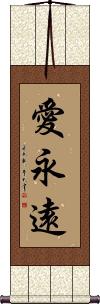
The first character here means “love.”
The last two mean forever, eternity, eternal, perpetuity, immortality, and/or permanence.
愛永遠 is the shortest and most universal way to express this idea in Chinese and Japanese.
Japanese note: This sound more like a title than a phrase in Japanese (if that makes any sense). 愛永遠 is a great title for a romantic book, the title of a movie, the name of a perfume, or even a name for a store.
See Also: Eternal Love | Forever Love
Pledge of Lifelong Love
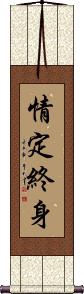
情定終身 is a pledge of eternal love in Chinese.
This can also be a colloquial way to refer to the act of exchanging marriage vows.
If you and your mate want to express how committed you are to your life-long love, this will be a great piece of calligraphy for your wall. Also, a nice phrase to celebrate an anniversary.
Loyalty
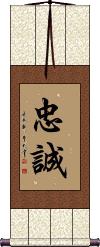
忠誠 is the written form of loyalty that is universal in Chinese, Japanese Kanji, and old Korean Hanja.
Loyalty is staying true to someone. It is standing up for something you believe in without wavering. It is being faithful to your family, country, school, friends, or ideals when the going gets tough and when things are good. With loyalty, you build relationships that last forever.
Notes:
1. There is also a Japanese version that is part of the Bushido Code which may be more desirable depending on whether your intended audience is Japanese or Chinese.
2. This version of loyalty is sometimes translated as devotion, sincerity, fidelity, or allegiance.
See Also: Honor | Trust Your Heart | Integrity | Sincerity and Faithfulness
This in-stock artwork might be what you are looking for, and ships right away...